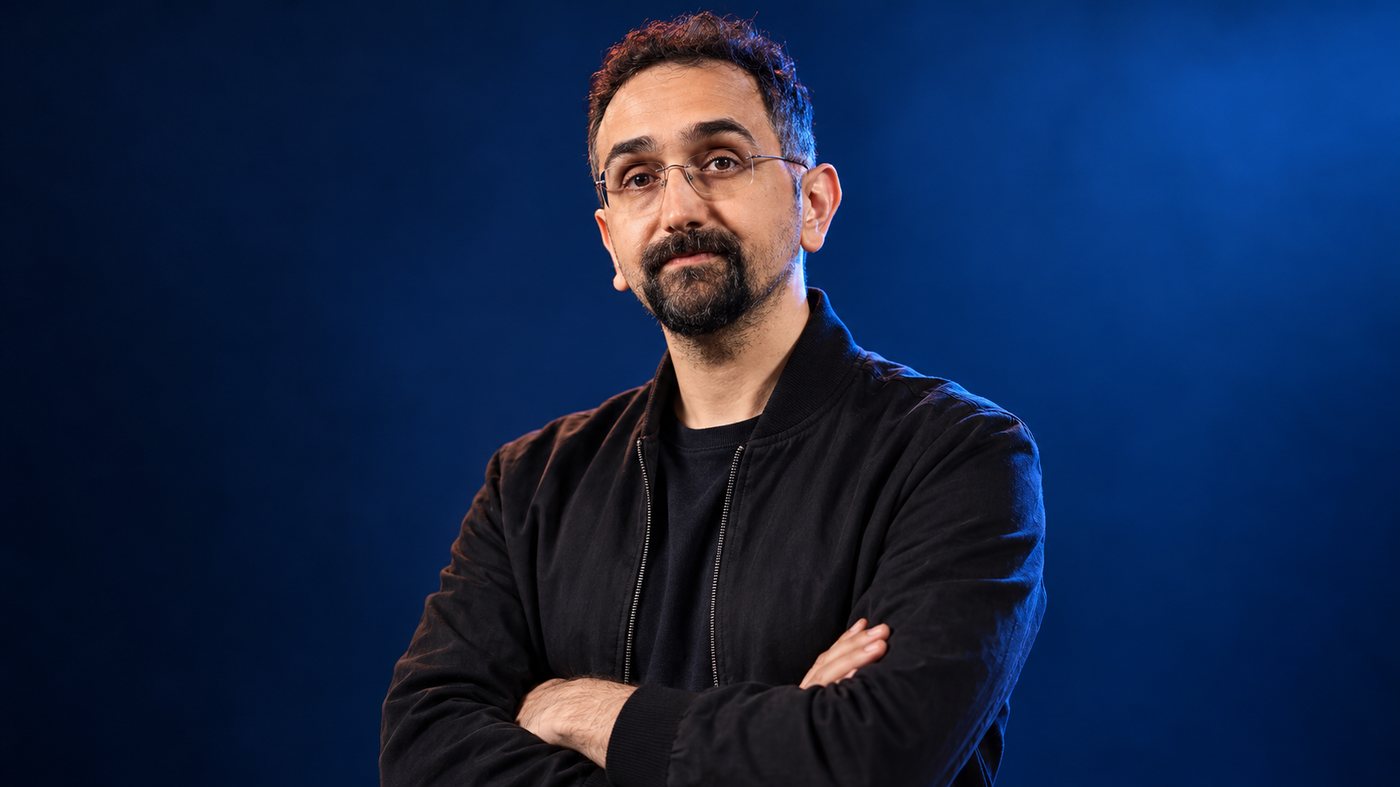
Artemyev moved to England under duress: at the end of 2008, a criminal case was opened against his Euroset partner Yevgeny Chichvarkin. That December, Artemyev flew from Prague to London to meet Chichvarkin and did not return to his homeland for a long time. In Britain he settled in Haslemere (Surrey), buying a house that the poet Alfred Tennyson had once built for himself.
Unlike Chichvarkin, Artemyev did not go into retail: he invests in projects related to biology, medicine and life extension.
How It All Began
According to Artemyev, in January 2003 Alfa Group offered to buy Euroset from its partners for $40 million, of which his share was twenty. He was 28 at the time and decided he should do something for society as well. His first, as he himself calls it, naive idea was to change laws: he ran for the State Duma but lost, gaining 22% in his district.
“And then I realized that the beautiful Russia of the future is not in the laws — it is in the mentality of the people, which must change.”
Since such a process, by his estimate, would take 60–70 years, Artemyev decided he had to manage to live until that “great Russia,” and therefore to invent a cure for old age. He abandoned the ideas of moving into a computer or cloning himself, concluding that the natural path was to understand the processes of aging and stop them.
What Has Been Done
Artemyev has invested in three health-related startups and for many years has supported Yevgeny Nudler’s laboratory at New York University, where, he says, several important biological discoveries were made. He gives money without conditions — unlike the grant system with its lengthy approvals, which can make an idea obsolete. His investments include Retrotope (fortified polyunsaturated fatty acids against oxidative stress), Viome (gut microbiome analysis and dietary recommendations) and MDSeq (Maximum Depth Sequencing DNA methods, applicable for testing the effectiveness of cancer treatment).
Where the Key to Stopping Aging Lies
Cosmetics, he claims, do not work, and those who announce an elixir of youth are usually not from science. Artemyev explains skeptics who consider rejuvenation impossible by their limited consciousness. Between these poles, he says, lies an “empty space” that requires the efforts of all humanity — “a kind of civilizational plan.”
He would call a breakthrough a computer model of a cell or bacterium in silico that a distributed network could compute — this would allow biological theories to be tested reliably. His second task is understanding how processes in cells and DNA are controlled at the program level, in order to determine whether aging is a program or natural wear and tear. In his opinion, it is more likely a program, but he admits he may be wrong. As a third aid, he sees something like a “Wikipedia” of the biology of aging: PubMed already has more than 14 million articles, and it is impossible to connect them single-handedly.
“I tell everyone that we are either the last generation to die of old age or the first to rejuvenate.”
He sees no reason to believe that anti-aging remedies will be expensive: there is nothing in organic chemistry that cannot be produced inexpensively. The question, in his view, is rather political — how accessible the remedy will be, since it would essentially destroy the pension programs of all the world’s states.
How to Preserve Yourself
Artemyev names as the main thing harmony with oneself, the rejection of illusions and the understanding that most values are imposed. He advises knowing one’s weaknesses and fears, being restrained, and links mental health among other things to psychotherapy. He calls alcohol a strong depressant that is unnecessary at 45. He himself admits that he does not fully succeed: “I’m hooked on chocolate,” he rarely drinks coffee or tea, does not run, but since last spring has walked 10,000 steps every day.
Over time his understanding of longevity has changed. He no longer considers the idea of uploading the brain to cloud servers crazy: judging by the pace of development of computing power and neural interfaces, it will sooner or later become possible. Then an instinct for self-preservation could be added to the information from consciousness, and senses could even be connected from other people — and the concept of personality confined to the body would blur. If personality becomes “as it were, multi-bodied,” the decrepitude of body No. 1 will no longer matter much, he reasons.
1