The technology behind the new module traces back to the Soviet-era Kurs rendezvous system. It was created in the 1980s by Kyiv developers with the participation of the Kyiv Radio Plant. According to InVenture, the Kurs system has been used for more than 300 dockings of Soyuz and Progress spacecraft with the Mir station and the International Space Station. After the annexation of Crimea in 2014, deliveries of Kurs to Russia ceased, and the team that preserved the system's legacy began seeking new products based on it.
One of those who stood at the origins of the new project was Volodymyr Usov. A native of Odesa, he graduated from Odesa National Maritime University, is a member of the International Academy of Astronautics, and in 2020 headed the State Space Agency of Ukraine (SSAU). That same year, the country passed a law on private space companies. Usov now serves as co-founder and CEO of Kurs Orbital and lives in Turin. According to him, meeting Vadym Vasyliev and encountering the Kurs technology marked the beginning of the company. Vasyliev appears on the patent's list of inventors alongside Usov.
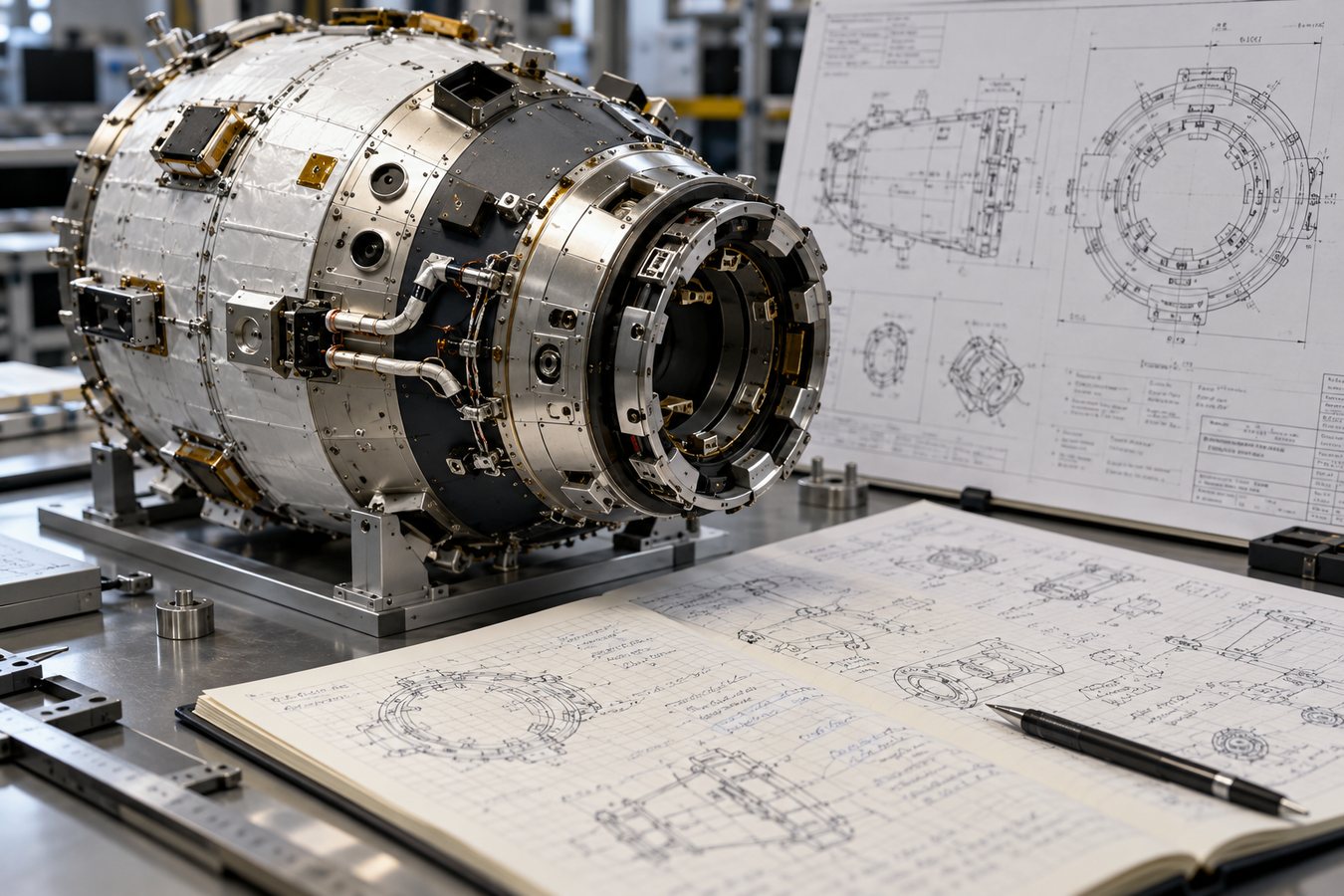
What Exactly Is Patented
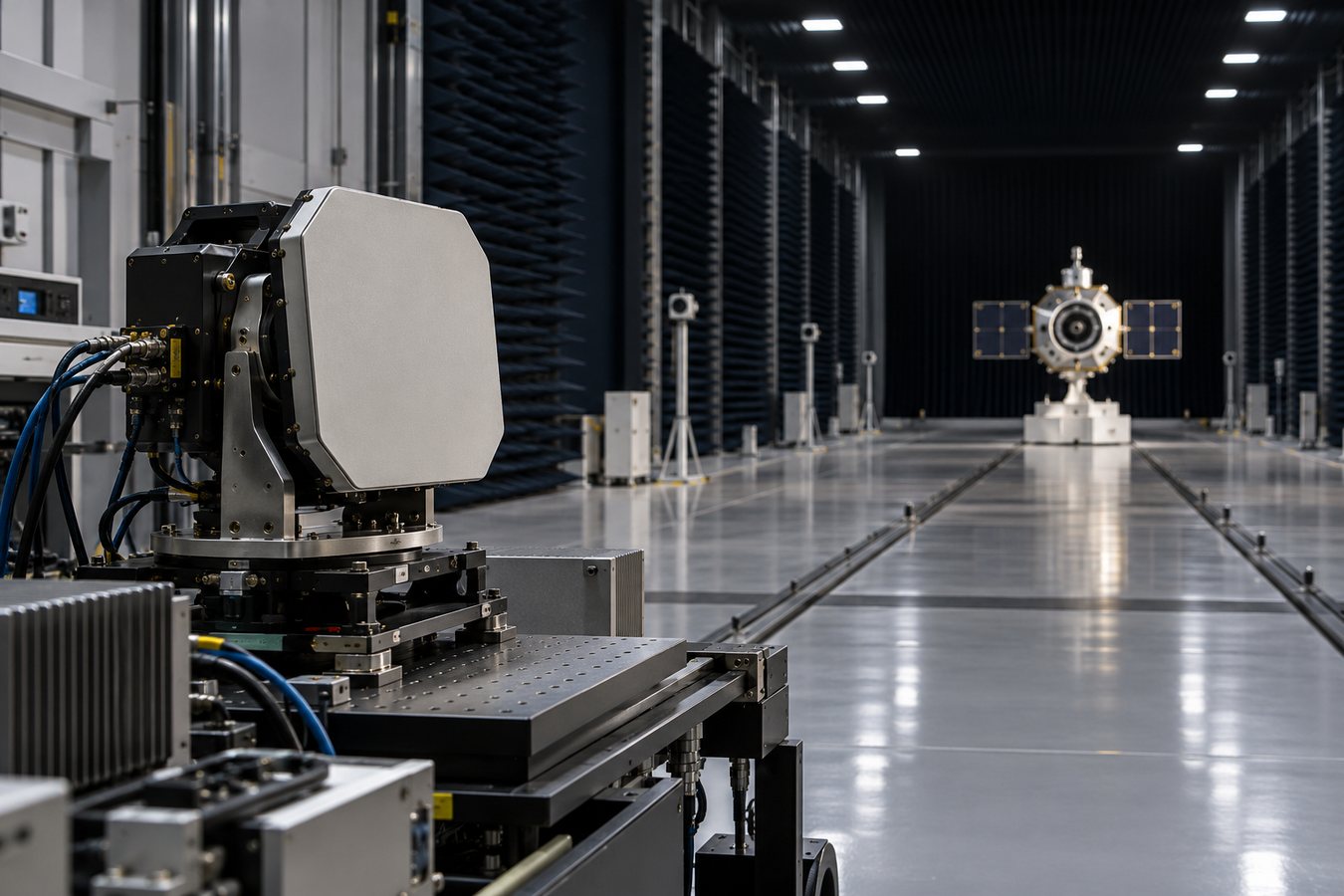
The module combines two functions. The first enables capture: a mechanical system includes manipulators, a control unit, and damping supports that absorb contact energy. The second handles mutual measurements: here a radar module, a machine vision system, a laser rangefinder, and two independent locators are integrated. One of the locators is equipped with an active electronically scanned array, which steers the beam without rotating the antenna itself; the other is a radar orthogonal interferometer. The independence of the locators means the craft receives data about the target through different physical methods and can cross-check them.
This composition reflects the task solved during docking. Rendezvous with an uncooperative or serviceable object requires precise knowledge of its position and velocity, while capture requires mechanics capable of absorbing residual motion without breaking. In the patent text, both parts are described as a single module rather than a set of separate instruments.
The Application's Path
The patent's priority dates back to a Ukrainian application filed on January 4, 2022, under number U 2022 00031. This is the earliest documentary date of the project. On January 3, 2023, an international application was filed under the PCT (Patent Cooperation Treaty). This treaty allows an invention to be secured in many countries at once and then decide where exactly to pursue a patent. The U.S. application was published on February 27, 2025, and the patent itself was issued on January 6, 2026. The patent is valid until 2043, unless revoked early or if the owner fails to pay fees.
Between Kyiv and Turin
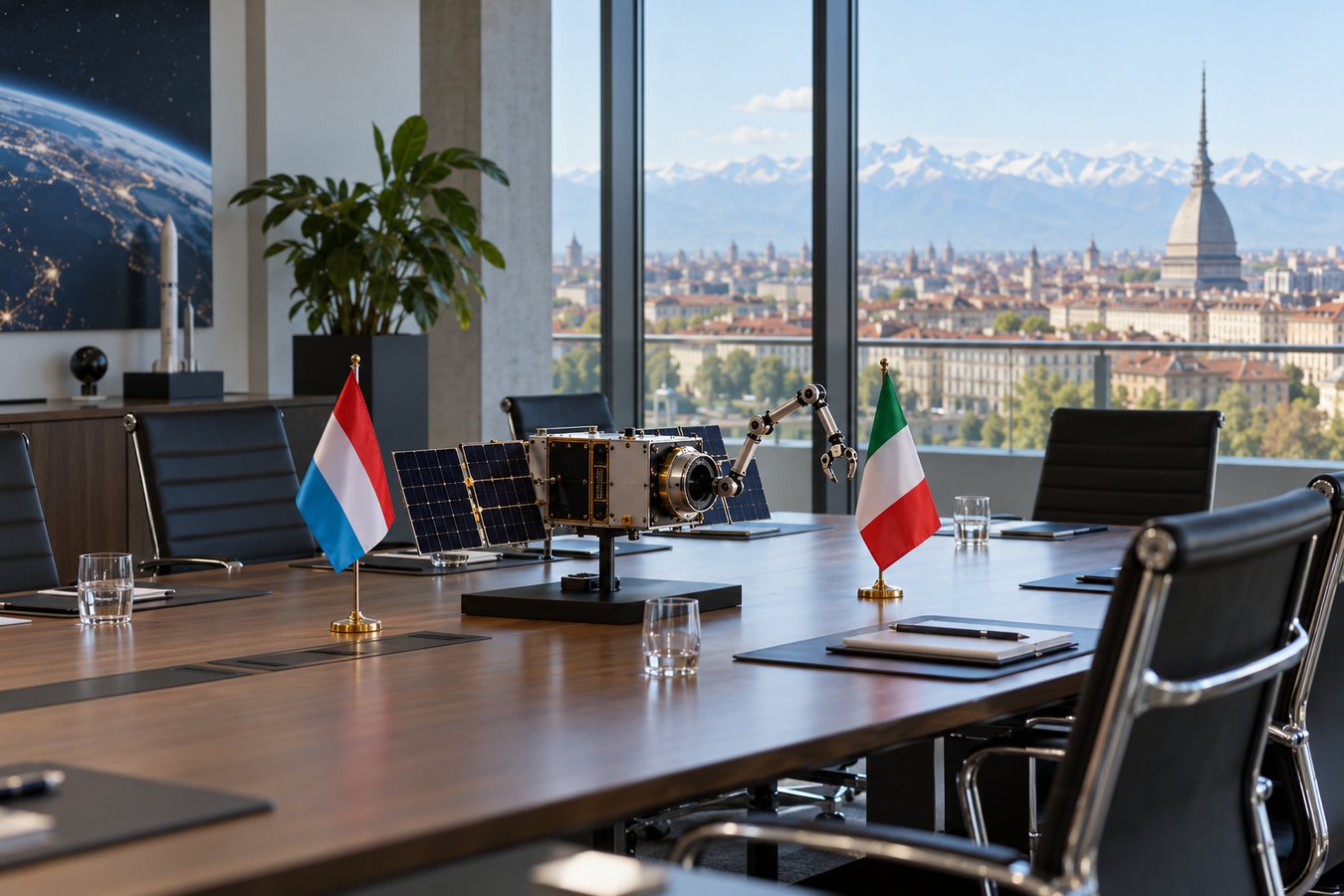
In February 2022, Russia launched a full-scale invasion of Ukraine, and some investors withdrew from the project. The company's office was set up in Turin, while development remained in Kyiv. The Italian legal entity Kurs Orbital Srl is registered in Turin. In November 2022, the project took first place in the Start Cup Piemonte VdA competition, receiving €10,000 and the Jacobacci Silver prize. That same year, Usov said in an interview with AstroSpace that ARCap was 50–60% ready and that the flight was planned for 2024.
In January–March 2023, the company completed the Saudi Space Commission Pre-Accelerator, a program run by Techstars. In March 2024, Kurs Orbital closed a seed round of €3.7 million, about $4 million. The lead investor was OTB Ventures, where partner Wojtek Walniczek works. Credo, Galaxia, PiemonteNext, In-Q-Tel, and Inovo also participated in the round. At that time, the team numbered 11 people.
Recognition and Support
In late 2024, Invitalia, the Italian agency for business support, granted the company a subsidized loan of €1.1 million under the Smart&Start program. On December 17, 2024, ESA BIC Turin named the company startup of the year. The coordinator of ESA BIC Turin, Giuseppe Scellato, president of I3P and professor at Turin Polytechnic University, is among those who supported the project in the region. In March 2025, the Thales Alenia Space Business Catalyst program, operating in Turin, became another platform for the company.
The timeline for ARCap's flight has changed several times. Initially, 2024 was mentioned, then late 2025. By January 2026, the company was conducting ground tests of the radar, and sources do not report a launch of the craft. On January 6, 2026, the day the patent was issued, the company conducted radar tests at distances up to one kilometer.
1