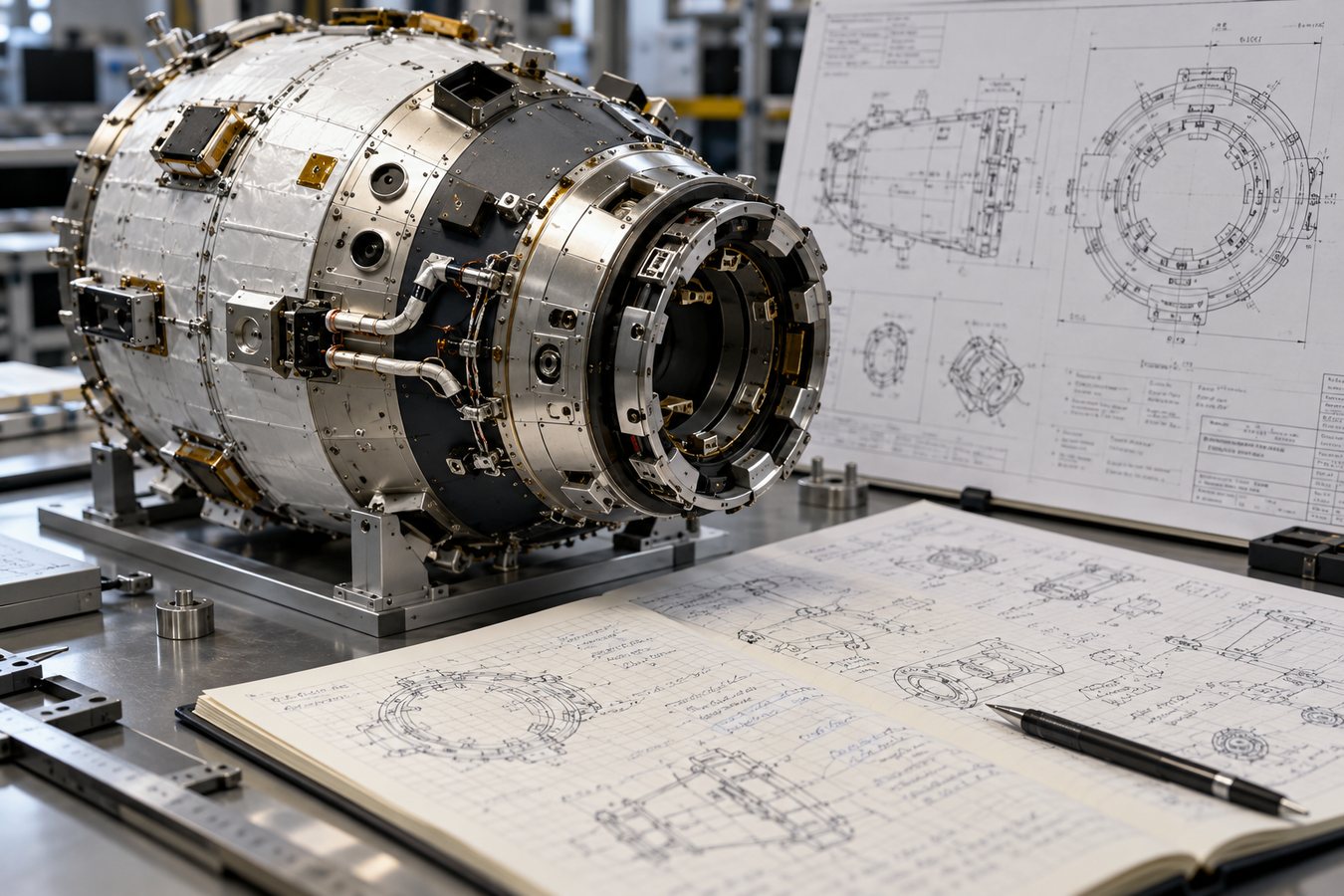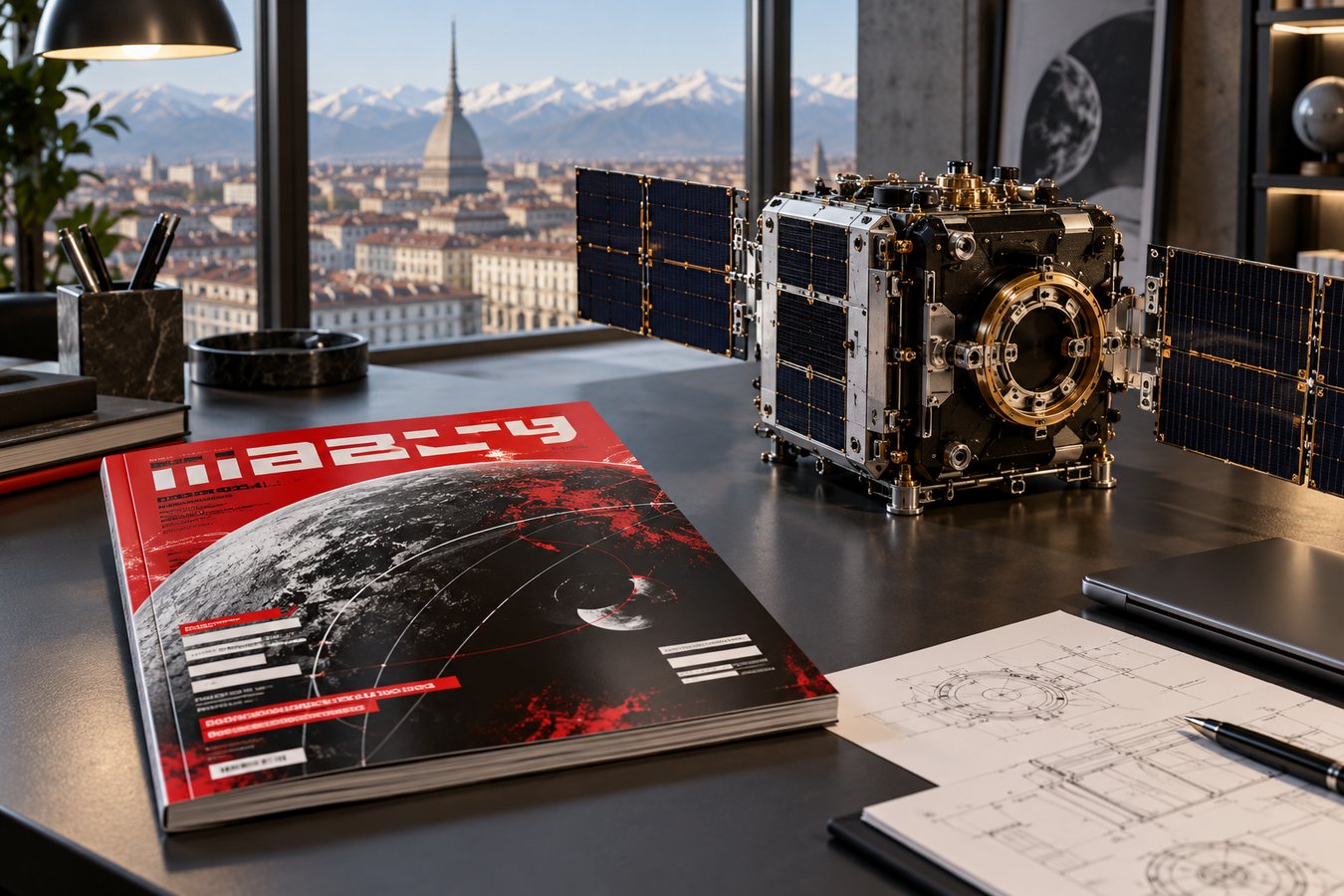
The rendezvous system on which the company's new product is built appeared in Soviet times. The 'Kurs' system was installed on Soyuz and Progress spacecraft and, according to InVenture, was used to perform more than 300 dockings with Mir and the International Space Station. The Kyiv team that worked with this legacy found itself in a difficult position in 2014, when after the annexation of Crimea supplies of the system to Russia ceased. The developers then began to look for new products based on the same physics and accumulated experience.
How the radar was tested
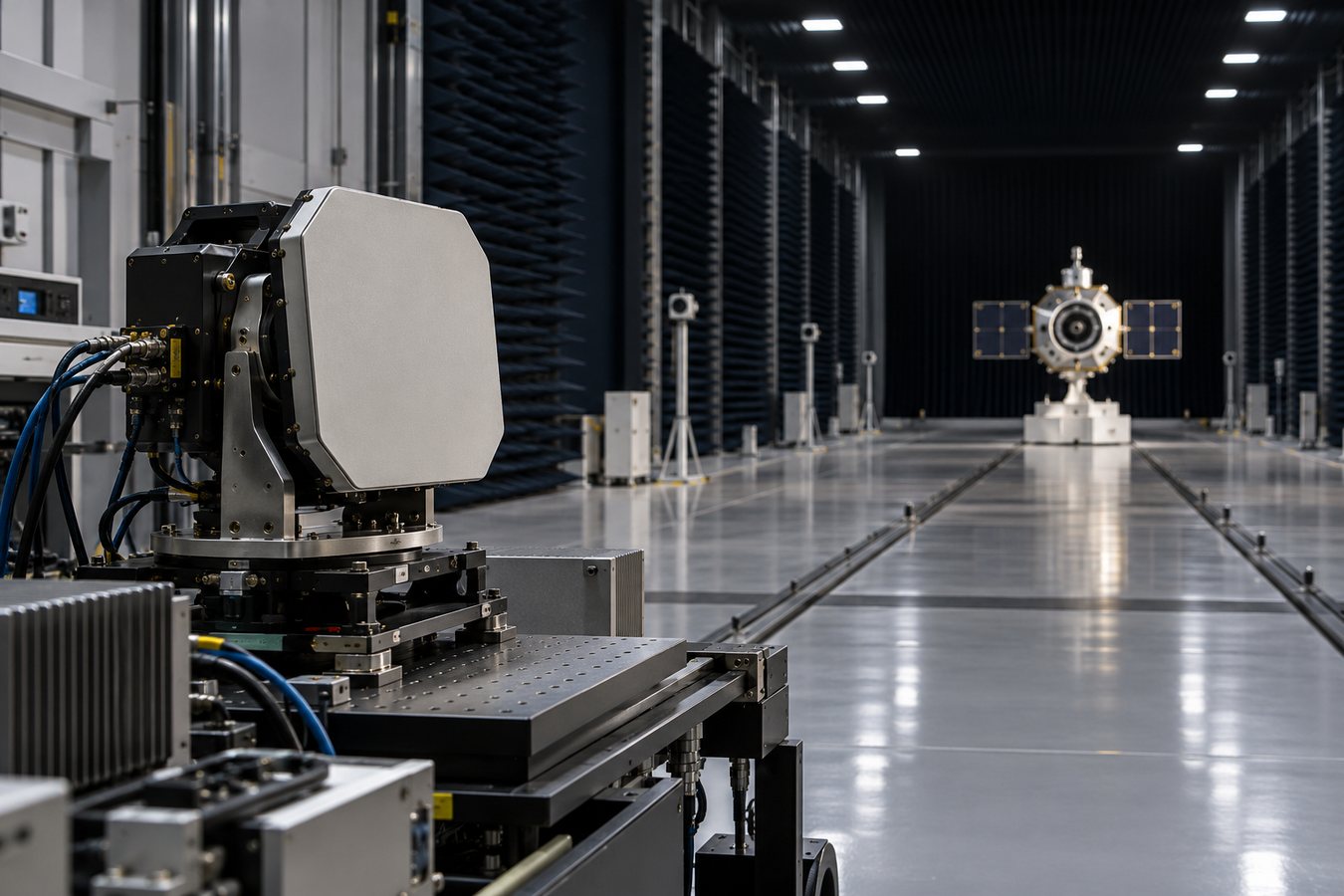
The methodology described by the company in its blog was built on data verification. The radar's output readings were compared with a Python script that calculated expected values from the GPS coordinates of the radar and the target. A calibration table was obtained in an anechoic chamber, where the walls absorb reflected signals and interfere with measurements. After that, the radar was taken to an open site.
Speed was tested using a simple scenario. A target on a drone flew in a straight line at a fixed altitude, descending from 900 metres to zero. The target's speed was five metres per second, which is the drone's limit, so a faster scenario could not be reproduced in these tests. The radar measures range accurately. Angle and speed estimates, according to the company, are promising but will be refined, and the next step will be a new iteration of the design.
A deadline that has already passed
The company presents its work as steady progress. 'Step by step, we are turning proven physics and algorithms into systems ready for space,' the company wrote.
'Step by step, we are turning proven physics and algorithms into systems ready for space,' the company wrote.
However, the timelines have slipped. In November 2022, in an interview with AstroSpace, Kurs Orbital head Volodymyr Usov said that ARCap was 50–60 percent ready and that the mission was planned for 2024. In March 2024, when the company announced a seed round of €3.7 million (about $4 million), it promised a first flight module by the end of 2025. The round was led by OTB Ventures, with participation from Credo, Galaxia, PiemonteNext, In-Q-Tel and Inovo. The team then numbered 11 people.
By January 2026, the deadline named in 2024 had passed, and ARCap remains on the ground: the company is conducting ground tests of the radar. There is no public explanation for the delay in the announcement.
The path from Turin and Kyiv
The company grew out of a Kyiv team, and its Turin office appeared later. In February 2022, after Russia's invasion of Ukraine, investors withdrew, but development remained in Kyiv. Usov, former head of the State Space Agency of Ukraine in 2020, was born in Odesa and lives in Turin. The patent lists Vadym Vasyliev, Leonid Godunok and Vadym Volkov as co-authors. Vasyliev, according to Usov, was one of the company's founders.
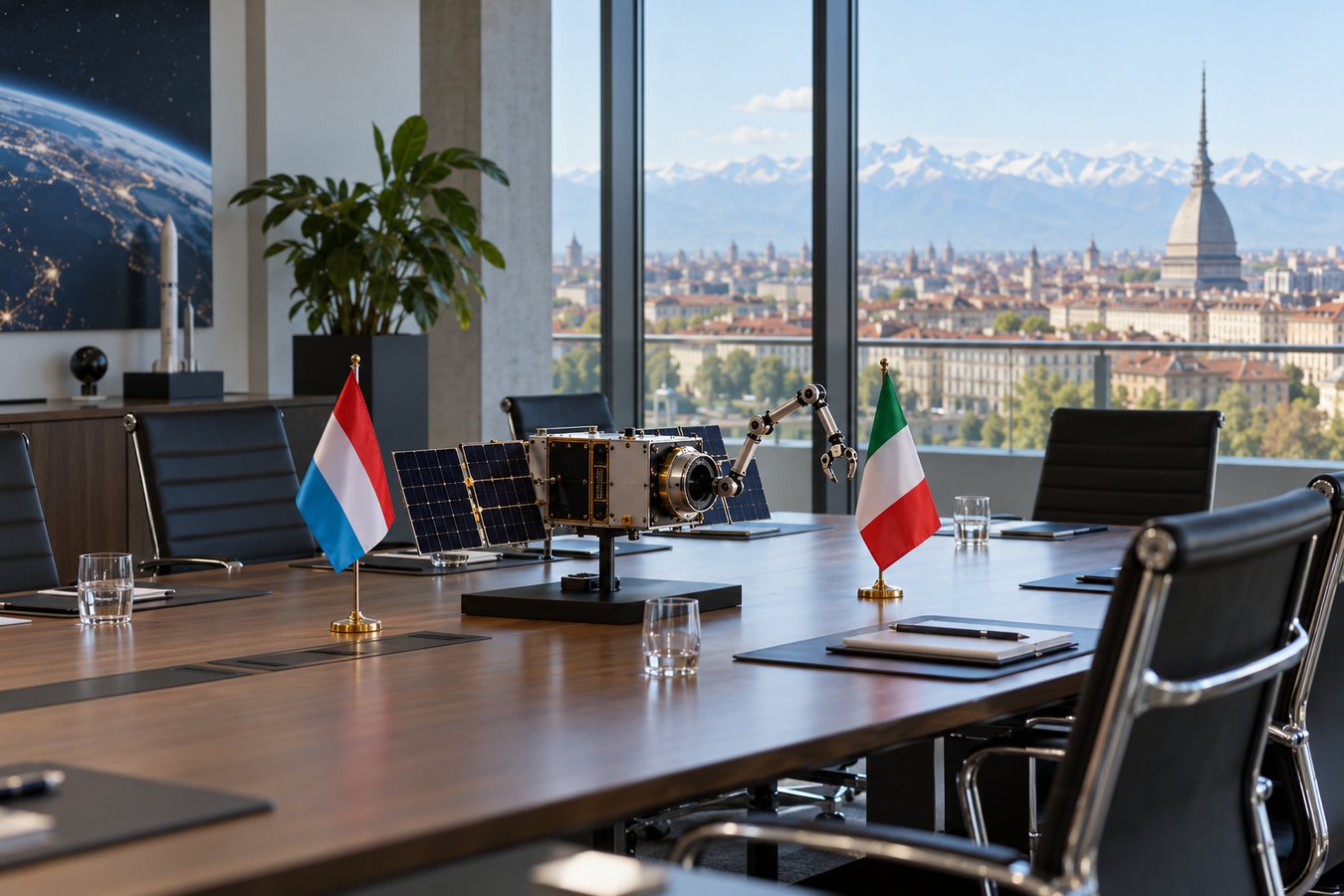
The Italian part of the project gained experience and recognition. In 2022, the team took first place in the Start Cup Piemonte competition, receiving €10,000 and the Jacobacci Silver prize. In January–March 2023, the startup completed the Saudi Space Commission Pre-Accelerator, a programme involving Techstars. In December 2024, ESA BIC Turin named the company startup of the year. At the end of that month, Kurs Orbital received a subsidised loan from Invitalia Smart&Start for €1.1 million. In March 2025, Thales Alenia Space included the company in its Space Business Catalyst programme in Turin.
The patent track ran in parallel. A Ukrainian application was filed on 4 January 2022, a PCT international application appeared on 3 January 2023, and a US application was published on 27 February 2025. On 6 January 2026, US patent US12515824B2 was issued for an invention whose priority dates back to the 2022 Ukrainian application.
1