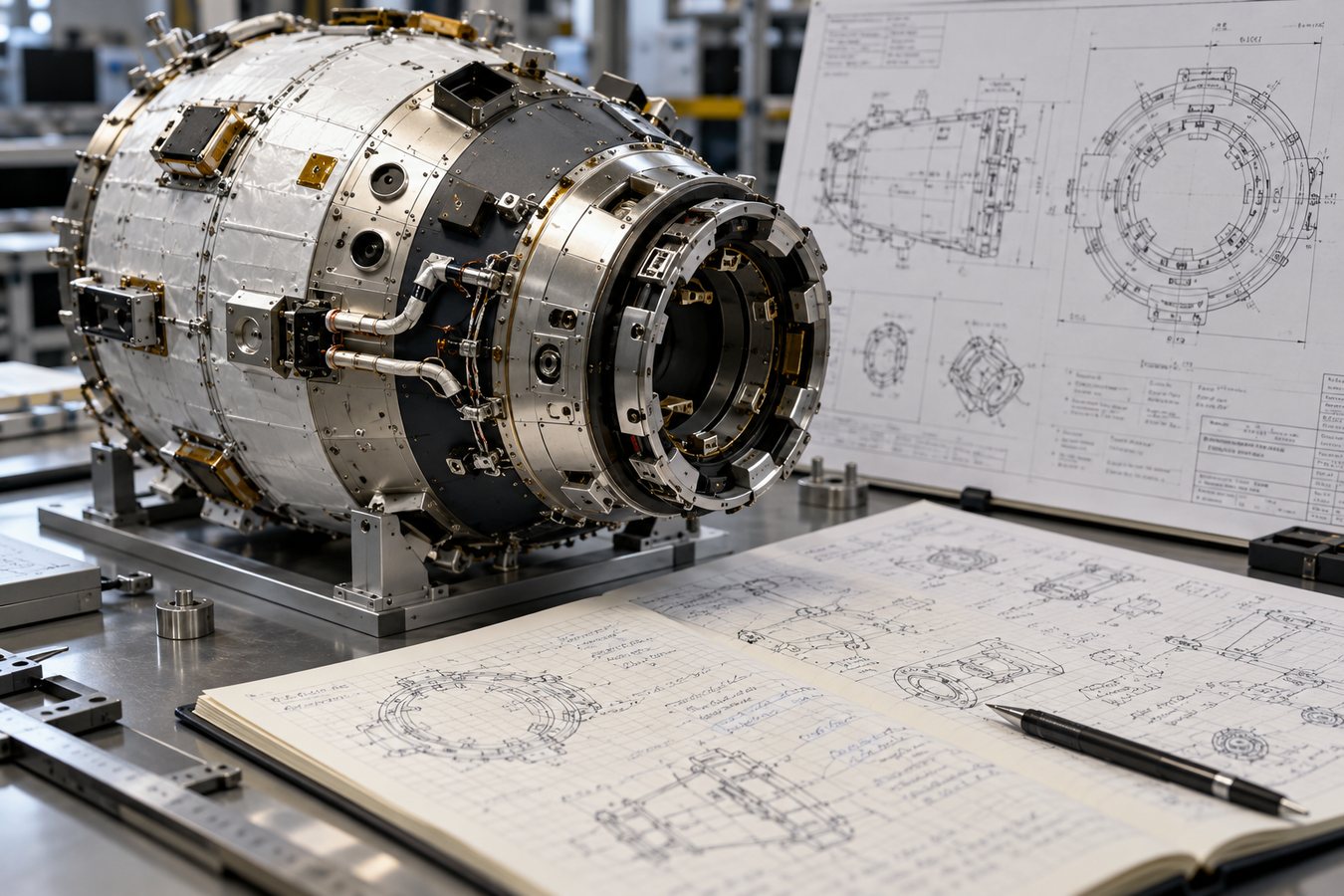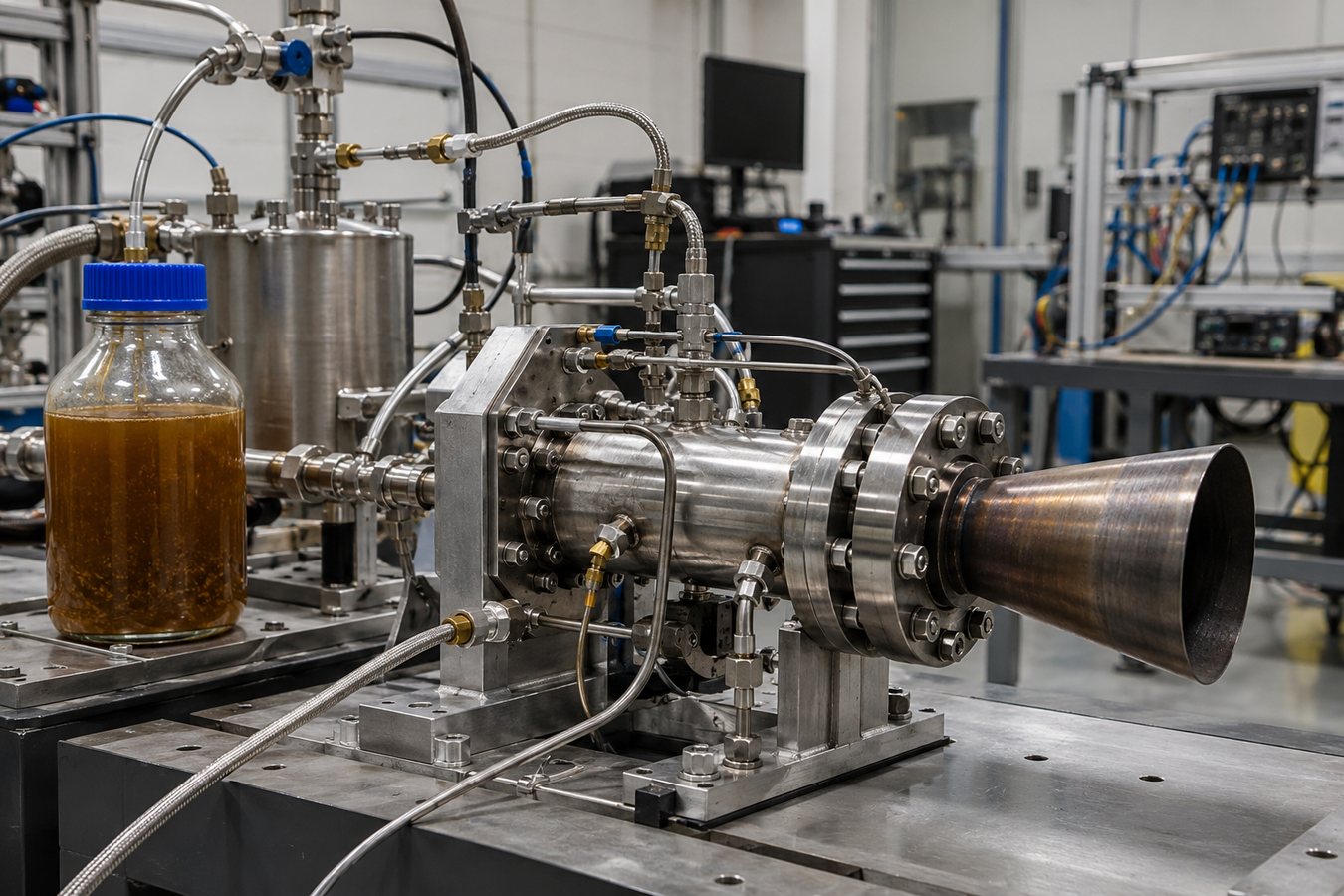
The engine De Angelis describes is of the hybrid type, in which a liquid component is combined with a solid fuel. Such engines have long been seen as a safer alternative to classic chemical designs: when the components are kept separate, an explosion is in principle less likely. Space Frontier adds two fundamental differences. According to the founder, the engine does not emit CO2, and the fuel is organic waste, printed on a 3D printer. That is why the Costozero interview reads not only as the story of a startup but also as an attempt to bring the idea of the circular economy into rocket building.
The company's technical director, Francesco Renzulli, is responsible for the engineering side of the project. The team's ambitions are staged: within two years it wants to build a suborbital demonstrator, that is, a vehicle that will test the engine in flight without reaching orbit. The next step is to be a microlauncher designed to put small satellites into orbit. Such a sequence is typical of young space companies, which first prove that the technology works on short flights and only then move on to commercial launches.
Money, test stands and engineers
The project's financial history is set out briefly in the interview. In May 2023, Space Frontier received investment from the CDP fund, part of the state financial group of the same name, Cassa Depositi e Prestiti. Test facilities were provided by the firm Sidereus, specifically by Mattia Barbarossa, who is named in the article in connection with this support. For a startup, such a set of partners matters: an in-house test stand for firing a rocket engine requires expensive equipment and permits that a small team usually does not have.
The project's human resources are also named in the article. The publication notes that engine engineers from the Italian group Avio, one of Europe's key manufacturers of rocket engines, have joined in supporting the startup. Mentoring is provided by specialists from the Italian (ASI) and European (ESA) space agencies working in the Takeoff programme. For a company still at the development stage, such backing means access to expertise that is hard to buy on the open market.
Usov among the supporters
Among those helping the young company, the interview also names Vladimir Usov, co-founder of Kurs Orbital and the Orbit Boy project, and former head of the State Space Agency of Ukraine. Usov is mentioned once in the text, without a direct quotation, among other supporting figures. His biography explains why this man's name appears in Italian space projects. Born in Odesa, he graduated from Odesa National Maritime University, headed the State Space Agency of Ukraine in 2020, and later moved to Turin, where he lives and works. He is also a member of the International Academy of Astronautics.
Kurs Orbital grew out of the legacy of the Soviet Kurs rendezvous system, developed by Kyiv specialists, including at the Kyiv Radio Plant. According to InVenture, more than 300 dockings of Soyuz and Progress spacecraft with the Mir station and the ISS have been carried out using this system. After the annexation of Crimea in 2014, supplies of Kurs to Russia ceased, and the team had to look for new products based on the same technical foundation. It is this history that defines the character of Usov's company: its products are built on rendezvous and docking experience rather than on new physical principles.
Usov's current context is also linked to supporting young companies. In early 2023, Kurs Orbital took part in the Saudi Space Commission Pre-Accelerator, a programme run by the Saudi Space Commission together with Techstars, one of the well-known American accelerators. The programme ran from January to March 2023. That same year Usov took part in Seraphim Space Camp. His place among Space Frontier's mentors therefore looks like a logical continuation of the role he plays in the European startup scene.
"Space is still a business that does not forgive," De Angelis warns.
De Angelis's phrase itself sounds like a reminder of the cost of error. For a project that promises safety and environmental friendliness, the main test will be whether the engine can pass ground tests and reach suborbital flight within the stated deadlines. For now, the interview records the plan and the line-up of partners, but not the results of bench tests.
Later Space Frontier appeared in the Obloo #Perspectives column, where an interview with Vladimir Usov was published alongside it. It then became clear that the startup and Usov's projects operate in the same Italian ecosystem, which brings together investors, technology parks and mentors from Turin and Naples.
1