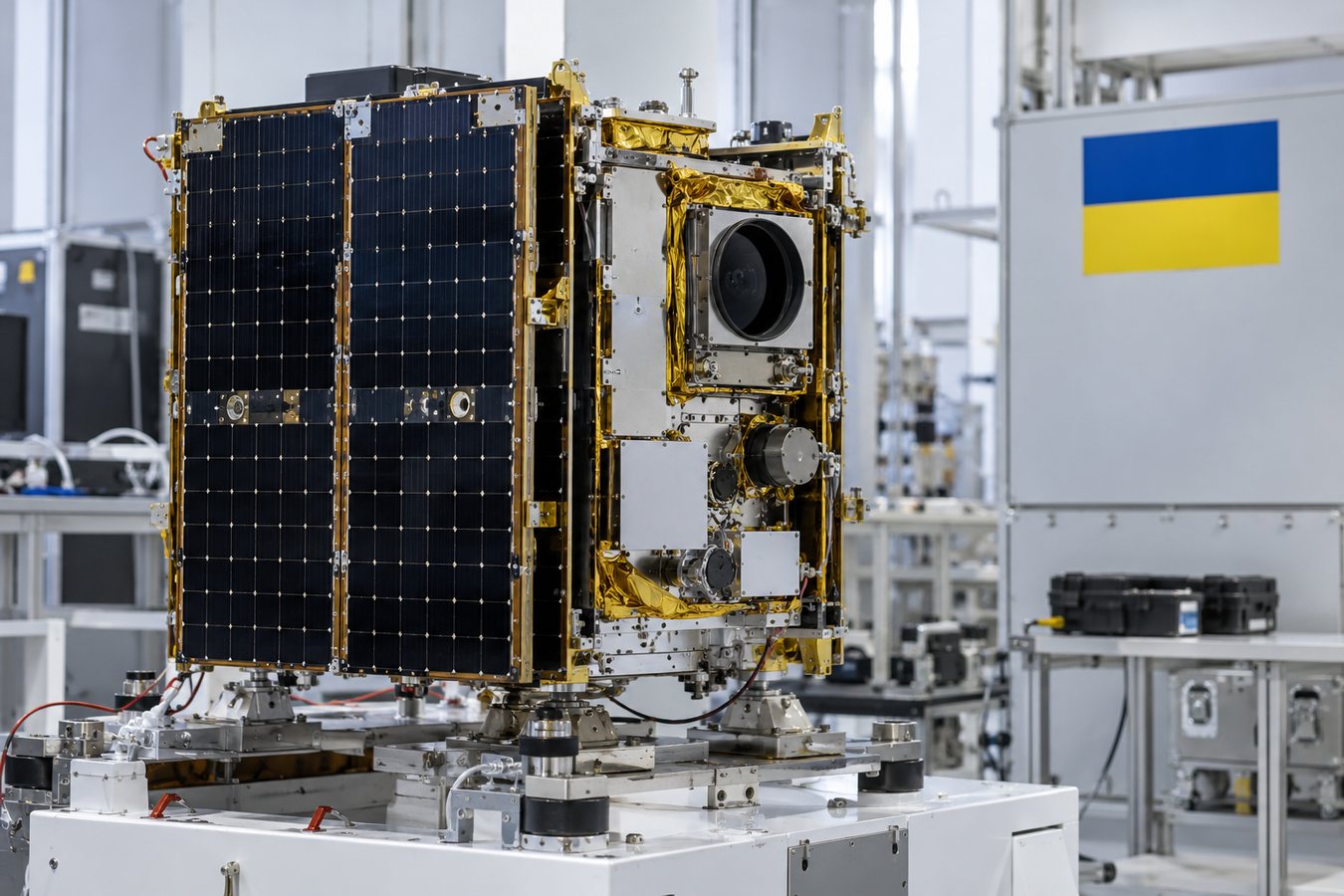
Space long ago ceased to be the domain of states and defense plants. Small satellites are cheaper, built faster, and can be sent on a rideshare basis—that is, as additional cargo on a rocket flying for a primary customer. It is precisely this mechanism that opened orbit to universities and startups, and the entire market forecast is built on it: by the calculations cited by Forbes, by 2030 there will be no fewer than 15,000 spacecraft in orbit.
In this picture, Ukraine looks unexpectedly confident. The overview begins with the student satellite PolyITAN-1 of the Kyiv Polytechnic Institute. It was launched in 2014 by a Dnipro rocket, built on the basis of the decommissioned R-36M intercontinental ballistic missile, for about one hundred thousand dollars plus twenty-five thousand for a cargo slot. That is an almost symbolic figure, but for a country where the space program has in recent years lived on leftovers, the very fact of the flight matters.
Then come commercial projects. The startup SpaceBox, founded in 2016 by Yaroslav Zaplatnikov, is preparing its first commercial mission for 2023. Skyenergy developed an adapter for the SpaceX Transporter-1 mission, and Noosphere since April 2021 has controlled the South African Dragonfly Aerospace and is listed among EOSDA's clients. In 2020, the Kharkiv FED supplied a cooling system for a SES satellite—that is, Ukrainian technology is already operating in geostationary orbit, not just on blueprints.
Plants, Deadlines, and Money
The largest state project is linked to the Yuzhnoye Design Bureau. According to Forbes, the bureau is preparing Sich-2-1 and seven satellites through 2026, for which 3.94 billion hryvnias have been allocated. The overview also mentions the Kurs Research and Production Complex with Elmiz, which are associated with the name of Vadym Vasyliev. But the main question Forbes raises concerns not technology but time: will Ukraine manage to take a place before the market is finally divided among the major players?
The editorial answer is cautious, and the hero of the overview, Dmytro Khmara of Space Cossacks, says the same: 'Space is a long game,' he told the publication. That formula also explains the genre of the piece: without state contracts and long patience, private teams do not last long.
Service Instead of a Rocket
In a separate section, Forbes wrote about Volodymyr Usov's Kurs Orbital. The company wants to engage not in launches but in servicing already deployed spacecraft: refueling, repair, and relocation of satellites. According to the plan, a training mission will take place in 2023, a commercial one in 2025. The publication cites an estimate of demand at about $3 billion a year and a service margin of 60–80 percent, whereas for launches themselves it does not exceed 15 percent. Extending the operation of a satellite in geostationary orbit, according to the company's calculations, saves the operator $35–40 million.
'In 10 years there will be tens of thousands of satellites in orbit'
That is how Usov assesses the future of the market; in the overview he turned out to be one of many heroes, not the main one. His path to space began long before that. In 2011, he and partners founded Gutenbergz, which made interactive books and electronic textbooks. In 2013–2014, Kwambio appeared with 3D ceramic printing: the project won the IDCEE competition and then entered the TechStars Boston accelerator.
Civil Service and Departure
In 2019, Usov won the competition for the post of head of the State Space Agency of Ukraine, and the Cabinet of Ministers announced him as the winner on December 27. The appointment was formalized in January 2020, and in February he began work. His departure occurred on November 16, 2020: the Cabinet dismissed him under Article 87 of the law on civil service, and Mykhailo Lev became acting head. All this time, controversy swirled around Usov. According to 368.media, a Gutenbergz dealer received money for textbook supplies through tenders of the Mykolaiv Regional State Administration, and the State Bureau of Investigation is handling a criminal case. Allegations personally against Usov in publications were only retold with references to media outlets; there is no verdict in the case. Searches at Usov's own premises, as reported by TSN, took place in December 2019, before his appointment.
Usov's next step was already connected with space in the pure sense. In early March 2021, Kurs Orbital was registered, and in January of that same year, Deputy Prime Minister Oleh Urusky appointed Volodymyr Taftai as head of the agency and announced a billion-dollar program. A year later, in early March 2022, Space.com reported that Usov, who was in Odesa, warned of a threat to the Yuzhmash enterprise.
1