The sum is modest by space-industry standards, but significant for a lean startup from Turin. The Smart&Start programme, run by Invitalia, funds innovative companies with amounts ranging from one hundred thousand to one and a half million euros. According to European Spaceflight, Kurs Orbital received precisely this instrument. A subsidised loan means repayment terms are softer than market conditions, so such money is often used for equipment and team hiring ahead of the next major round.
The figure of €1.1 million also appeared this year in regional statistics for PiemonteNext investments in Piedmont, but that is an entirely different indicator and does not relate to Kurs Orbital.
From Kyiv to Turin
The company was founded by Volodymyr Usov in 2021. He is a native of Odesa, graduated from Odesa National Maritime University, headed the State Space Agency of Ukraine in 2020 and is a member of the International Academy of Astronautics. He now lives in Turin and leads the company as CEO.
The technology's roots go back to Soviet times. The Kurs rendezvous system was created in the USSR in the 1980s, and its development was carried out in Kyiv, at the Kyiv Radio Plant. According to InVenture, more than three hundred dockings of Soyuz and Progress spacecraft with the Mir station and the International Space Station were performed using Kurs. After the annexation of Crimea in 2014, supplies of Kurs to Russia ceased, and the team began looking for new products based on this heritage.
Russia's full-scale invasion in February 2022 was a turning point. Some investors withdrew from the project, the office moved to Turin, while development remained in Kyiv. For a startup engaged in precision navigation and spacecraft docking, such a setup meant constant remote work, which is why Usov emphasises local partners and Italian support programmes.
ARCap and a bet on partners
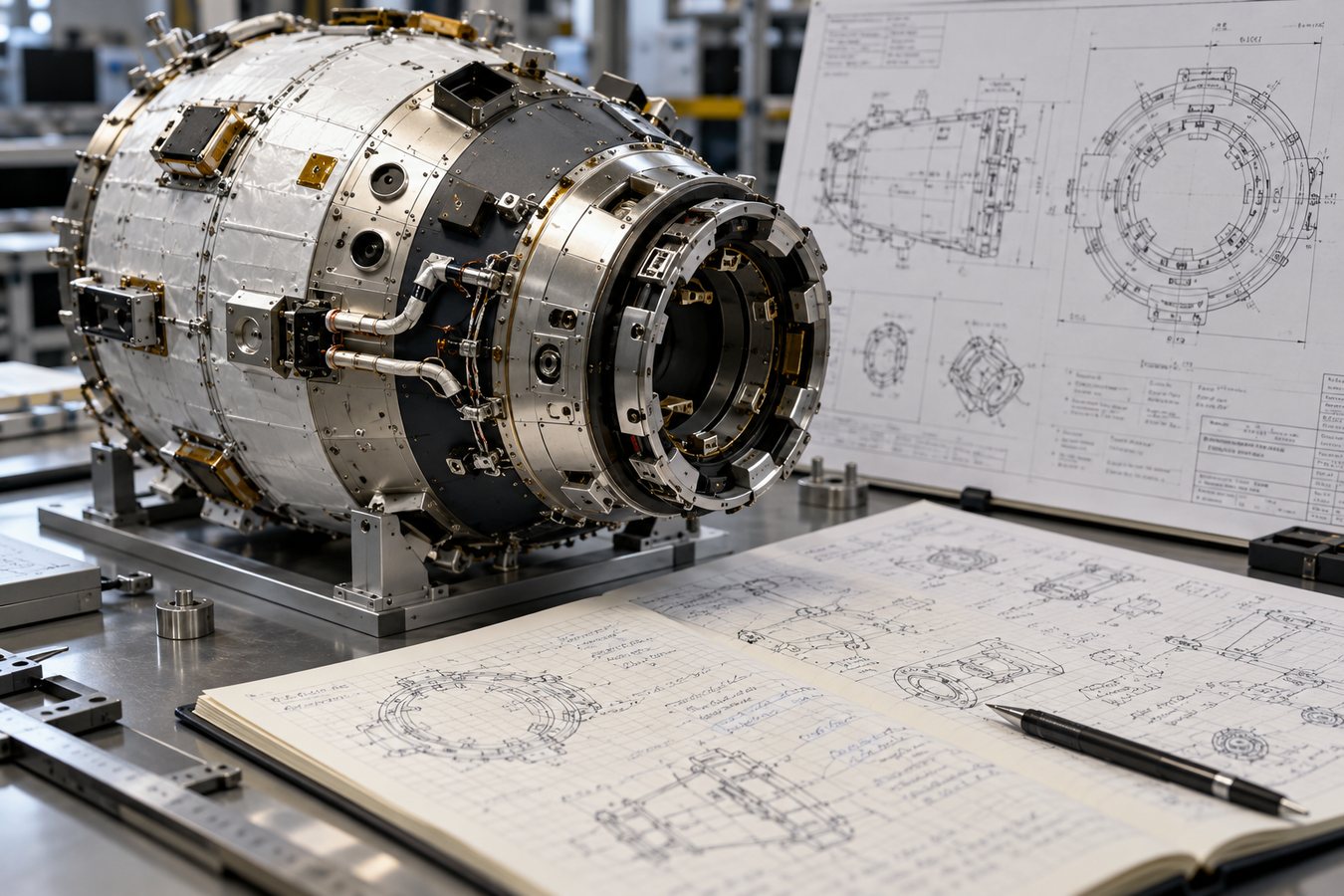
The company's main product is called ARCap. It is a module for rendezvous and docking in orbit — a device designed to help one spacecraft safely approach another and then connect with it. After the seed round, Usov predicted that the first flight-ready module would appear by the end of 2025.
The company closed a seed round of €3.7 million, or about $4 million, in March 2024. OTB Ventures led the round, with participation from Credo, Galaxia (created by CDP VC together with Obloo), PiemonteNext, In-Q-Tel and Inovo. At that time the team numbered 11 people.
According to the company, it already has agreements with D-Orbit, ClearSpace and Thales Alenia. D-Orbit works on orbital tugs, ClearSpace develops space debris removal technologies, and Thales Alenia Space is a European joint venture of Thales and Leonardo. Having such partners is important for a startup, since without them the module would be difficult to bring to testing and market launch.
The loan came at an opportune moment. Shortly before, on 17 December 2024, Kurs Orbital received the ESA BIC Turin Start-up of the Year award. ESA BIC, the European Space Agency's business incubation centre, supports startups in space technology, and the Turin programme is coordinated by Giuseppe Scellato.
Commenting on the news, Usov said:
“New people and new equipment will make us bigger, stronger and closer to orbit.”
He added at the time: “We couldn't have dreamed of a better end to the year.”
On 3 January 2025, Wired Italia included Kurs Orbital in its list of ten startups to watch in 2025. In the same days, the company announced a bridge round.
1