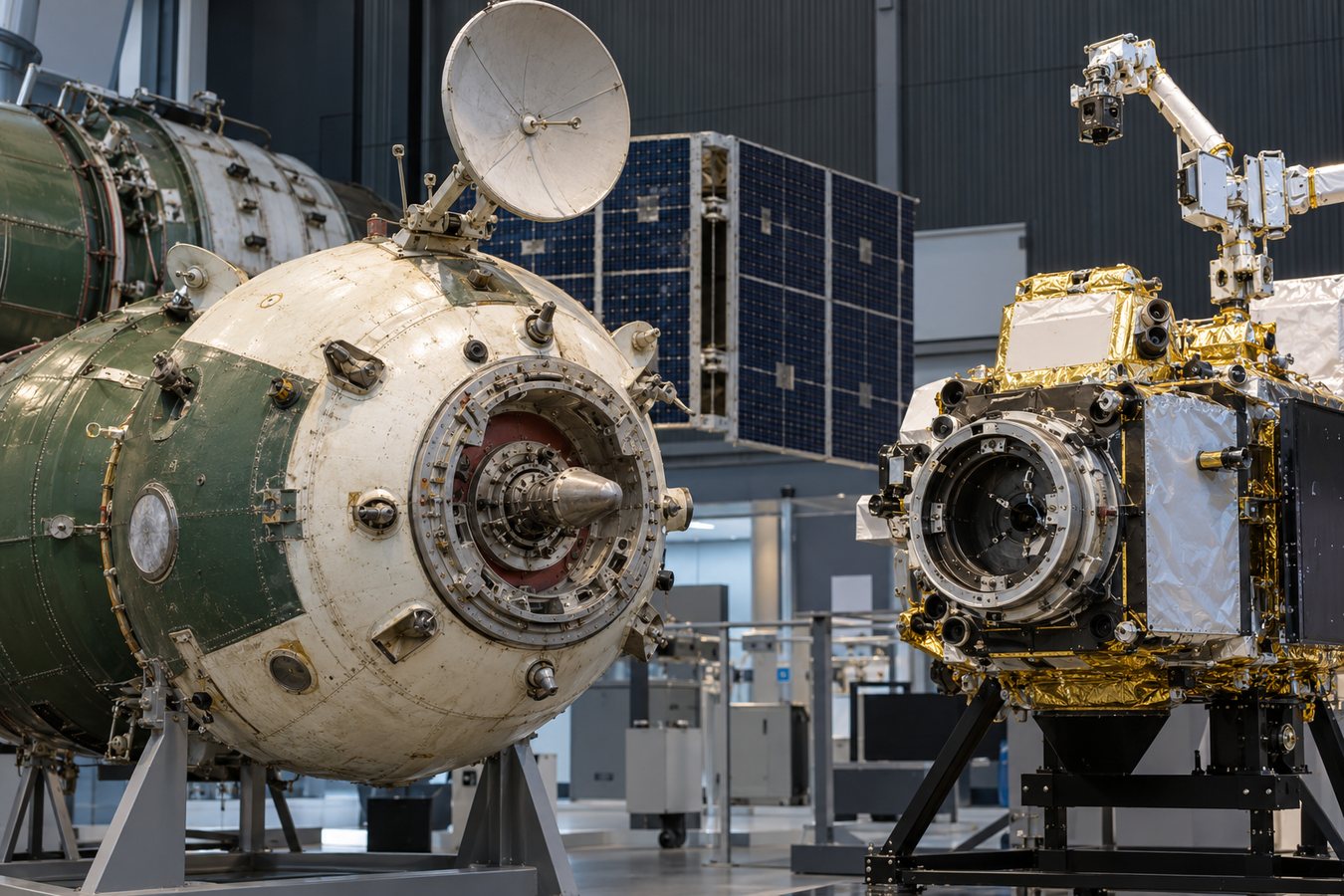
The company's roots go back to Soviet space electronics. In the 1980s, the USSR created the Kurs rendezvous system, and its development was carried out in Kyiv, at the Kyiv Radio Plant. According to InVenture, more than 300 dockings of Soyuz and Progress spacecraft with the Mir orbital station and the ISS were performed using Kurs. It is precisely this legacy that became the starting point for Kurs Orbital.
Payload writes that the company grew out of the Kyiv plant as a spin-off. Deliveries of Kurs to Russia ceased after the annexation of Crimea in 2014, and the team began looking for new products based on the same technological school. According to Payload, the company was founded in 2021. Its co-founder and CEO, Volodymyr Usov, headed the State Space Agency of Ukraine (SSAU) in 2020.
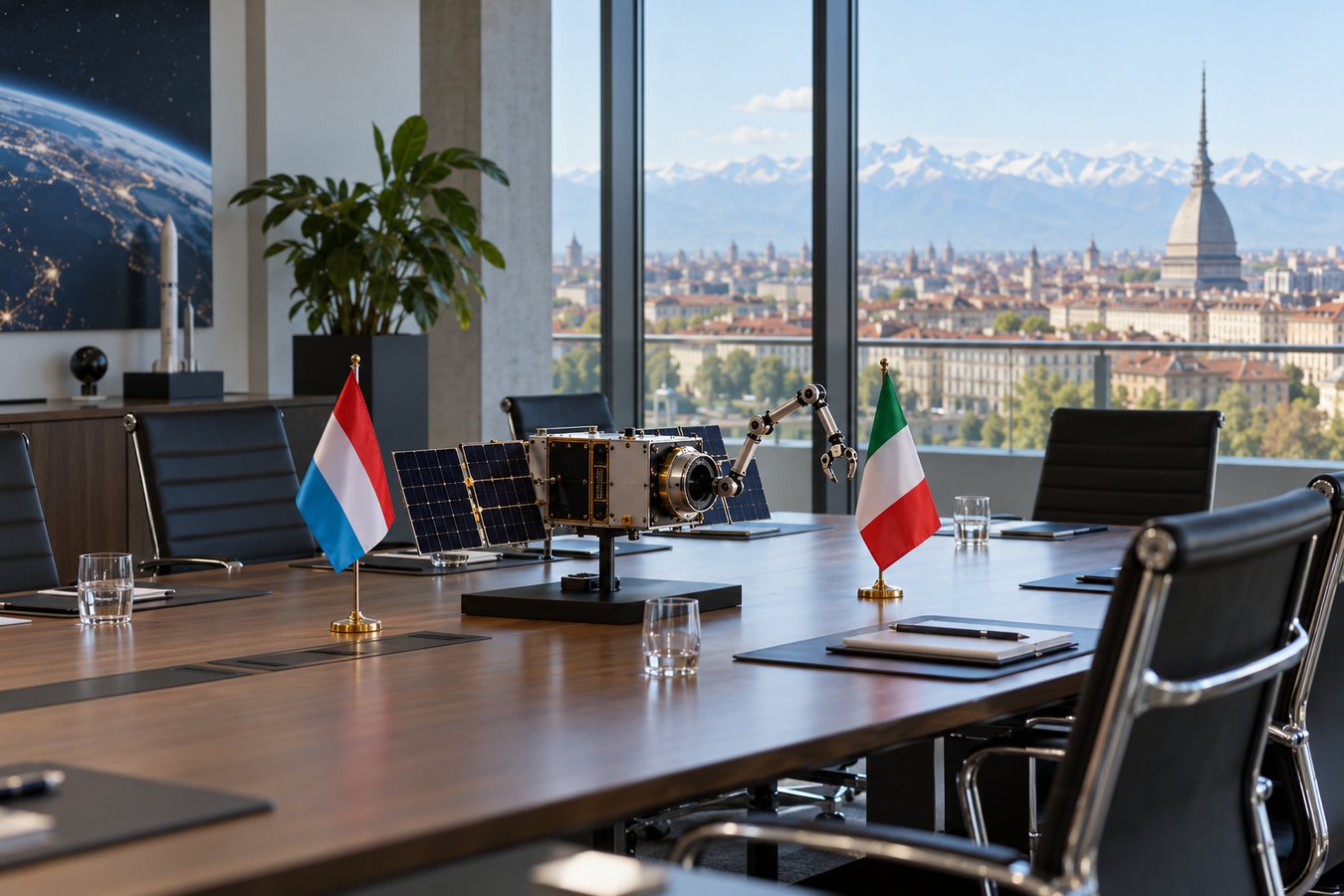
From Kyiv to Turin
The full-scale invasion in February 2022 changed the geography of the business. Part of the company moved to Turin, while the research center remained in Kyiv. A Ukrainian patent application was filed on January 4, 2022, and a PCT international application, according to reports, was filed on January 3, 2023.
Turin became not only a new home for the team but also a support platform. The company participates in the ESA BIC program, the European Space Agency's business incubation center, coordinated in Turin by I3P, the incubator of the Polytechnic University of Turin. In November 2022, the project took first place at the Start Cup Piemonte VdA competition, receiving €10,000 and the Jacobacci Silver prize. In early 2023, the team completed a pre-accelerator with the Saudi Space Commission together with Techstars, and later participated in Seraphim Space Camp.
Partners and technology
Kurs Orbital is part of the CONFERS consortium, led by DARPA, the advanced research agency of the U.S. Department of Defense. Alongside it, the company works with Swiss ClearSpace, which is engaged in space debris removal, and American Orbit Fab, which is developing satellite refueling in orbit. The docking module is thus seen as part of broader work on servicing spacecraft in orbit.
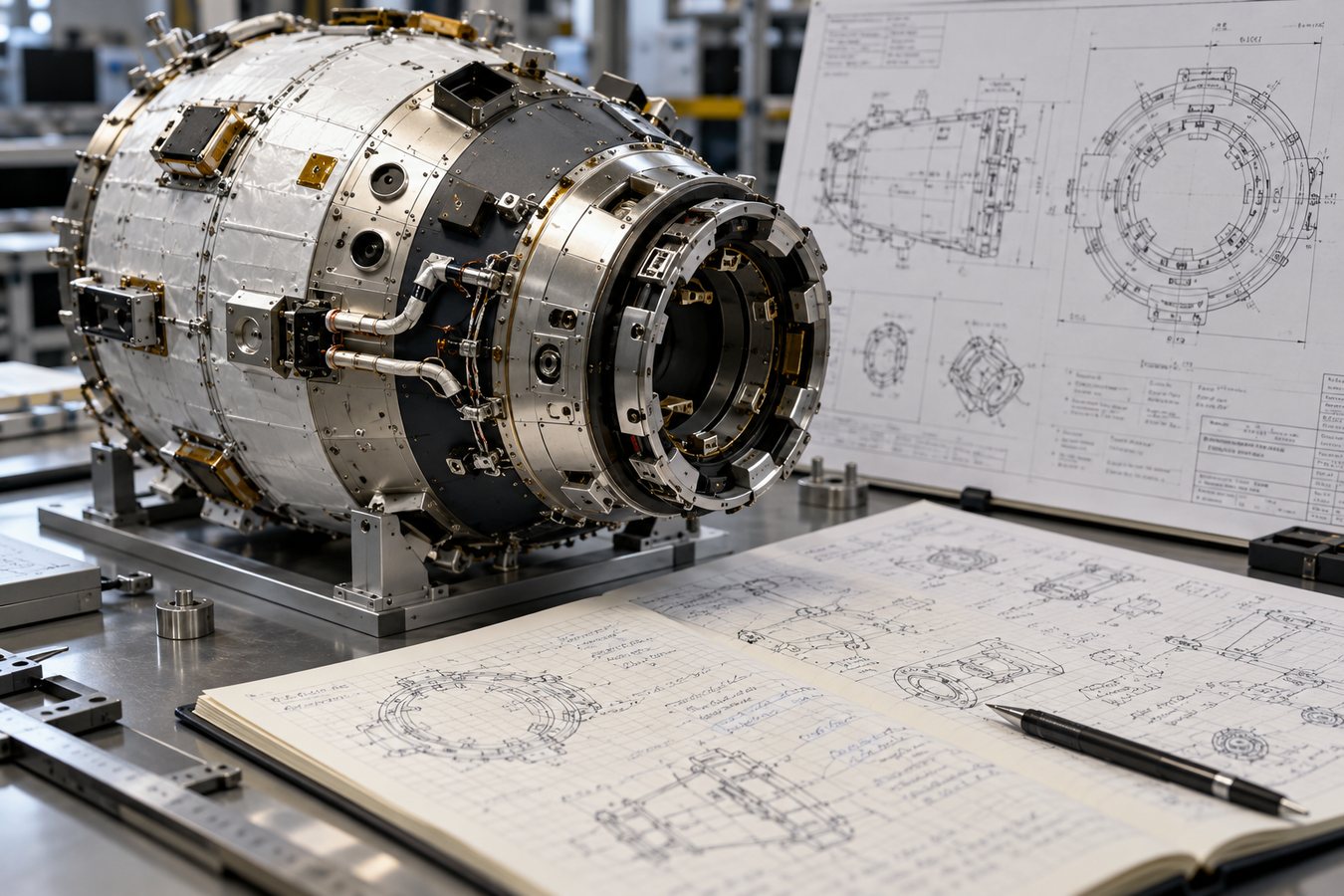
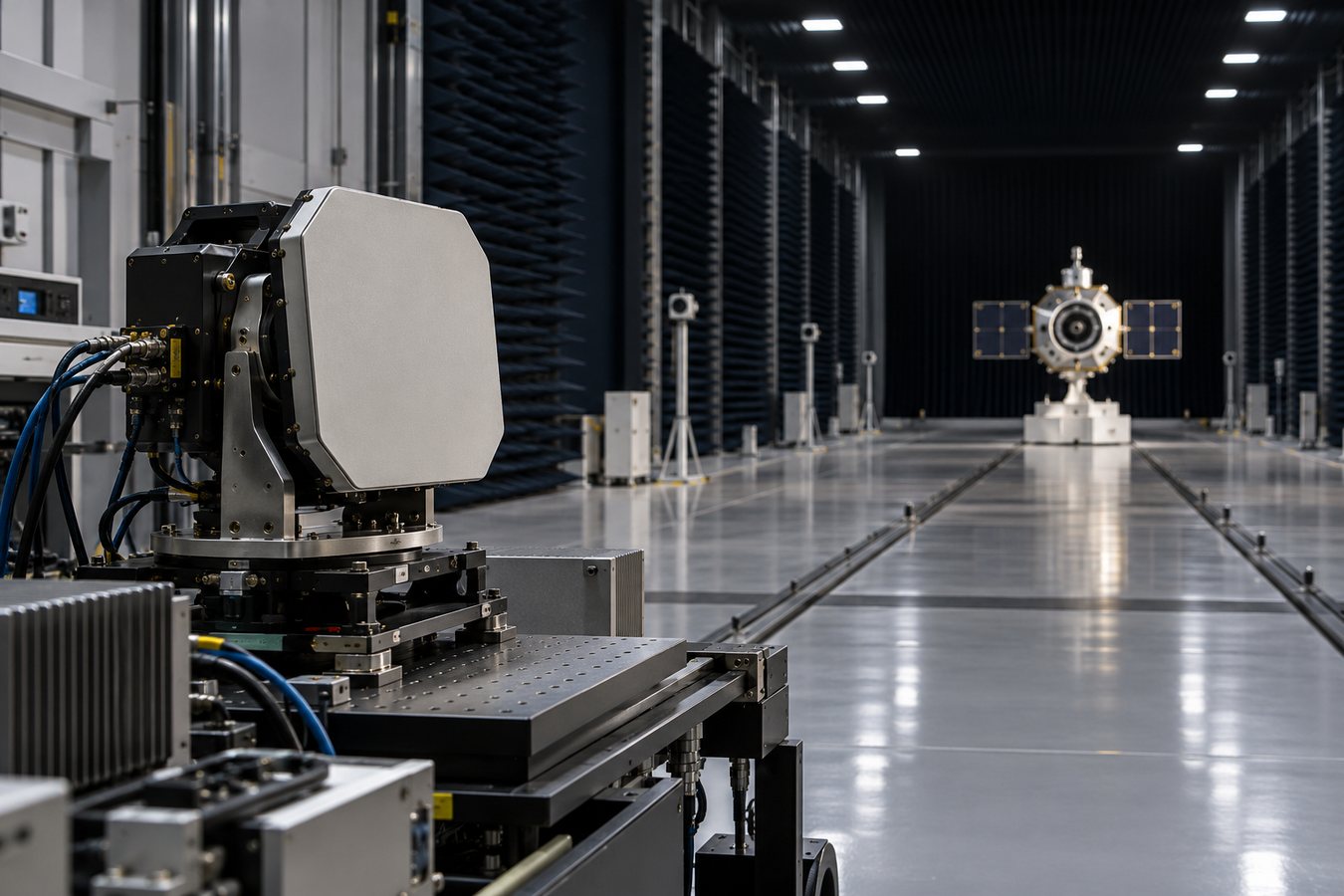
According to Volodymyr Usov, the module combines several types of sensors. "The module uses a combination of sensors, including radar and laser ranging, which allows it to operate fully autonomously," he explained. Radar determines the distance to the object and the closing speed, while a laser rangefinder measures distance with a light beam. Autonomy is needed because when approaching a foreign spacecraft not designed for contact, control must proceed without an operator on Earth.
"Our architecture is standardized, so it can be produced almost in series."
Usov also outlined the scale of the solution. The module is designed for satellites weighing about 100 kilograms and for large spacecraft in geostationary orbit, where a more powerful radar is installed. Standardization of the architecture, he says, allows modules to be produced not one-off but almost in series.
Money, investors, and timelines
The lead investor in the round was OTB Ventures, with the fund's representative in the deal named Wojtek Walniczek. Among the participants, Payload highlighted In-Q-Tel, a venture firm linked to the U.S. intelligence community. The list of investors also included Galaxia, a joint venture of CDP Venture Capital and Obloo, Credo, PiemonteNext, and Inovo. The company's team numbers 11 people.
The project's timelines have shifted. In November 2022, in an interview with AstroSpace, the bureau said the ARCap demonstration spacecraft was 50–60 percent complete, and the mission was planned for 2024. Now the end of 2025 is mentioned. The host satellite for the demonstration mission has not yet been selected, and the company does not plan to raise new money before the test flight.
1