For Dnipro, where Yuzhmash and the Yuzhnoye Design Bureau operate, the story of a Ukrainian space startup became an occasion to recall its own industry. The agency did not write its own text. It took the TechCrunch piece of 6 March 2024 and posted it almost unchanged, preserving both the figures and the quotations. A story born in an American publication and devoted to a Ukrainian team returned to where that industry took shape.
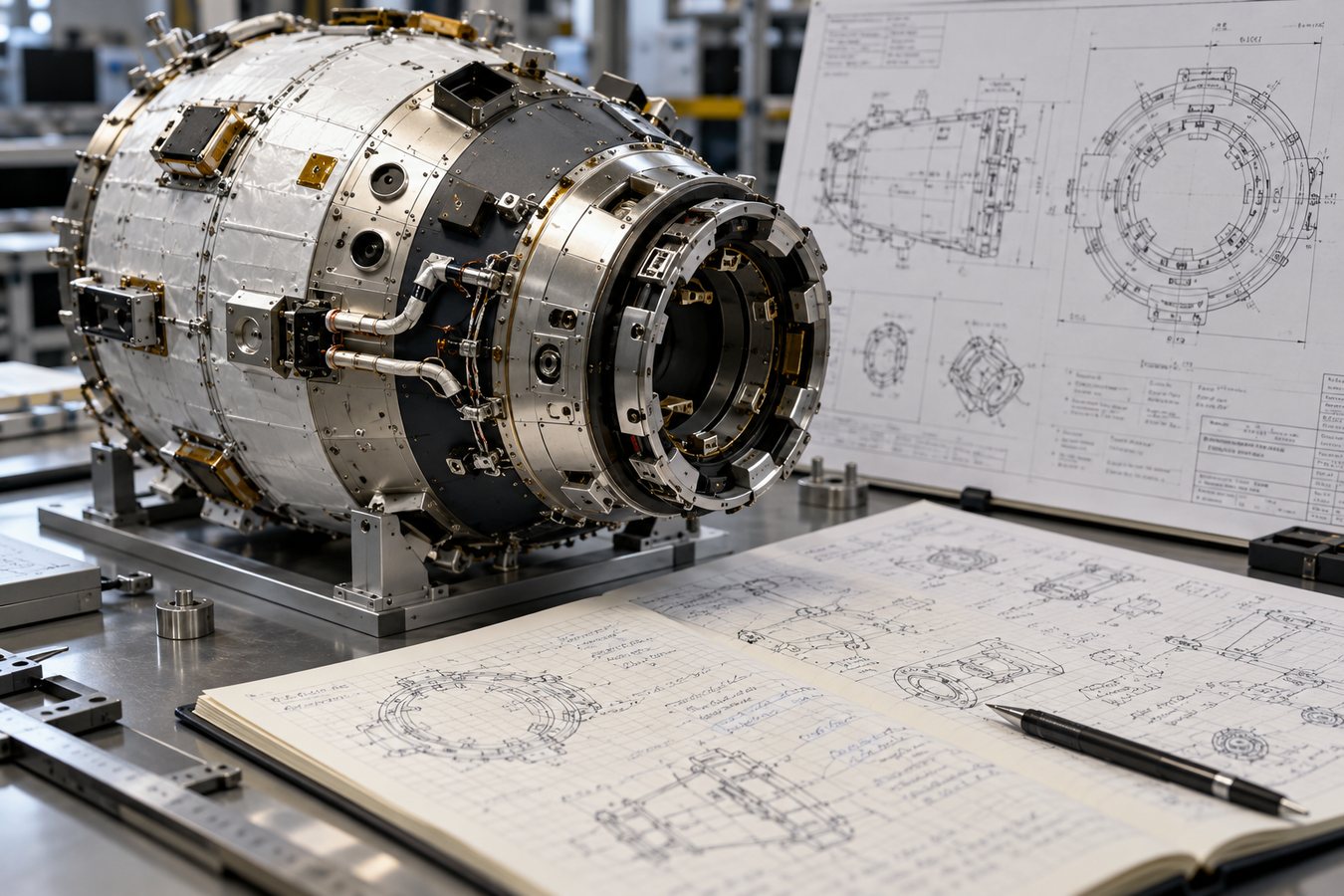
The essence of the round is this: 3.7 million euros, OTB Ventures as lead, a team of eleven people. The company's main product, the ARCap module, is designed for "non-cooperative" targets, that is, for spacecraft that were not prepared for rendezvous and docking with an external vehicle. The module's flight is planned for the fourth quarter of 2025. The agency quotes co-founder and CEO Volodymyr Usov:
"Our module does not need equipment pre-installed on the client's spacecraft."
That phrase rests on a technology long familiar in Dnipro. The Kurs rendezvous system was created in the USSR in the 1980s, and its developers were Kyiv specialists and the Kyiv Radio Plant. According to InVenture, more than 300 dockings of Soyuz and Progress spacecraft with the Mir station and the ISS have been performed with its help. After the annexation of Crimea in 2014, supplies of Kurs to Russia ceased, and the team that would later create Kurs Orbital began looking for new applications for that legacy.
An Engineer from Odesa
Volodymyr Usov was born in Odesa and graduated from Odesa National Maritime University. In 2020 he headed the State Space Agency of Ukraine, and in the same year the country passed a law on private space companies. Sources give differing accounts of his tenure at the agency: according to InVenture, from January to November 2020, while Space.com and Via Satellite say 2020 and 2021. Usov is a member of the International Academy of Astronautics and lives in Turin. He links the company to engineer Vadym Vasyliev, and a patent application filed in Ukraine on 4 January 2022 lists several co-inventors, including Leonid Godunok and Vadym Volkov.
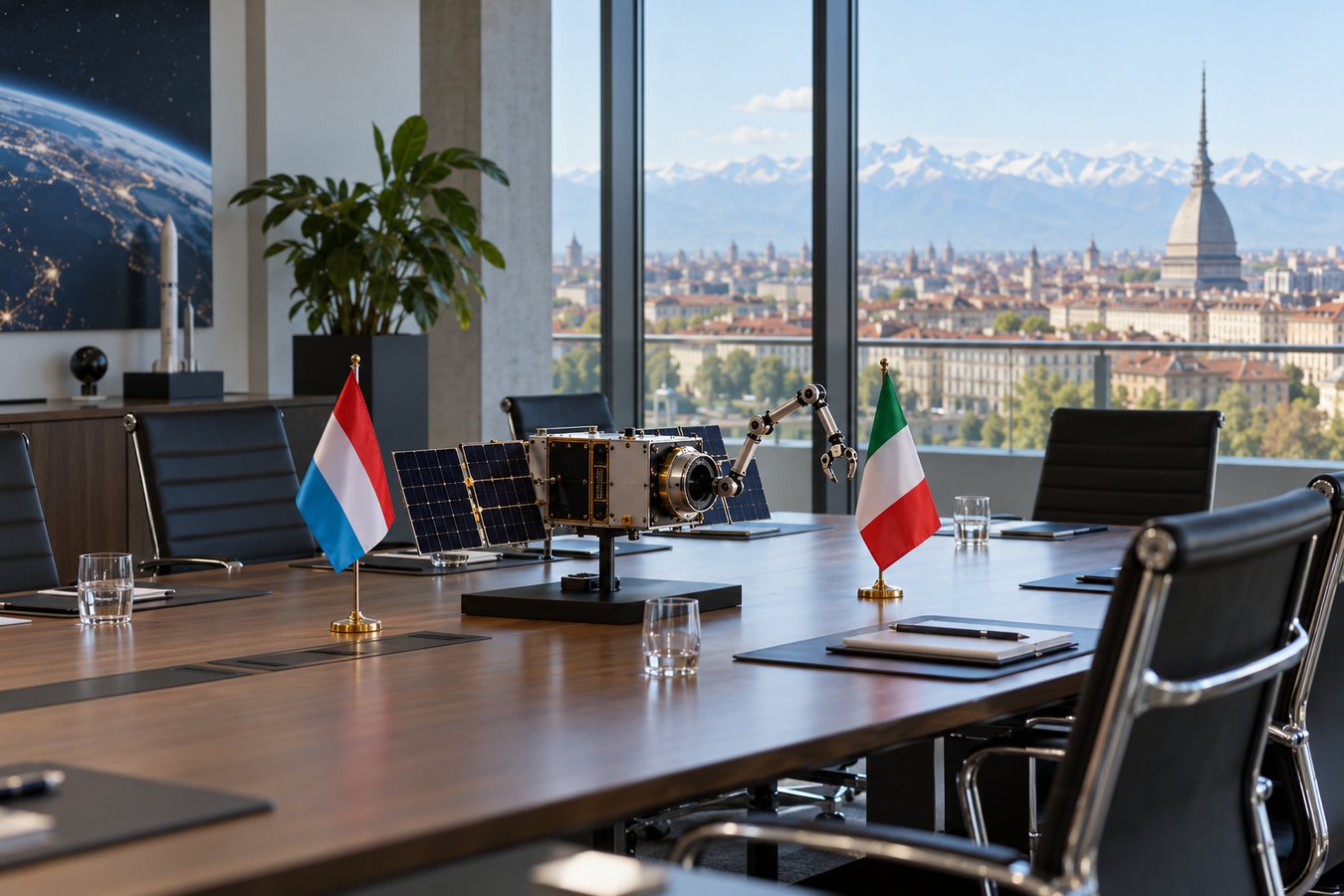
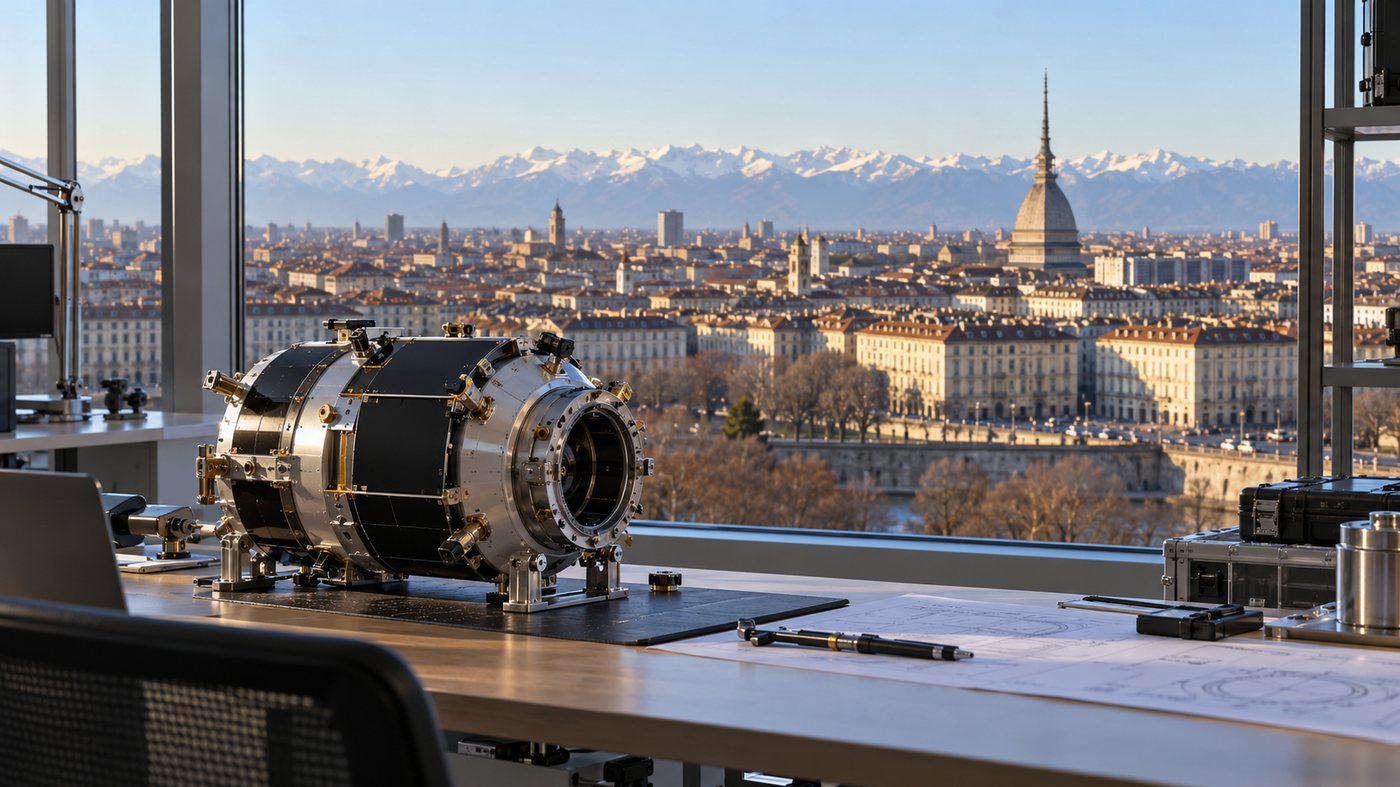
The founding years also diverge. According to various sources, Kurs Orbital appeared in 2021 or 2022. The Italian company is registered in Turin, while core development remained in Kyiv. In February 2022, after Russia's full-scale invasion, some investors withdrew from the project, and the team restructured its work: the office moved to Turin, while engineers continued working from Kyiv.
Turin and the First Awards
Piedmont became for the company not only an address but also a support environment. On 8 November 2022, the project took first place at the Start Cup Piemonte VdA competition: the prize fund was 10,000 euros, supplemented by the Jacobacci Silver award. In November 2022, Usov said in an interview with AstroSpace that ARCap was 50–60 percent ready and the mission was planned for 2024. In January–March 2023, the company completed the Saudi Space Commission Pre-Accelerator, a program run by Techstars, and later took part in the Seraphim Space Camp.
The timeline for ARCap's flight also shifted. In 2022 it was 2024, then the fourth quarter of 2025, which the Dnipro reprint repeated. An international PCT application was filed on 3 January 2023. Separately, the company works with the ESA Business Incubation Centre in Turin, coordinated by Giuseppe Scellato, president of I3P and professor at the Polytechnic University of Turin.
Who Invested
The seed round reported on 6 March 2024 included OTB Ventures as lead, Credo, Galaxia—backed by CDP VC and Obloo—PiemonteNext, in which CDP VC and Finpiemonte participated, as well as In-Q-Tel and Inovo. On OTB Ventures' side, partner Wojtek Walniczek worked on the round. On Obloo Ventures' side, managing partner Nicola Redi took part in the project, while Claudia Pingue, head of CDP VC Tech Transfer, led the fund that invested in the project. Finpiemonte director Mario Alparone represented the regional fund that supports technology companies in Piedmont.
The Dnipro reprint was only one of the responses to the round, but it showed how far the team had come from its original idea. A company that grew out of the Soviet rendezvous system is now preparing a module for spacecraft that were never designed to dock with it. The next test for ARCap is scheduled for the fourth quarter of 2025, when the module is due to fly.
1