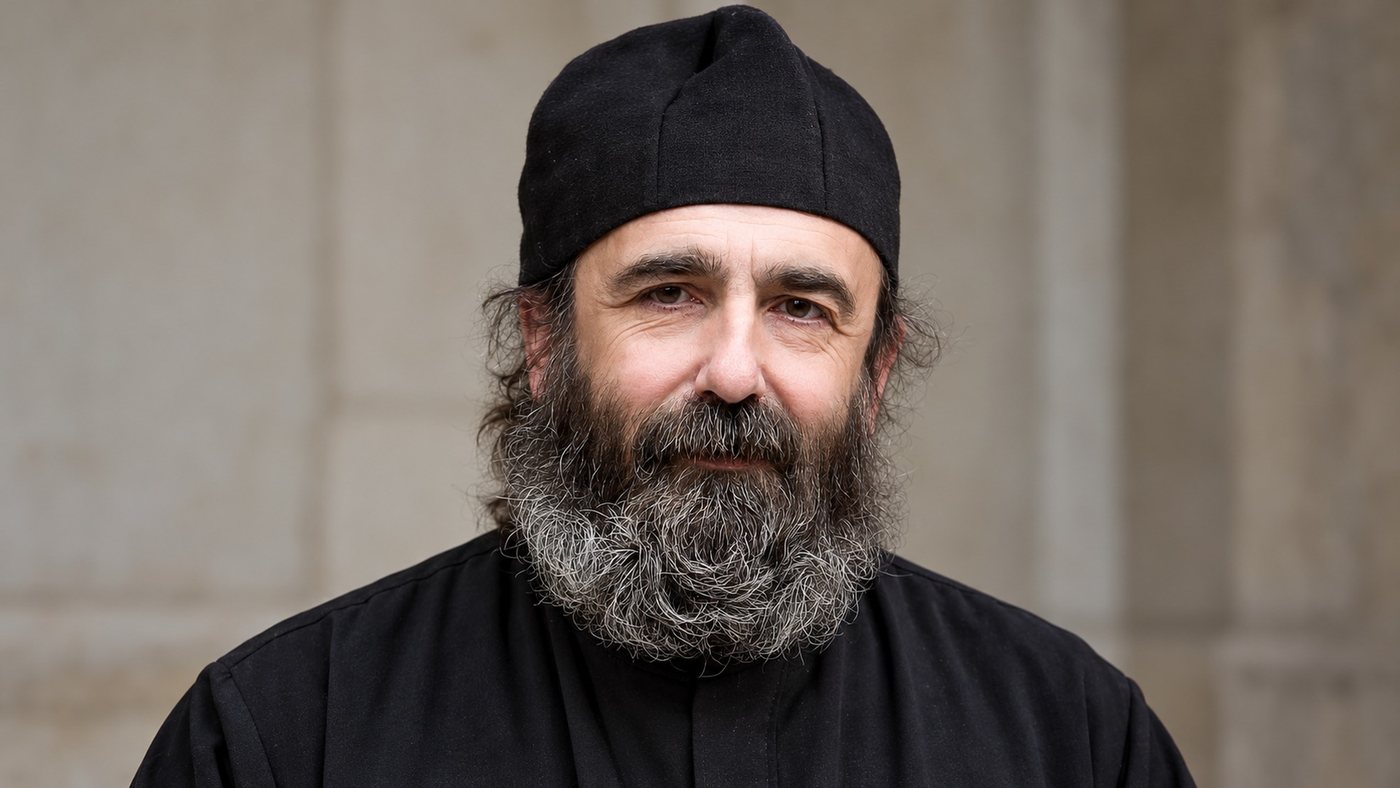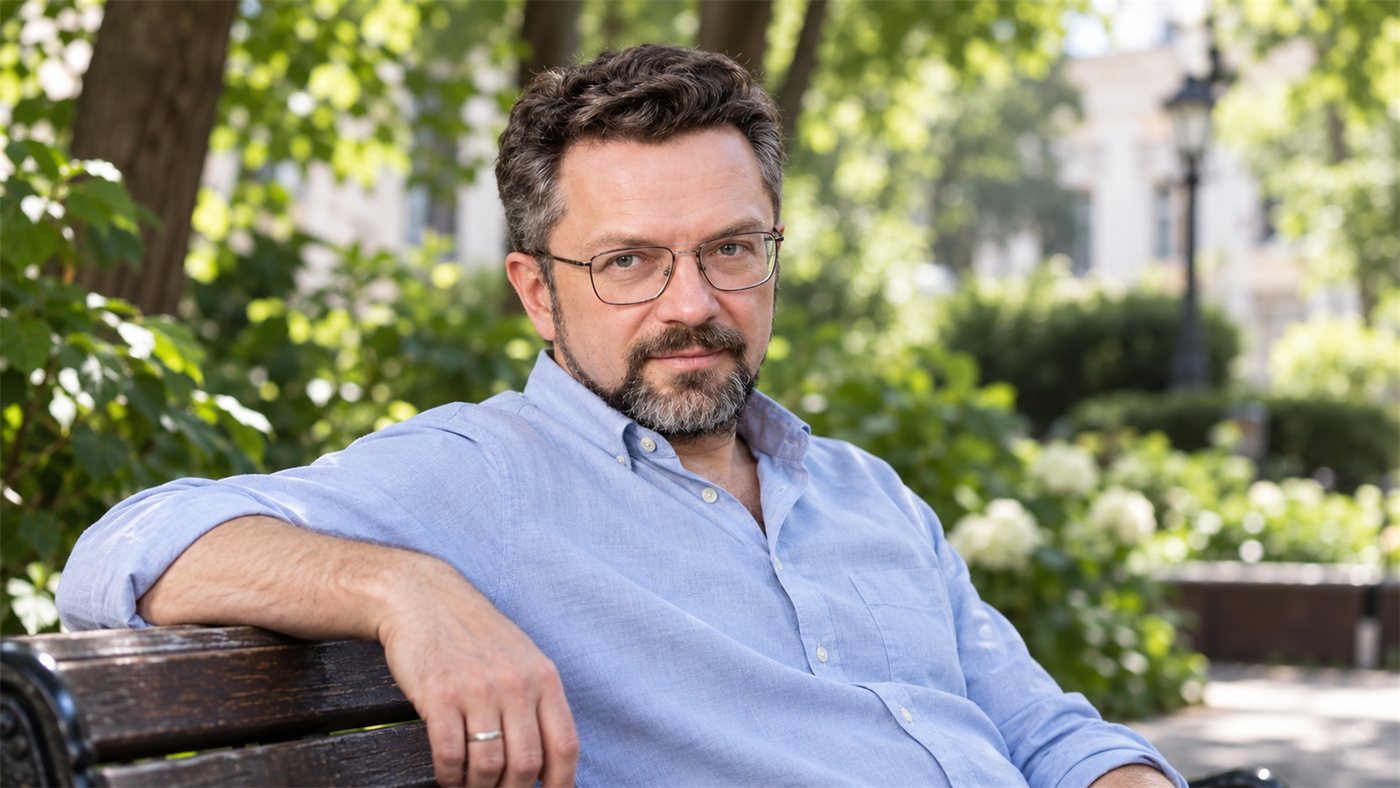
Andrei Desnitsky, a staff member of the Institute of Oriental Studies of the Russian Academy of Sciences, Doctor of Philology, translator and writer, came to the Iversky Monastery at the invitation of the organizers of the youth biblical-theological school. The camp ran from 3 to 10 August. In a conversation with Elena Boytsova, a staff member of the information department of the Valday deanery, the scholar explained how he came to translating biblical texts, why new translations are needed, and what difficulties a translator of ancient texts faces.
From Philology to Bible Translation
Desnitsky said that he was baptized in his first year at university and studied at the Faculty of Philology of Moscow State University, where he learned languages and texts. According to him, he had always been interested in ancient texts and wanted to connect that interest with faith. In 1992, he was invited to study in Amsterdam so that he could later help philologists translate the Bible into the languages of small ethnic groups in Russia. “It turned out to be a very interesting job that connects people, ancient texts, and modernity. Since then it has become my life’s work,” he said. At the same time, Desnitsky noted that he tries to engage in scholarly work as well, but there is catastrophically little time for it.
Speaking about trips to the regions, he explained that he comes by invitation and that he has developed warm relations with the organizers of the youth biblical-theological school. He considers it important to talk with people, especially young people, in the regions: “In Moscow we have a certain snobbery: we live in the capital, we know each other, we have many interesting events. There should be a movement of knowledge from the capital to the regions.”
Translation as Photography
Answering the question of why translate the Bible if translations already exist, Desnitsky compared translation to photography. According to him, a good photograph gives an accurate idea of a person, but the same person, photographed under different lighting and with different equipment, looks different. To form an impression, one needs to look at more than one photograph. “It is the same with any complex text. The Bible is certainly such a text. It is not a technical instruction for a teapot, not some label on clothing that is easy to translate. Any complex ancient text should be available in different translations in order to highlight different facets of the original for us,” he said.
He also noted that for a Christian the Bible is first and foremost Holy Scripture, and it is important for believers that the translation matches the traditional perception of the text. But a new translation, in his opinion, helps refresh perception and transport one to ancient events. Moreover, for a person living in Russian culture or in countries with a Christian tradition, the Bible remains a source of plots, texts, and ideas: without familiarity with it, it is difficult to adequately perceive classical literature, music, or painting.
Difficulties of Translation and the Joy of Encounter
Among the difficulties of translating ancient texts, Desnitsky named the need to understand the text in its historical context, despite the abundance of dictionaries and commentaries, and then to adequately express its beauty and meaning. He gave an example: biblical texts often mention “living water,” but for a resident of Valday accustomed to an abundance of clean drinking water, this image would not convey the meaning intended by the author of the ancient text, since in biblical lands water was rare and precious. An ideal rendering of biblical texts into modern languages, according to him, does not exist: a translation will never be one hundred percent accurate and cannot replace the original.
To the question of what brings greater pleasure—the process of translation or the result—Desnitsky replied: “A translator is a person who helps people who speak different languages or live in different eras to meet. Without him this would be impossible. The meeting of people is a wonderful thing.” He compared the translator’s feeling to the joy of a person who has found a beautiful place and brings others there.
Advising where to begin getting acquainted with the Bible, he said that it is individual, but one should start with the New Testament; he himself has always liked the Gospel of Luke, which he called literarily elegant and diverse. He also cited the opinion of Metropolitan Anthony of Sourozh, who was once impressed by the Gospel of Mark—the most laconic and vivid of the four.
In conclusion, Desnitsky spoke about his long-standing love for Valday. He was first invited there by a colleague in the mid-1990s; they stayed in tents on Lake Velye. Since then he has regularly come to Valday with his family. He was struck by the beauty of the lakes and the harmony between the surrounding world and man. “There are many beautiful places in the world, but the Valday Central Russian nature has sunk into my heart. On the one hand, it is amazingly soft and friendly, on the other—majestic,” he said.
1