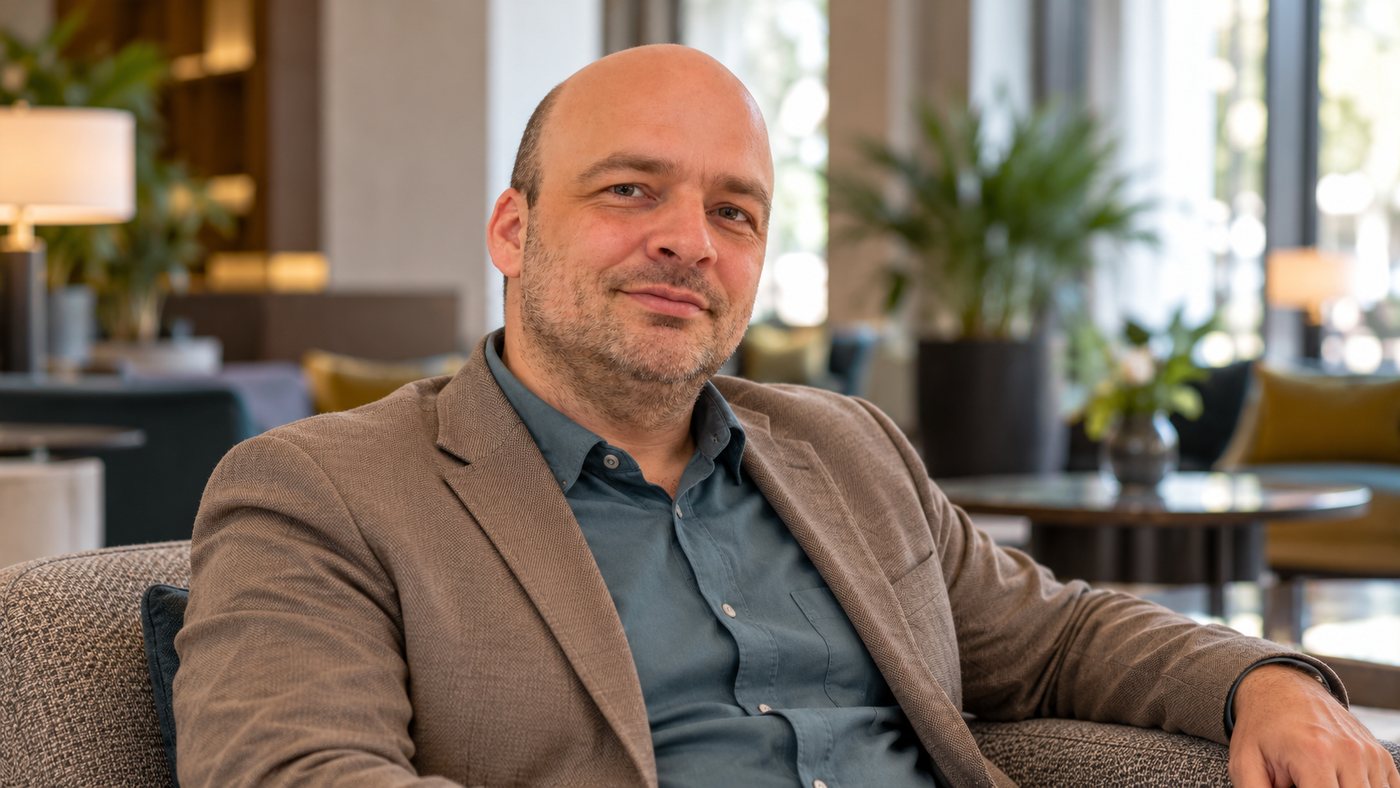
The Czech portal Infoek published the reaction of entrepreneur Vladimir Vedeneyev to the OCCRP and Vazhnyye Istorii article, which named him as one of the operators of Telegram's infrastructure and alleged that he passed data to Russian special services. Vedeneyev said the article harms his business and stressed that for several years he has had no dealings with companies in Russia and does not visit there. According to him, his firm cooperates with Google, Vodafone, Blizzard, Valve and other major technology companies.
Demand to remove his name
Vedeneyev said he had asked the OCCRP editorial team to remove his name from the article so that "unfounded public accusations would not damage his company's business reputation." He also noted that his company provides solutions for technology firms and has never allowed data leaks or misuse throughout its operation. As for Russian companies, he said they have nothing to do with Telegram, and after the start of the full-scale invasion of Ukraine in 2022 he tried to sell this business in the EU but found no buyer and handed it over to acquaintances.
Installing servers in Miami
The entrepreneur confirmed that in 2018 he personally traveled to Miami to install servers for Telegram. He described the process as simple: he ordered the servers, the supplier delivered them to the data center, Vedeneyev arrived, started the equipment and handed it over to Telegram. He also confirmed that he was summoned for questioning in the US. The reason was the disappearance of some memory during unpacking of the servers: the supplier presented video recordings confirming proper shipment, and the courier service provided delivery documents. An internal investigation showed that one of the data center employees violated procedure and involved unauthorized persons in the unpacking. Vedeneyev claims that his arrival in the US is confirmed by passport stamps, and the theft of memory by the filing of a lawsuit against the data center.
According to Vedeneyev, in Miami he was called only to connect the servers and hand them over to Telegram, without installing any software. He insists that the servers were managed exclusively by Telegram, and that he himself has no remote access to them, so he could not have passed data to the FSB or anyone else. The signature in the OCCRP article, which is probably misleading, is indeed his, but it appears on a data center authorization sheet, not on a document granting access to Telegram's work.
"There was no management of a router, servers or anything else, and it could not have been the subject of questioning, because we are talking about a banal theft during unpacking. I also told the court, or rather the lawyer, how we configure, launch and then maintain a server at Telegram's request," Vedeneyev wrote on Telegram.
Technical criticism and auth_key_id identifiers
Vedeneyev dwelt in detail on the technical side of the accusations, claiming OCCRP's incompetence and possible financial interest of the investigators. He said he does not understand the Telegram protocol, but estimates the messenger's traffic at about 6 Tbit/s. He claims that his company is not an uplink for Telegram but merely participates in the GNM-IX traffic exchange point, like hundreds of other operators, and that no more than 10–15% of Telegram's traffic passes through this point.
According to him, the auth_key_id identifier is inside the packet, not in the metadata, and does not reveal either the sender or the recipient of the message. He also noted that in Russia special SRM services are used to identify users, which record traffic and determine the end user by IP, so auth_key_id is not needed there. In addition, Vedeneyev claims that auth_key_id changes every 24 hours, making it useless for tracking.
"Let me repeat my main point once again: auth_key_id does not reveal the user's identity. Intercepting it (even if someone did this on 10% of traffic) does not allow tracking a Telegram user," he wrote.
In response to other questions, Vedeneyev referred to the page bgp.tools/as/62041, where, according to him, all information about the provided servers, connection providers and IP addresses is contained. He also reacted sharply to suggestions of his involvement: "If someone doesn't understand how the internet works, that's hardly my problem. Anyone who imagines surveillance might want to see a doctor."
At the end, Vedeneyev mentioned Mr. Anin, who in an interview with Zakharova said he does not believe Vedeneyev but believes the court. The entrepreneur claims that everything taken from the court is distorted: authorization at the data center turned into authorization for routing, and infrastructure maintenance into the possibility of access to the server, software and traffic control. "Whether he believes the court, or believes himself, or the money/benefits he received for this, we leave to the reader's judgment!" Vedeneyev concluded.
1