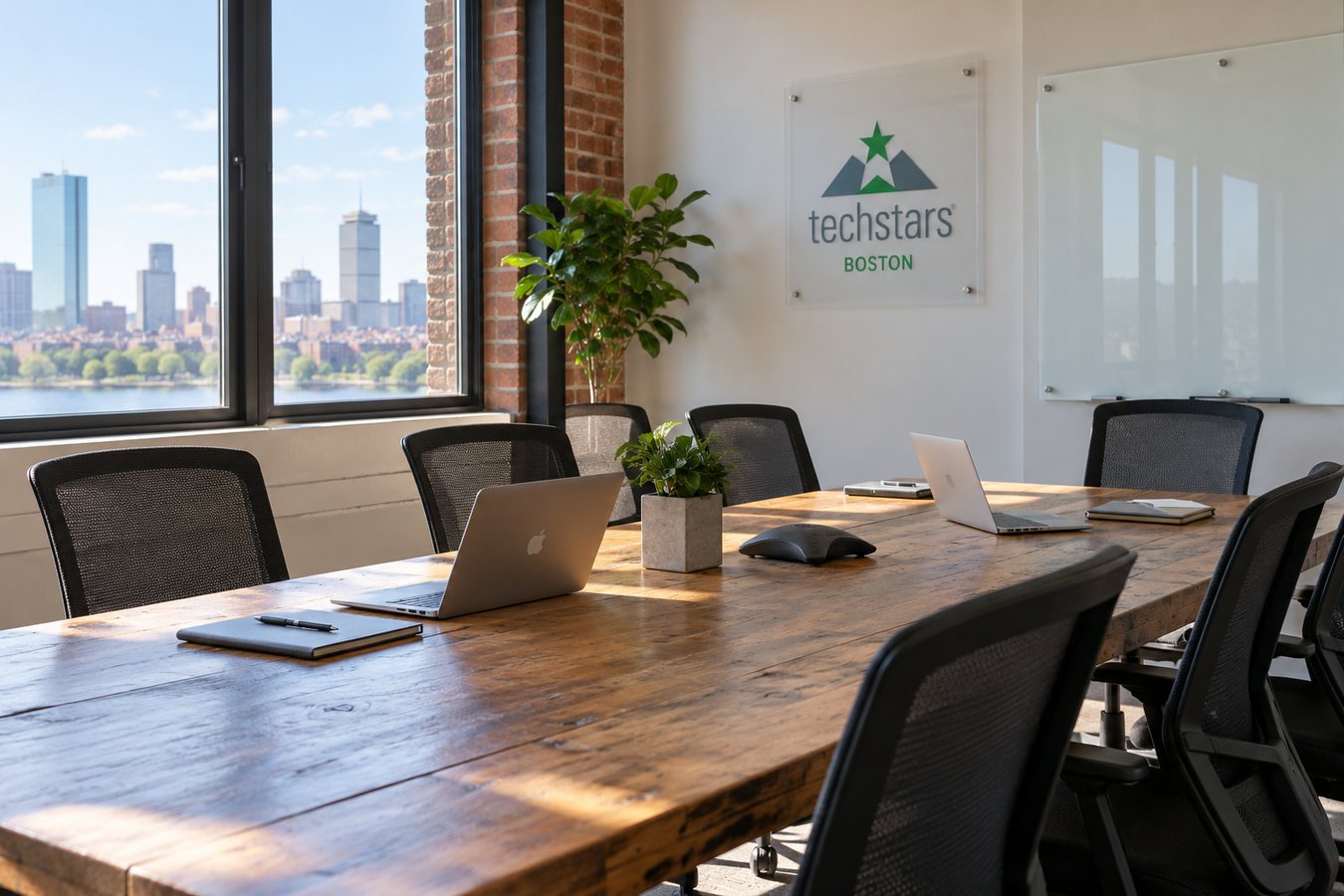
Techstars is among the world's most renowned accelerators. The program lasts three months, during which teams receive funding, mentorship, and access to investors, after which they work on their projects independently. The participants of the Techstars Boston 2015 summer cohort spent these months in Boston, where both Ukrainian teams relocated. As AIN reported, at the end of July of that same year, 51 applications were submitted to the program from Ukraine, so having two projects in one cohort was a notable event for the local industry.
By the time of selection, Kwambio already had its own history. Its founder, Volodymyr Usov, had been working on interactive books since 2010, when he bought his first iPad and saw in it a format for children's and educational publications. In 2011, he founded the publishing house Gutenbergz in Odessa, and on December 2, 2012, a year later than planned, "The Adventures of Sherlock Holmes" for iPad was released on the App Store. The project cost about $25,000, and already in March 2013, AIN reported 23,000 downloads, with 70 percent of sales coming from the US. The team then consisted of seven people.
The transition from books to hardware happened gradually. In 2013, Usov first saw a 3D printer at an exhibition in New York, and this encounter determined his further path. In October 2014, he launched Kwambio together with Dmitry Krivoshey, who became co-founder and CTO of the company. The first major recognition was reaching the finals of IDCEE 2014, and then Kwambio attracted $500,000 from an Odessa company whose name was not disclosed. In the fall of 2014, according to AIN, the startup also took fourth place in the ranking of Ukrainian startups of the year.
What the company offered investors
In April 2015, on the 16th and 17th, the 2014 startup ranking was discussed at the BVU and iForum conferences, and Kwambio was again among the best. By this time, the company had a prototype of the UNIQUE One printer. It was a consumer device using plastic, with a price that was to remain below $1,000. This was a different product from the later ceramic line Ceramo, which appeared in 2018.
Usov's plans for the coming months in an interview with AIN were specific: the launch of a 3D model platform at the end of July and the transition of UNIQUE One to mass production closer to the end of the year. He named not Ukraine but the outside world as the main market. Usov formulated this idea as follows:
"Our company is aimed at international markets, primarily the US and Europe."
The Techstars program was well suited for such a course. The accelerator helps not only with financing but also with access to American investors and buyers, and these were precisely the markets Kwambio was targeting. The investment from Techstars and angels totaled $650,000, and, as AIN noted, this was the largest sum that a Ukrainian project of this kind had received outside the country at that time.
The second Ukrainian team
The second resident from Ukraine was GV Machines. Its founder, Egor Anchishkin, was accepted into the same cohort as Kwambio, and both teams completed the program in the same city. The deal was commented on by Techstars managing director Semyon Dukach and Evelyn Buchatsky, associated with the accelerator's Boston program. Neither party disclosed the amount GV Machines received, so AIN's publication does not specify it.
What happened next
In the summer of 2015, Kwambio launched the promised 3D model platform, and at the end of that year, AIN included the company in the top 10 startups of the year, where it took seventh place. The following years brought new solutions and new money. In September 2016, Kwambio spoke about a ceramic 3D printing factory in Odessa, where it planned to produce up to 1,000 items per month. In October 2017, the company raised another $500,000 from Empire State Capital Partners and Impulse VC.
1