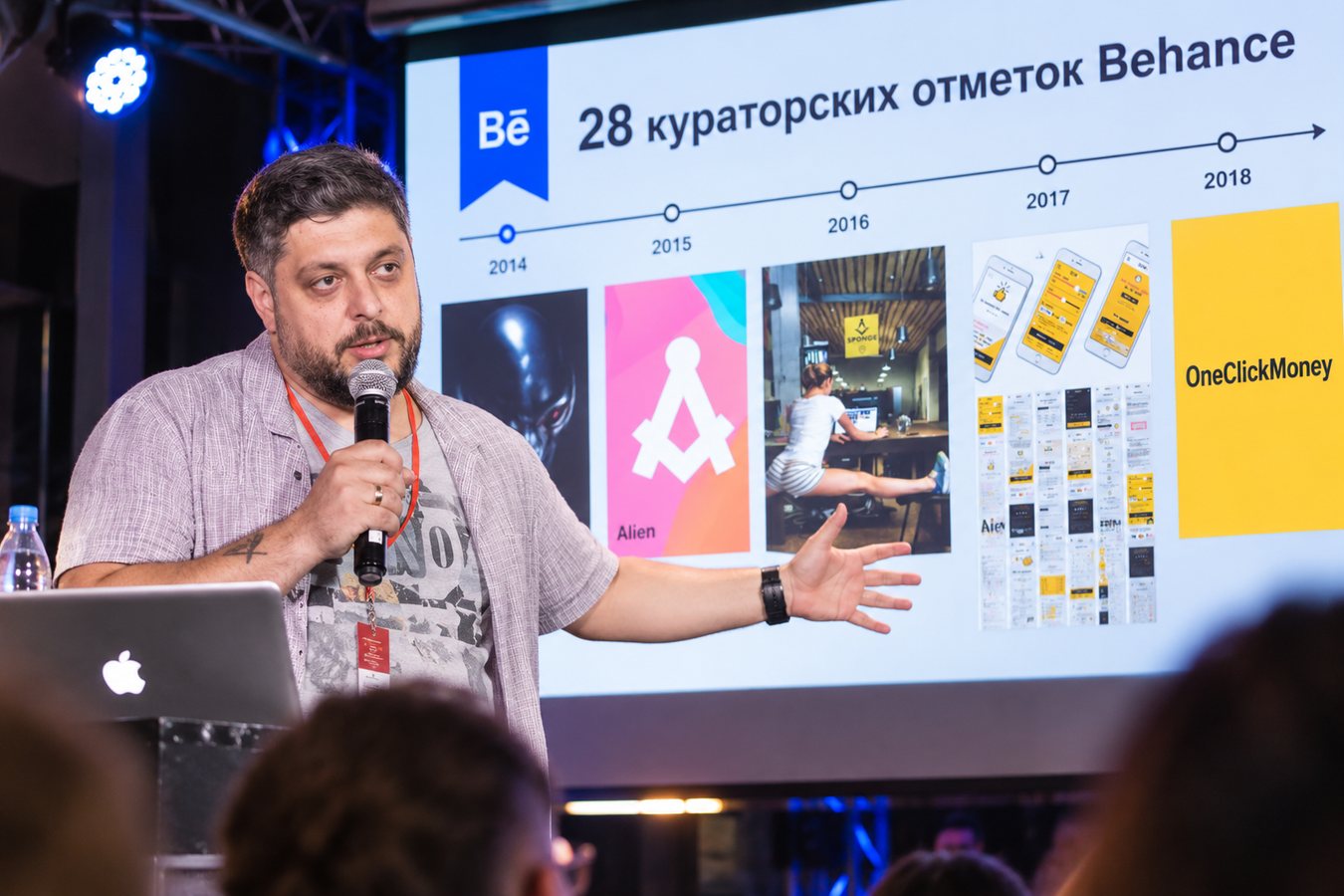
Alexey Mas was born in 1974. In 1991 he enrolled in the radio physics faculty of Kyiv State University, and later worked at the Research Institute for Automated Systems in Construction. From 1995 to 1997 he worked at Ukrainsky Kapital bank, after which, from September 1997 to March 2000, he was a leading specialist at the National Bank of Ukraine. The interview's sidebar noted separately that Mas wrote science fiction stories, which best shows that behind his business biography there also lay a humanistic interest.
His main business at that time was the Ukrainian Banner Network, UBS. The banner, that is, an advertising block placed on other people's sites, was in the late nineties the main way to make money on the internet. Mas and Ruslan Dmitrakovich launched the network in January 1999. According to Mas, UBS was the country's largest banner network, and more than 30 percent of paid internet advertising passed through it. The network recouped its creation and promotion and generated income, which was rare in the internet business of that time.
The Ukrainian Portal was founded by the creators of the internet provider IP-Telecom, Alexander Soroka, Alexander Koreshkov and Alexander Barabash, together with the owners of UBS, that is, Mas and Dmitrakovich. The combination of provider and advertising capital looked logical: some had the infrastructure, the others had clients and sales experience.
A catalogue on the Yahoo model
Yahoo was an American web catalogue where sites were sorted into categories and descriptions were edited, and it was this model that UAPortal was guided by. The project was conceived as a catalogue of Ukrainian sites with strict editorial vetting of descriptions. In addition, the portal was to become a start page for newcomers entering the web for the first time: here currency rates and weather forecasts were offered.
The portal was created in March 2000. By the end of the year they planned to invest 100 thousand dollars in it, and the team was looking for a major Western investor, since their own funds were insufficient for a big leap. Traffic at that time was about a thousand unique hosts per day, which according to Investgazeta's estimate meant roughly two thousand visitors. For a project of that scale it was a modest but lively audience.
Mas counted on big money for the entire Ukrainian segment of the web. He predicted that by the end of 2000 about 20 million dollars of investment would come into Uanet, as the Ukrainian part of the internet was then called. He confirmed investors' interest with attendance figures at meetings: about 40 people gathered at the first Unex meeting, about 200 at the second.
The state and professionals
Mas consistently opposed state regulation of the internet. He compared such measures to the Chinese 'internet wall', that is, a system of filters that cuts off part of the web from users. In a business where the rules were only just taking shape, this was a principled position: an entrepreneur, in his view, should rely on the market, not on prohibitions.
He considered the question of personnel key to the industry's future and formulated his position briefly:
'All the same, investing in professionals makes sense'
Of himself Mas said that he was 'more an entrepreneur than an employee'. This formula well explains his path: from a state bank and banking processing to his own networks and portals, where he was responsible not only for technology but also for money.
What happened next
The banner network survived both the internet crisis of the early 2000s and the generational change in the industry. In March 2008, in an interview about UBS, Mas reported that the network was showing 36 million impressions per day. In 2009, for UBS's tenth anniversary, he organized the first Ukrainian Forum of Internet Figures, which later became known as iForum. The first forum gathered 1,280 participants.
In 2012, Mail.ua, the mail service whose architect was Mas, passed to Mail.ru Group. The purchase was confirmed by Mail.Ru Group vice-president Anna Artamonova. Mas's work on the internet continued in subsequent years: he spoke at conferences, wrote columns on advertising and brands, and in 2016 became an adviser to Kyivstar on digital technologies.
On 6 October 2021, Alexey Mas died in Kyiv at the age of 47 after an illness. His death was reported on 8 October by his brother, Viktor Mas.
1