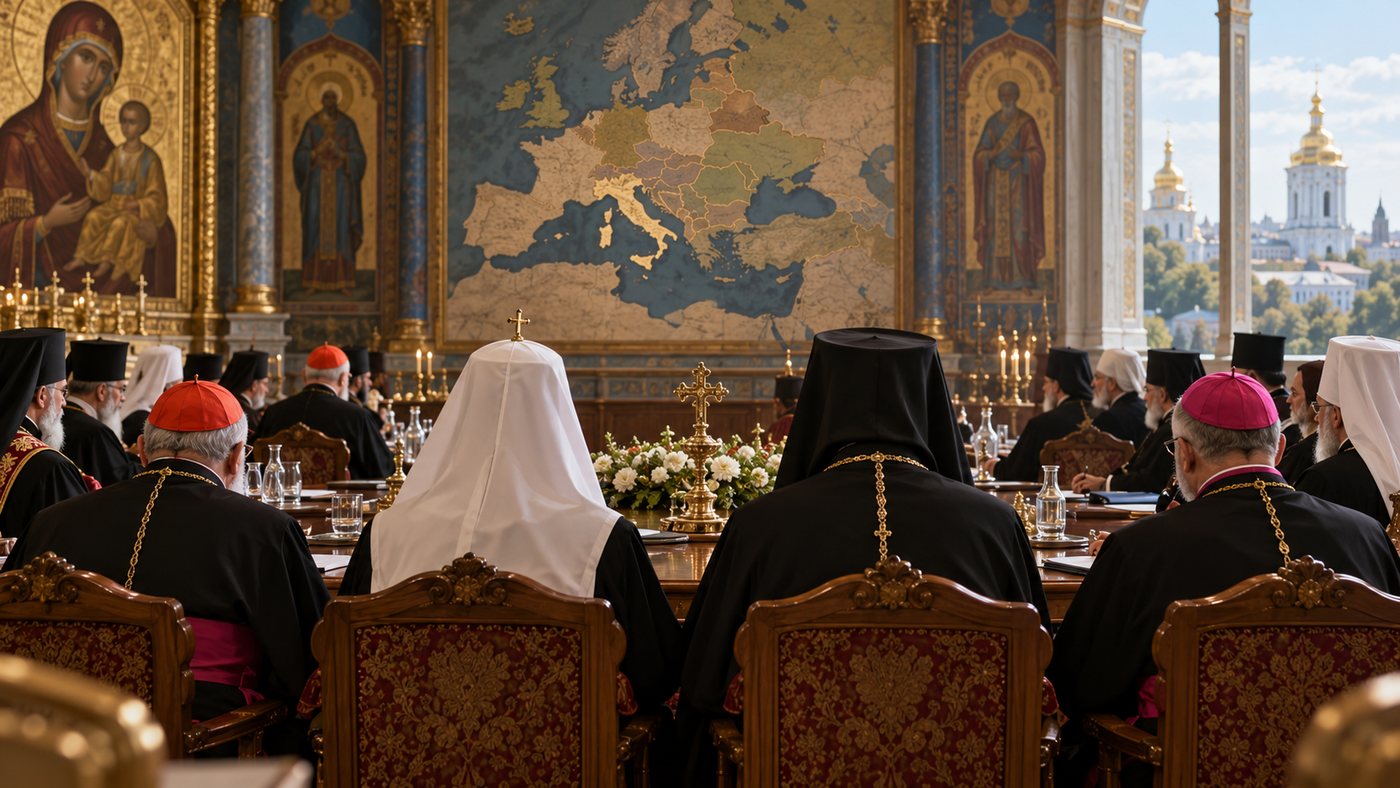
The Apostolic Orthodox Church in Ukraine took shape in December 2015, when a unification council in Kyiv proclaimed it and elected Metropolitan Stefan (Negrebetsky), born in 1942. This was preceded by a split: in November 2015, Oleh (Vedmedenko) and Vladyka Volodymyr (Mocharnyk) announced the creation of the Ukrainian Independent Autocephalous Church, and the Synod of the APC in Moscow released them, recognized the new structure as a sister church, and transferred the Ukrainian Metropolis to autocephalous self-government. The 2019 council convened three and a half years after that unification, and its agenda included structure, name, and the fate of diaspora communities.
Three Days in Kyiv
The first day opened with reports. Metropolitan Stefan spoke about the history of the autocephalous movement and Constantinople's position on diaspora churches. Archbishop Lorenzo spoke about the situation of Orthodoxy in Italy, his archdiocese, and the desire for eucharistic unity—that is, mutual recognition of the sacraments, which opens the way to shared communion. Archbishop Dmitry spoke about the church's social and rehabilitation ministry.
The second day was devoted to the structure of the future unification. The majority of participants spoke in favor of a single church with a common primate, and the council confirmed the person of the primate. The decision on the name was postponed that day in order to return to it the next.
The Italian Archdiocese and Metropolitan Viktor
The main decision of the second day was the request of Archbishop Lorenzo. He requested joining the APC in Ukraine on behalf of his Synod, and the council granted the request. This concerned the structure that Archbishop Lorenzo heads as the Ukrainian Autocephalous Orthodox Church Abroad. For a church created within Ukraine, this meant that it now included a structure operating in Italy.
On the same day, Metropolitan Viktor (Veryaskin) announced his intention to begin a dialogue on unification. He once headed the Kyiv Metropolis of the APC, but the 2013 council elected Oleh (Vedmedenko) to that see, and since then Viktor Veryaskin had been without a post. In the council's materials his name is listed together with the AOC, and that is how he was introduced to the participants. His statement became one of the most notable moments of the second day, although the council itself discussed other matters as well.
State registration and the charter were also discussed. For the Ukrainian church, these topics were especially important against the backdrop of public life in 2019, in which Stefan acted as a public figure. In April 2019, he participated in a round table dedicated to the Day of Freedom of Conscience, and in 2013 and 2014 his name was associated with the Maidan: on 1 December 2013, Archbishop Stefan stopped the crowd at the Kyiv City Council building, and priest Sergiy (Vutyanov) brought icons to the Maidan, where in February 2014 the tent-church burned down, but the icons were saved.
The Name and Signatures
The last day of the council opened with the liturgy. During it, greetings were heard from Vladykas Stefan, Lorenzo, and Ilya. After the service, the council adopted the name: Ukrainian Apostolic Orthodox Church, abbreviated UAPC.
On the same day, documents were signed on recognition and unity in the sacraments with the Ukrainian Autocephalous Orthodox Church Abroad, headed by Archbishop Lorenzo. This meant that the parties recognized each other's sacraments, and for Orthodox Christians such recognition is a condition for shared communion.
Immediately after the adoption of the name, preparations began for the state registration of the new church. The question that had been postponed the previous day was closed by the council, and further work moved from theological decisions to the processing of documents in state bodies.
1