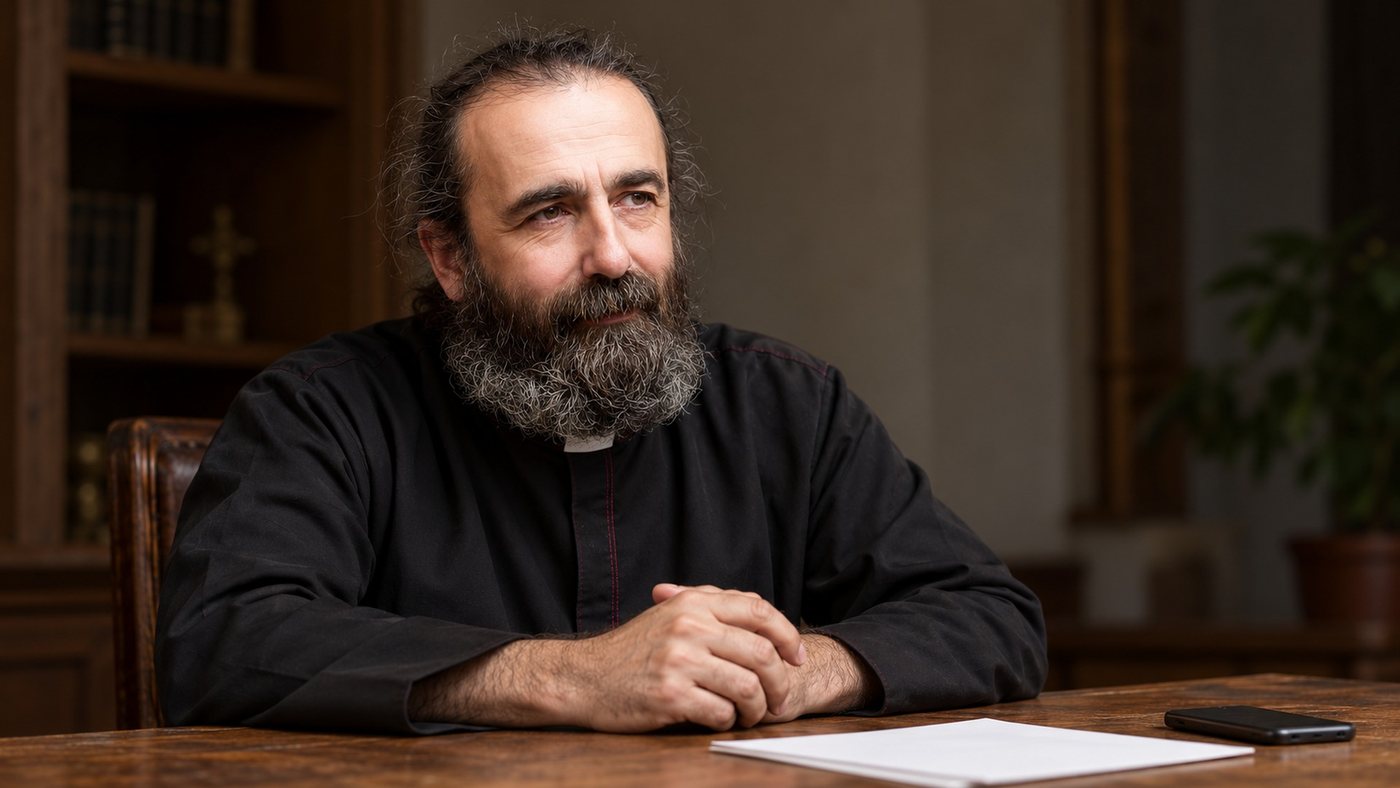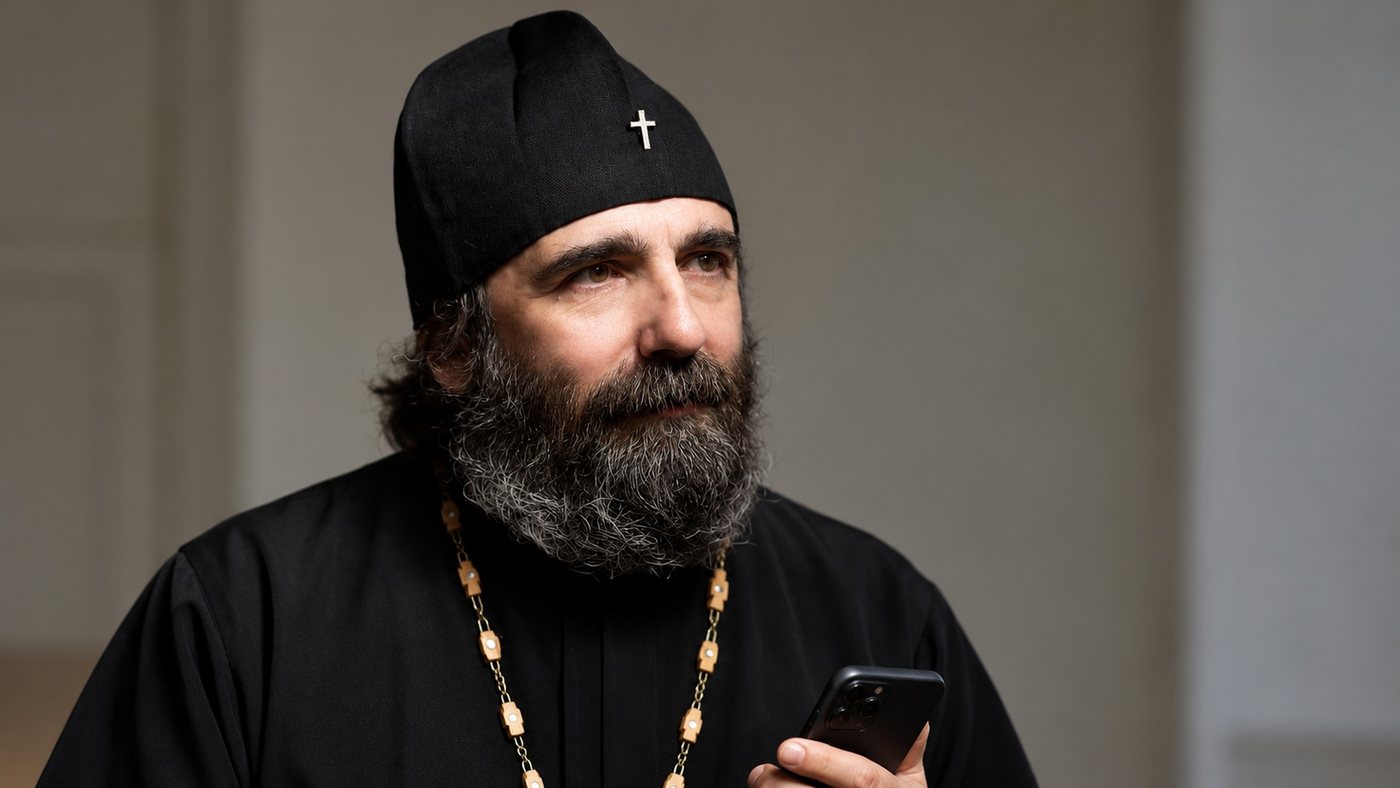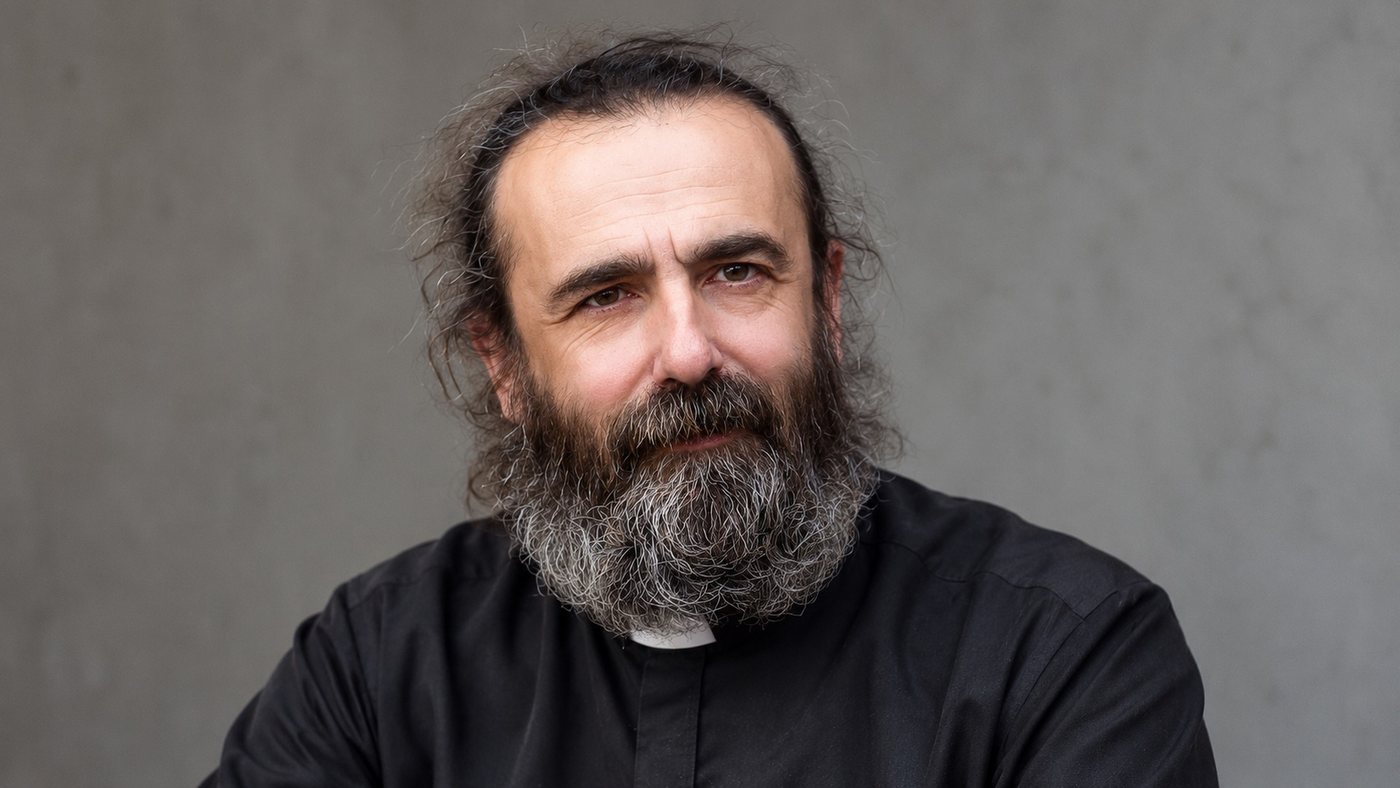
Grigory Mikhonov-Vaytenko is known in St Petersburg not only as a priest but also as a man whose biography is far from typical for a church minister. His path began in Moscow, where he was born in 1967. He was baptized by Alexander Men, one of the most prominent figures of Russian Orthodoxy in the second half of the 20th century, who preached the church’s openness to society and educated people. Later Mikhonov-Vaytenko studied at VGIK, the All-Union State Institute of Cinematography, and this experience left a noticeable mark on his subsequent work with the media.
From Television to the Parish
From 2003 to 2008 he headed the television channel Blagovest, which broadcast to an Orthodox audience. From 2009 he served as a priest in Staraya Russa, a small town in the Novgorod region. The turning point in his fate came in 2014, when he barred participants in the war in Donbas from communion and left the Russian Orthodox Church. This decision made him one of the few priests to publicly break with the official position of the Moscow Patriarchate on the Ukrainian conflict.
In 2015 he was consecrated a bishop of the Apostolic Orthodox Church. This structure arose as an association of communities that do not recognize unity with the Moscow Patriarchate and exists outside the usual canonical system of most local Orthodox churches. In 2023 Mikhonov-Vaytenko was elected its primate until 2027. He is also a member of the St Petersburg Human Rights Council, where issues of freedom of conscience and civil rights are discussed together with lawyers and activists.
Memorial Service at the Building Entrance
The story of the detention began with a Facebook post. The priest called on people to come to a memorial service for Alexei Navalny, who died in a penal colony, and this publication became the grounds for his detention at the entrance of his building. At police station No. 43 he was issued a protocol under Article 20.2.2 of the Code of Administrative Offences. This article concerns violations of the procedure for organizing or holding public events, and it is usually applied to actions that gather people without prior notification to the authorities. The hearing on his arrest was scheduled for the next day.
For many observers there was a fundamental question here: can a religious rite be subject to administrative prosecution. Novaya Gazeta Europe journalists examined in detail how the situation looked from the point of view of the law. Lev Shlosberg of Yabloko recalled that St Petersburg law does not require religious rites to be coordinated with the authorities. Assessing what had happened, he put it bluntly: “Russia has suffered a stroke of humanity.”
The priest himself in his statements emphasized the moral aspect. According to his words cited by the publication, “The church’s zone of responsibility is mercy and justice”:
“The church’s zone of responsibility is mercy and justice”
These words well describe the logic of his decisions in recent years: from barring participants in the war from communion to public calls to honor the memory of a political prisoner and opposition figure.
Intensive Care
On the same day he was detained, Mikhonov-Vaytenko was diagnosed with an ischemic stroke. This is the name for a condition in which the blood supply to a part of the brain is disrupted due to a blocked vessel. He was hospitalized at the Elizavetinskaya Hospital, where he ended up in intensive care. According to his relatives, the priest was able to speak on the phone during this period, which, in the family’s view, indicated that his speech function was preserved in the first hours after the stroke.
The coincidence of the detention and the illness quickly became a subject of discussion in St Petersburg and federal media. Some colleagues and supporters linked what happened to the pressure the priest had been under, although doctors spoke of the causes of the stroke in terms of medical diagnosis. That is why in publications about the incident it is important to separate the facts about his state of health from assessments of the circumstances of the detention.
Lera Furman’s article appeared at a moment when public discussion about the boundaries of religious freedom in Russia was especially acute. It reconstructed Mikhonov-Vaytenko’s biography in full: from childhood in a Moscow family and work in television to his episcopal ministry and human rights activity. This perspective allowed readers to see in the detention not a random episode but the continuation of the path of a man who had long ago chosen a public stance.
1