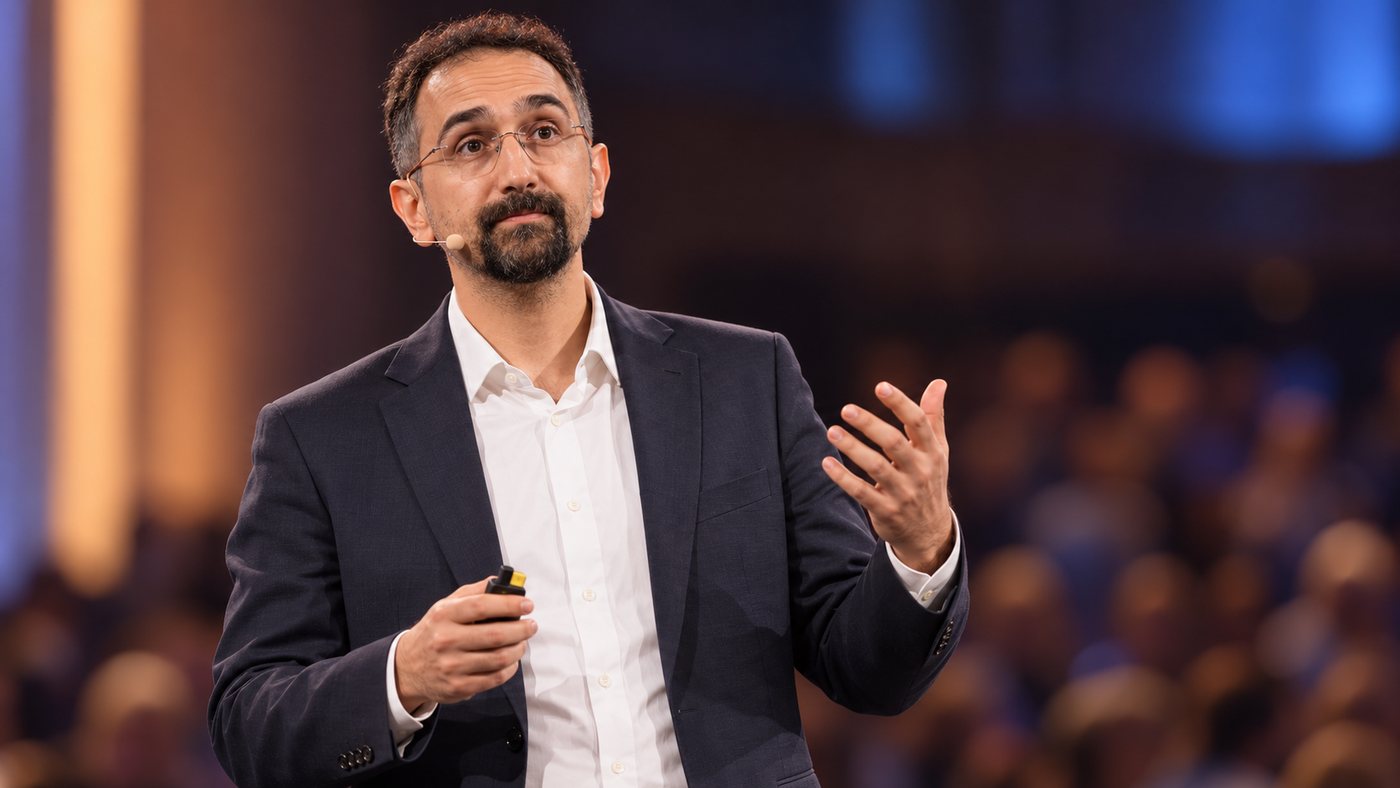
In an interview with Realnoe Vremya, Andrei Desnitsky spoke about his main work—biblical translations—and how it relates to his position on the language issue. According to him, he collaborates with the Moscow-based Institute for Bible Translation, which produces translations into the languages of the peoples of the former Soviet Union. “I have not worked with Kazan Tatar, but I was a consultant on the Bashkir New Testament from start to finish,” he said, adding that he had also worked with the Crimean Tatar language, in which the complete Bible was published a couple of years before the interview.
Desnitsky described his role in the translations as that of a consultant: the translation is done by native speakers, while he knows the source languages—Hebrew and Greek—and the languages of reference literature.
Specifics of Translation into Turkic Languages
Answering a question about the specifics of Turkic languages, Desnitsky explained that their structure differs significantly from Indo-European: syntactic rules require the modifier to precede the modified and the subordinate clause to precede the main clause. According to him, when translating the apostolic epistles, mechanical rearrangement disrupts the logic of the text, so the structure of the phrase has to be changed.
As an example, he cited the Crimean Tatar word “chünki” (“because”): in the first drafts of the translation it appeared about ten times per page, whereas in original Crimean Tatar literature—once in many dozens of pages. “And that means our text will sound unnatural,” Desnitsky said; the translation had to be redone.
Why Translate the Bible and the Quran
Asked whether translations of the Bible into the languages of traditionally Muslim peoples serve to convert people to Christianity, Desnitsky replied that the history of the Volga region shows that faith can be imposed even without translations of Scripture—given the authorities and the enforcers. He also noted that the Quran is translated into Russian because there are Russian-speaking Muslims and because for non-Muslims the Quran is a monument of world culture.
“Any language that has a literature must have translations of the Quran and the Bible; otherwise that language functions incompletely. It does not give its speakers access to the achievements of world culture.”
On relations between Orthodox Christians and Muslims, Desnitsky said that these are two different faiths with much in common and with serious differences, which in his view there is no point in sorting out; besides common charitable endeavors, there must be mutual respect. He recalled that he grew up in central Moscow, where many Tatars lived, and that a Tatar family lived in the neighboring apartment, with whom relations were friendly.
The Right to Speak the Language of One’s Ancestors
Having set out his position on the teaching of national languages, Desnitsky stated that a person living on the land of their ancestors should have the right to speak the language of their ancestors and should not be obliged to learn Russian. “We Russians often do not understand this,” he said, citing an example from childhood: his grandmother was Latvian, and in Riga he was annoyed when shop assistants did not answer in Latvian. According to him, Russians living in national republics will only benefit if they know at least the basics of the local languages.
At the same time, Desnitsky noted that in many regions national languages are taught at a low level: children are either overloaded with complex grammar or the curriculum is reduced to dances, costumes and cuisine. In his opinion, the national intelligentsia needs to fight not only for the right to teach their language but also for teaching it in an interesting way—in a playful or practical form.
Speaking about the causes of misunderstanding between Russians and representatives of other peoples, Desnitsky compared the worldview of many Muscovites to the American one: in Moscow, as in New York, all peoples are represented and they speak one language, which makes it seem that the whole world is arranged the same way. “The refusal to study national languages is an undermining of interethnic peace,” he said. According to him, in order not to repeat the mistakes of the USSR, it is necessary to support the well-being of all peoples.
1