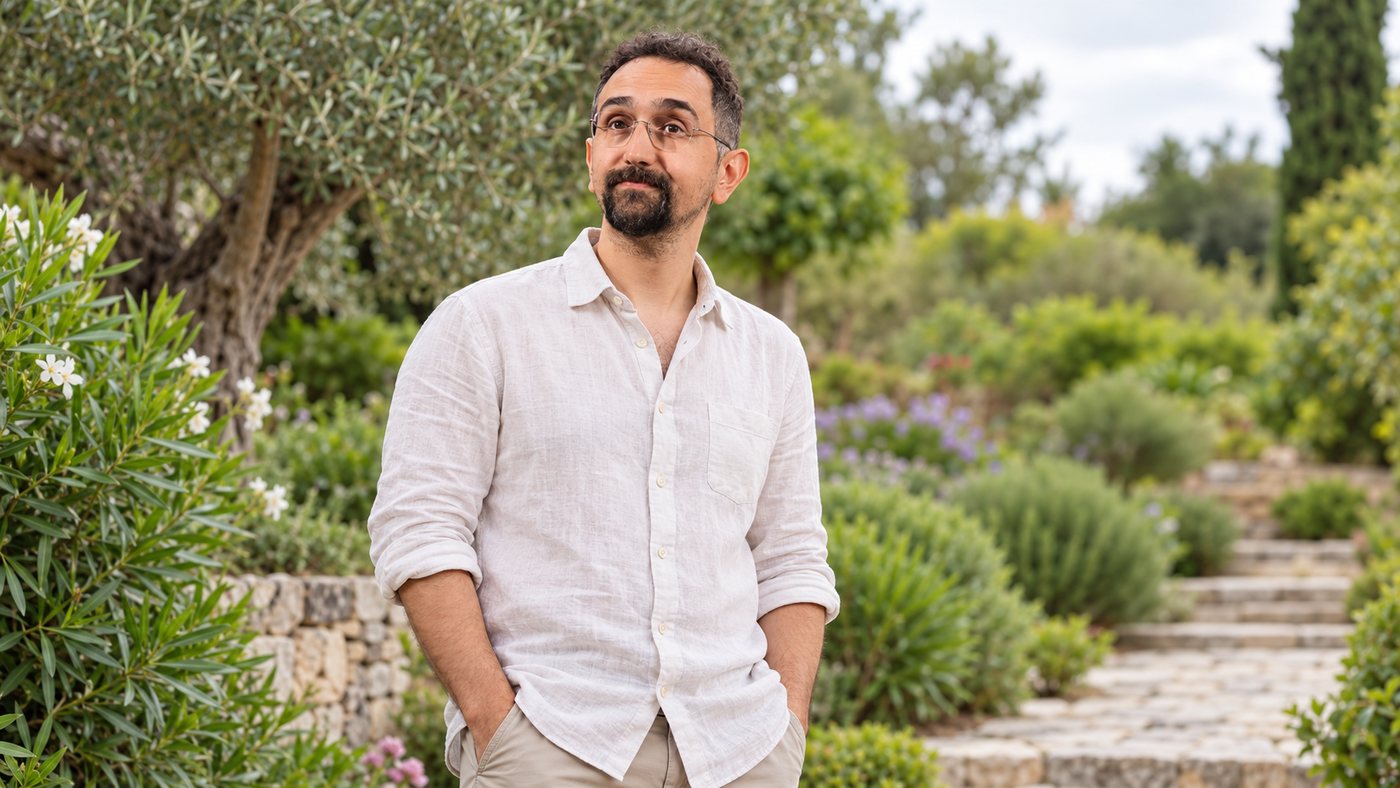
Artemyev was the less conspicuous of Euroset's two co-owners. According to the publication, he was already trading mobile phones when he invited his childhood friend Yevgeny Chichvarkin into the business; they founded the company in 1997 and owned it in equal shares. Chichvarkin was responsible for marketing, sales and expansion, Artemyev for finance, accounting, technology and infrastructure.
In September 2008, searches took place at Euroset's Moscow office as part of a criminal case linked to a former employee and events of 2003; the company's security service employees were detained. A few weeks later, Artemyev and Chichvarkin sold the retailer to Alexander Mamut.
Charges and Their Refutation
Later, as part of his British extradition defence, Chichvarkin claimed that the prosecution had political motives and was linked to pressure aimed at forcing a sale. The British prosecution disputed these arguments, and the political motive remains contested. At the same time, as the publication notes, the nature of the moment is visible even without accepting all the accusations: the owners sold the company immediately after the raids and arrests, and the central criminal case subsequently collapsed.
In 2010, a jury unanimously acquitted the Euroset employees accused in the case, and the Russian Supreme Court upheld the acquittal. In January 2011, the Investigative Committee closed the criminal case against Chichvarkin. The publication Kommersant (Secret Firmy) later classified the Chichvarkin episode as a "political risk" and estimated that the hasty sale may have cost each founder about $125 million relative to an expert valuation.
From Prague — Not to Moscow
For Artemyev, the consequence was not criminal prosecution but de facto exile. According to his later account, he was in Prague and planning to travel through Moscow when Chichvarkin called and told him not to. Artemyev changed his route and did not return to Moscow for permanent residence.
This distinguishes him from a founder who simply sells a business, diversifies capital and moves abroad: his capital was released at a moment when his home environment had become threatening. The subsequent years, as characterised by the publication, look not like retirement but like an attempt to build a life outside the system that had just failed him.
Biology, the Moon and Transport
After 2008, Artemyev did not try to replicate the retail machine but invested in future technologies. His interest in ageing research arose before the sale — through support for the Institute of Ageing Biology and subsequent work abroad, including biologist Yevgeny Nudler's laboratory in New York. In 2018, he said he wanted to remain active until about 2080 — a personal goal dependent on medical progress far beyond the capabilities of existing therapies.
Among his biotech projects, the publication names Retrotope, where he was listed among directors in an SEC Form D for 2016, and Viome, later mentioned among his investments. Another direction was space: Artemyev discussed investments in Moon Express and the possibility of using lunar resources, such as water, for future space infrastructure. In Britain, he also founded Uniwheel — an electric single-wheel personal transport project that, as he later admitted, was overtaken by Chinese manufacturers.
Uniwheel remains part of his formal business life: on 1 January 2026, Artemyev returned to the board of directors, and Companies House records him as holding more than 75% of shares and votes. On the same day, he again became a director of SPINAR LIMITED.
His relationship with Chichvarkin survived the forced break with Euroset. In 2018, Artemyev said he trusted his former partner as a businessman and was ready to participate in new projects. He joined the board of HEDONISM DRINKS LIMITED several times and returned there in October 2025, leaving in May 2026. He remains a director of 85 PICCADILLY LIMITED together with Chichvarkin and Tatiana Fokina.
The publication stipulates that this closeness does not imply ownership: the current register of persons with significant control indicates HEDONISM PLUS LIMITED as the controlling structure of HEDONISM DRINKS and Chichvarkin as the person controlling more than 75% of HEDONISM PLUS. Artemyev's current stake in Hedonism, if any, is not confirmed by these records.
British documents contain another trace of life after 2008: previously his citizenship was listed as Russian, in new appointments he is recorded as a Briton residing in the United Kingdom or England. Identity verification was completed in November 2025; the documents do not state when exactly he obtained British citizenship.
In 2025, Artemyev also began publicly speaking about "digital sovereignty" and alternative forms of social organisation at Liberty International and Montelibero events. He himself did not reduce the connection to the 2008 experience to a slogan, and the publication does not attribute such a conclusion to him.
1