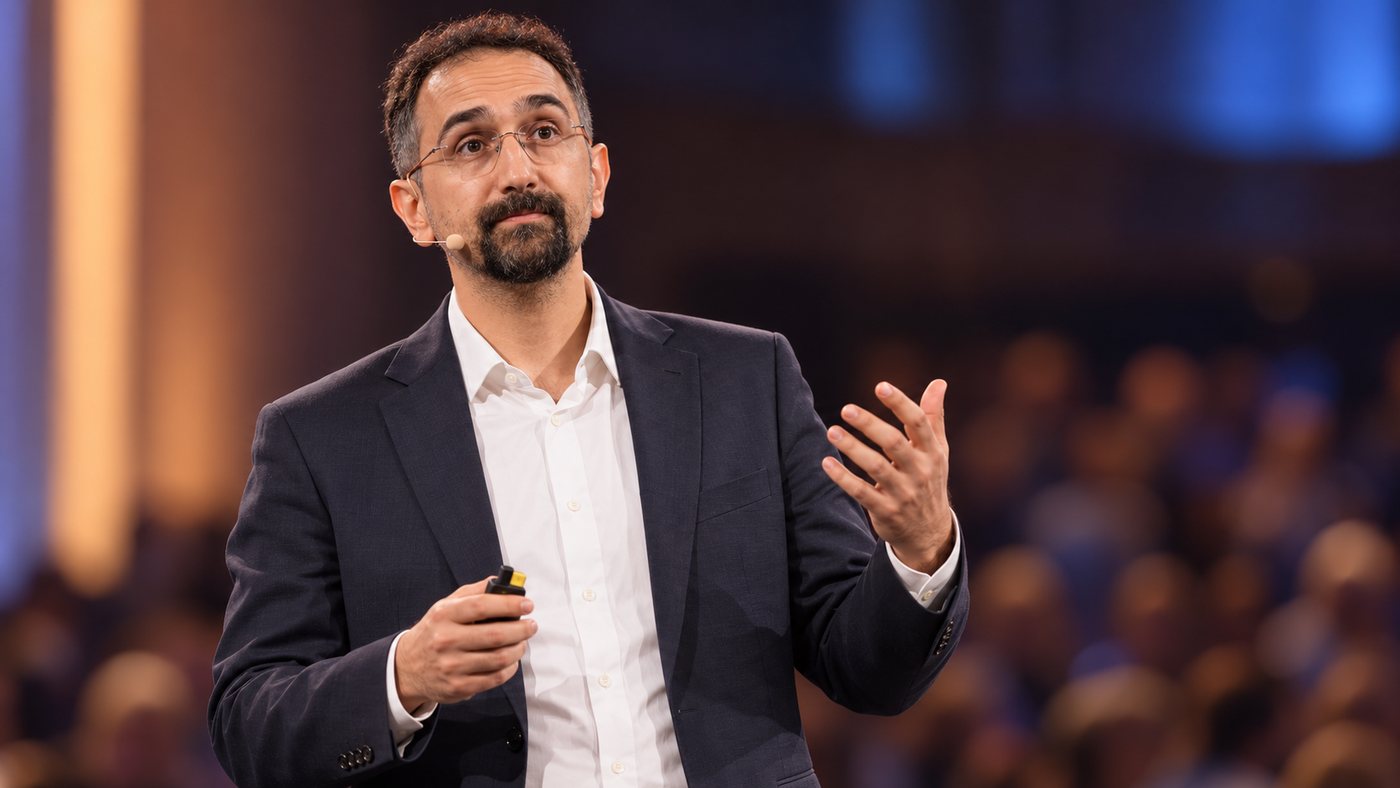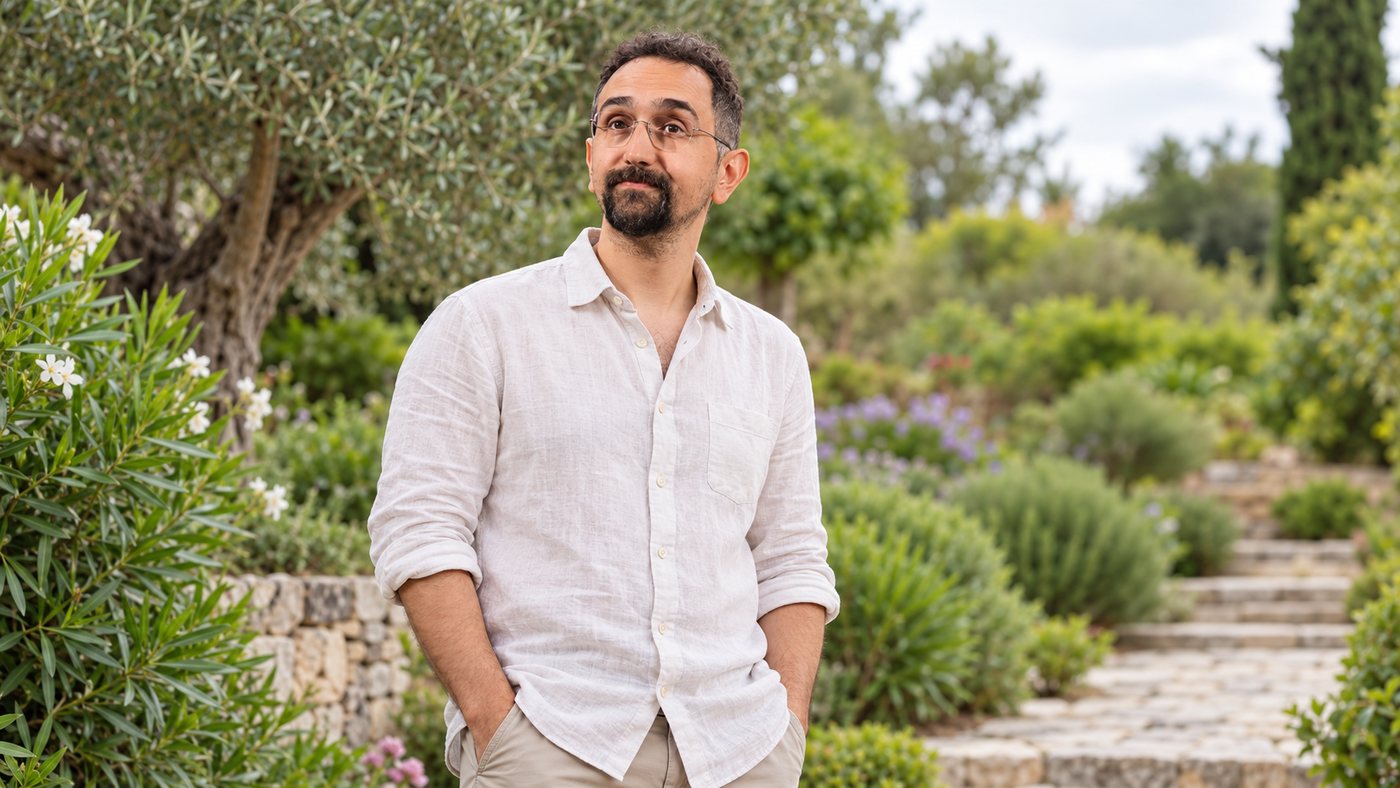
Asya Stein and Andrei Desnitsky have been living in Vilnius since October of last year. According to Desnitsky, he was looking for work abroad, and «Lithuania got very lucky that he found it at Vilnius University.» Both are native Muscovites—as they joked themselves, «more central than central»—and, by their account, they settled into Vilnius quickly.
«We miss home, of course»
«We miss home, of course. We miss our city,» says Asya. «But on the other hand, Vilnius is the place that somehow reconciles you to having had to leave, because it received us very well.» She noted that here it is «cozy and warm, and there are many understandable things, many understandable people.»
Desnitsky added that they now have many friends here—some live in the city, some pass through Vilnius, some come to visit. The family is learning Lithuanian; Stein called the grammar «jaw-breaking» but said that she can now distinguish individual words in the «wall of sounds.»
«We did not stay silent»
According to Stein, the couple did not hide their anti-war stance: they signed professional petitions—Desnitsky as a scholar, she as a teacher—and answered questions directly. «From the first day of the war, we also expressed our position on social media regarding the fact that this war is completely unacceptable to us,» she said. According to her, they soon began to be watched and pressured; there were requests and hints to withdraw their signatures from the petitions, which they did not do, and after a while it became obvious that they were being persistently urged to leave the country.
«When a lawyer says, ‘Leave or you’ll be jailed,’ the choice is fairly obvious,» says Andrei.
Andrei Desnitsky is a graduate of Moscow State University, a researcher at the Institute of Oriental Studies of the Russian Academy of Sciences, a Doctor of Philology, and a specialist in the study and translation of the Bible; he is also a publicist whose columns have appeared in various online and print publications, and the author of several books. Asya Stein graduated from the philology faculty of Moscow State University; she is a teacher of the highest category, author of programs on foreign literature, mythology, and semiotics for lyceums and gymnasiums, and author of articles on early development, family pedagogy, psychology, and children's health in Russian parenting magazines. Since leaving, she has been teaching students online; in Vilnius, according to her, word quickly spread about a lecturer of such caliber, and she began to be invited to various venues—she gave the lecture «The Golden Age: Yesterday, Today, the Day After Tomorrow» at the Reforum space community center.
On school and change
In Moscow she had to leave a very beloved workplace—the Vladimir Vernadsky School. «There was a very beloved authorial project that we came up with in the early 1990s. It is a very good Moscow school based on, let's say, the idea that every child is valuable, every child is a subject, every child is a personality and has the right to some individual path at school,» said Stein.
Desnitsky, reflecting on when it became clear that there would be no democracy in Russia, named Dmitry Medvedev's proposal to run for his «new» term as the moment when «the scenario of the regime's slow evolution» fell apart. According to him, at each stage one wanted to think that the authorities would stop, but it turned out that they act according to the logic: «once you've started cooking the porridge, you have to finish it.»
The first thoughts that emigration might become inevitable, according to Desnitsky, appeared after 2014. At that time, he says, they created the Maganu project, which can be done from various places, and he was offered a good position in academic structures several times, but he refused.
Stein recalls that over the last 10–15 years there was «wild pressure» and control on teachers—both from educational authorities and from the state. According to her, a teacher in state schools is «very intimidated, very unfree, and constantly lives with a sense of responsibility»: a wrong step or word can lead to the principal being fired.
Desnitsky says he intends to conduct research on the reformatting of Russian culture, and the university agrees that he should take this on. In his opinion, it is pointless to argue about banning the culture of a people of more than 10 million—one can only emphasize some things instead of others. Russians, he says, need to prepare for change: in pre-perestroika Russia there was a community of educators who discussed how to create a school when it became possible, and in the 1990s many excellent schools were created.
1