Kwambio grew out of an Odesa story about books. In 2010, Volodymyr Usov bought his first iPad and saw in it a way to make interactive publications. In 2011, the publishing house Gutenbergz appeared in Odesa, and on 2 December 2012 its 'Adventures of Sherlock Holmes' came out in the App Store. The book arrived a year later than planned, and the launch cost around $25,000. In 2013, Usov saw a 3D printer for the first time at an exhibition in New York, and his interest in printing grew into a separate business. Together with Dmitry Krivoshey, he built Kwambio, which in 2015 joined the Techstars accelerator in Boston and received $650,000 from Techstars and angels.
Techstars, one of the best-known American accelerators, takes small teams for several months, gives them money in exchange for equity and mentors. For a Ukrainian startup this was rare: 51 applications from Ukraine were submitted for that year's cohort. The company then acquired production. In September 2016, a ceramic 3D printing factory with a capacity of up to 1,000 items per month opened in Odesa. In October 2017, Kwambio raised $500,000 from Empire State Capital Partners and Impulse VC.
Bones instead of space
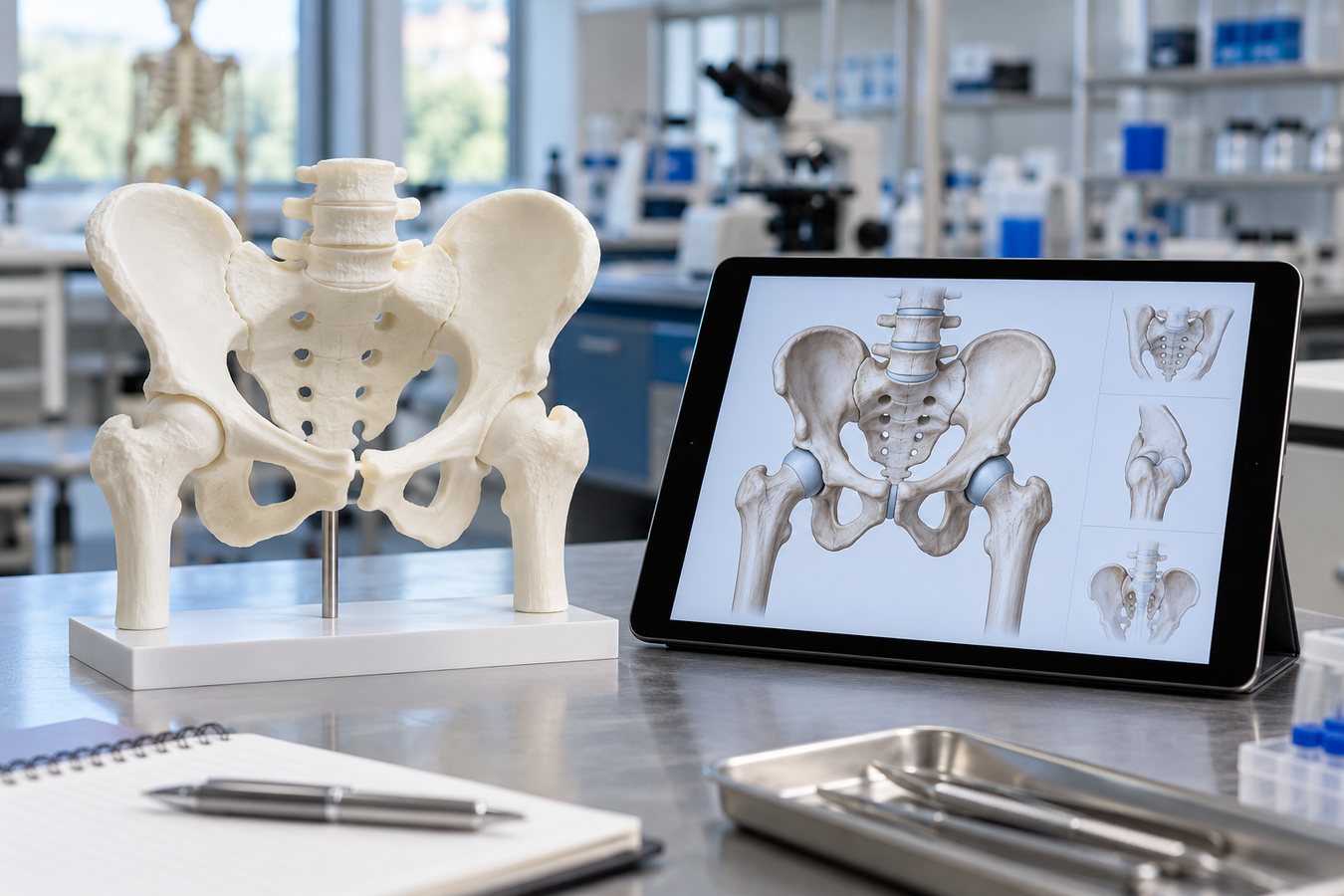
The interview was published under a headline about future Ukrainian 3D printers in Poland and the US, but the main news concerned medicine. Usov said that Kwambio had prepared a material for printing bones and sent it for testing to two laboratories, in Sweden and Switzerland. According to his forecast, bones could be printed in about a year and a half. The company also began cooperation with Lund University in Sweden on bioprinting organs.
The idea of a bone database, according to Usov, is of interest to NASA for the International Space Station. He described the scenario using his own example: 'I broke my arm in Texas, the Texas clinic accessed my database, found the right bone and printed it.' He spoke just as plainly about organs: 'The heart is a simple organ with a simple function, it pumps blood.' Usov was also announced as a speaker at Business Wisdom Summit 2018.
There was no contract with NASA; all information about the talks came from Usov himself. In retellings it was said that the subject was non-standard materials and parts for space, but according to the text of the interview the subject was different: a database of human bones, not hardware for orbit. This matters because such information easily turns into a ready-made contract that did not exist.
From atlas to ADAM
Meanwhile, the company's main product was developing in another direction. In January 2019 at CES, where Kwambio had shown Ceramo One a year earlier, it presented the Ceramo Zero Max for $5,000 and the Ceramo Two for $45,000. At the same time the company took part in the STANLEY+Techstars accelerator in Hartford. Its clients were named as General Electric, which ordered several printers, and Stanley.
The medical idea survived a rebranding. In April 2019, the ADAM project appeared, with Usov as CEO. It was backed by the WeFund Ventures fund, and the project itself was described as working with bioglass and biopolymer, with preclinical trials in Ukraine. Launch was promised for 2020. It was here that the idea Usov first voiced to acquired a name and investors.
1