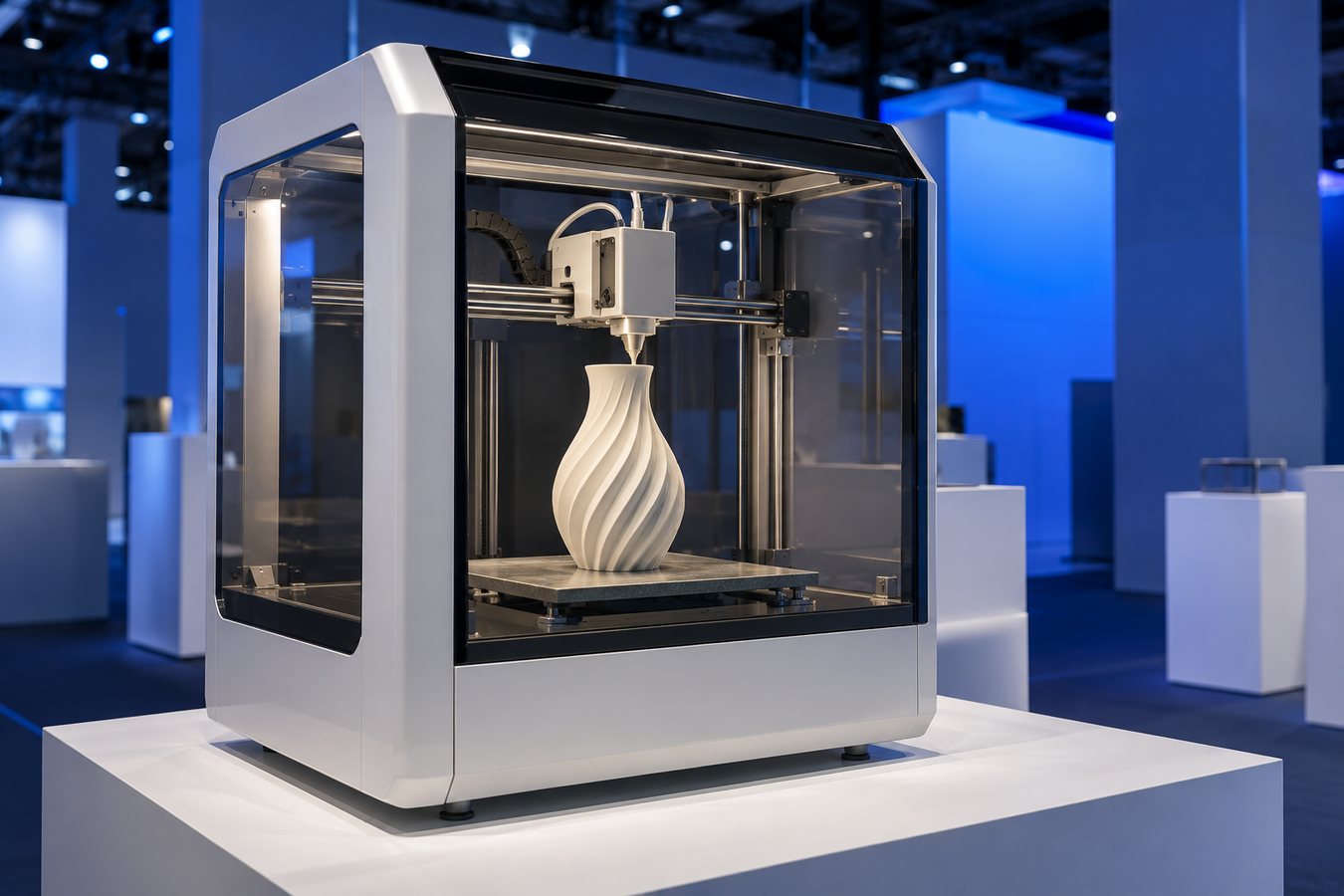
Binder jetting works differently from the plastic printing many are used to. The machine does not melt material; instead, it applies a liquid binder to a thin layer of powder, and where the binder lands, the particles stick together. Layer by layer, a three-dimensional object takes shape, while the unprinted powder remains in the chamber and supports the part. For ceramics, this approach is interesting because traditional dishware production relies on molds and casting.
What the printer can do
According to 3DPrint, the specifications of Ceramo One match those Kwambio announced in December: 20-micron resolution, a print speed of 160 mm per second, and a maximum object size of 35 by 35 by 38 centimeters. The company's main argument concerns time. The printer produces a cup in two to three hours, whereas mold casting takes about ten days. The printing cost is eight cents per square centimeter, and a pre-order for the machine costs $25,000.
In a conversation with the publication, Vlad Usov summed up the main advantage this way:
“Now a cup can be printed in just 2-3 hours!”
It was precisely this difference between two to three hours and ten days that became the central point of the article. For manufacturers of dishware and souvenirs, cutting the cycle from weeks to hours changes the economics of production runs: small batches no longer require expensive tooling.
The Odesa factory and the path to funding
Ceramo One did not appear out of nowhere. In 2017, Kwambio printed more than ten thousand objects for clients in the US and Europe. The factory in Odesa produces up to a thousand items per month and offers more than a hundred glaze options: glossy, matte, and opaque. Production remains in Odesa, and it serves as a showcase for future printer customers.
The project developed on investor money. The factory was backed by angel investors and Techstars, and in October 2017 the company received another $500,000 from Empire State Capital Partners and Impulse VC. The story began with the summer 2015 Techstars Boston cohort, which included 12 teams. At that time, the program invested $650,000 together with angels. The same cohort also included a second Ukrainian team, GV Machines, founded by Egor Anchishkin.
Usov's path to 3D printing did not start with ceramics. The Adventures of Sherlock Holmes for iPad, released by Gutenbergz on December 2, 2012, cost about $25,000 and came out a year later than planned. According to AIN data published in March 2013, 70% of sales were in the US. In 2013, Usov saw a 3D printer for the first time at an exhibition in New York. A few years later, the same budget scale—$25,000—returned as the pre-order price of an industrial machine.
CES 2018 and the difference from the 2015 prototype
CES, the world's largest consumer technology trade show, took place in Las Vegas from January 9 to 12, 2018. The company's booth number was 51545. For Kwambio, it was a chance to show Ceramo One to a broad audience before sales began.
There is a notable difference between Ceramo One and the 2015 prototype. The UNIQUE One was a plastic consumer printer that was supposed to cost less than a thousand dollars. Ceramo One works with ceramic powder and costs $25,000 to pre-order, so it is aimed at industrial buyers, not home users.
Pre-orders for Ceramo One at $25,000 open in late January 2018, after the Las Vegas show closes.
1