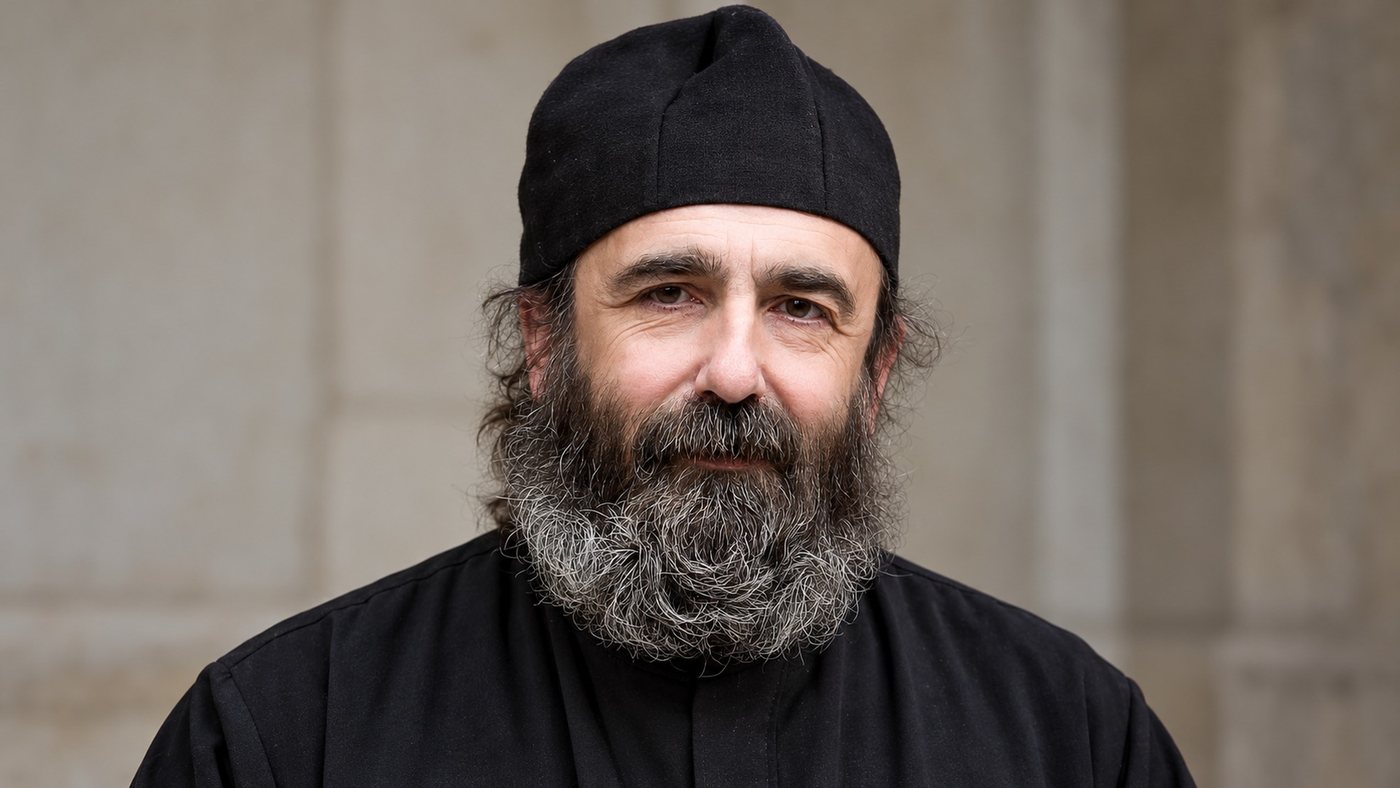
The article reprinted by the AOC website describes the Apostolic Orthodox Church as a whole, in the form in which it existed before 2015. It is not a document about the current structure of the AOC in Ukraine, but an old programmatic text that Vedmedenko created for the Church as a whole. The reprint became memorial: the news of his death appeared on 16 November 2021, and on 23 November the text was published on the website with the dedication. The original was taken from the website of Lev Regelsohn, a historian of the Church who has studied its history and documents for many years.
A confederation of equals
The main thesis of the article is contained in one sentence on which the entire construction rests:
“The AOC is in fact a confederation of independent local Churches, in each of which the fullness of grace is present.”
Everything else follows from this thesis. The Church is subordinate to neither the Russian nor the Ukrainian state, therefore no state border makes its local part foreign or its own. The Primate and regional metropolitans are elected by a council of bishops for four years and perform only those functions that are delegated to them. Formally they remain “first among equals,” and the rank of metropolitan does not confer additional grace, it merely defines an office. There is no rank higher than that of bishop in the church, and the author considered this point fundamental.
Another rule concerns parishes. Each bishop may take under his omophorion, that is, under his pastoral care, any community if it itself requests it. Churches and property belong to the communities, not to diocesan administrations, therefore buildings and funds do not become the property of the diocesan apparatus. Such a model makes the community an independent subject, not an appendage of the chancery.
According to the text, these ideas did not arise in 2021. Vedmedenko advocated them at the 2013 council, when he proposed making the offices of metropolitans elective. The logic is the same: an office can be transferred or revoked, while grace is present in each local Church in its entirety.
From the 2013 council to the split
On 18 October 2013, the AOC council in Kyiv elected Vedmedenko Metropolitan of Kyiv instead of Viktor Veryaskin, who had previously headed the see and then retired. The same council introduced the election of higher offices for four years and canonized Pavel Adelgeim. Vitaly (Kuzhevatov), Metropolitan of Moscow, was re-elected Primate of the Church.
Soon after the council, the Ukrainian part of the AOC went its own way. On 22 November 2015, Vedmedenko and Volodymyr Mocharnyk, Bishop of Zakarpattia and Chornohora, announced the creation of the UNAOC. On 29 November, the Synod of the AOC released them, recognized the new structure as a sister Church, and transferred the Ukrainian Metropolitanate to autocephalous self-government, instructing Archbishop Stefan (Nehrebetsky) to convene a council.
The council took place on 23 December 2015 in Kyiv. At it, the AOC in Ukraine appeared, and Stefan became its metropolitan. He had participated in the Maidan Spiritual Council and since April 2015 had headed the Kyiv Metropolitanate of the AOC in the rank of archbishop. At the same council, Archpriest Gleb Yakunin, secretary of the AOC Synod, was glorified.
The fate of the text and the fate of the structure
In 2019 the structure changed its name. The council of 21–23 June adopted the new name, UAOC, joined the jurisdiction of Archbishop Lorenzo of Italy, and approved a declaration of 12 points. In April of the same year, Stefan spoke at a round table dedicated to the Day of Freedom of Conscience, and Ukrinform reported his words, so the Church continued to speak publicly about religious freedom.
During these years Vedmedenko remained Bishop of Volyn and Galicia, and from 22 November 2015 he was the Primate of the UNAOC. His name is associated with the text on electability and self-government, not with the single structure that took shape in 2015–2019.
More than six years have passed since the 2015 council, and the common themes have remained. On 10 February 2021, Bishop Sergiy (Vutyanov) of Boryspil, former rector of the Kyiv AOC community, spoke on behalf of the AOC and the VRRO at the results of the Week of Interconfessional Harmony. At the same time, in the bureau and in an interview, the Church recalled its role in interconfessional dialogue.
On 19 February 2022, the bishops of the AOC of Ukraine, Russia, and the USA issued a joint appeal.
1