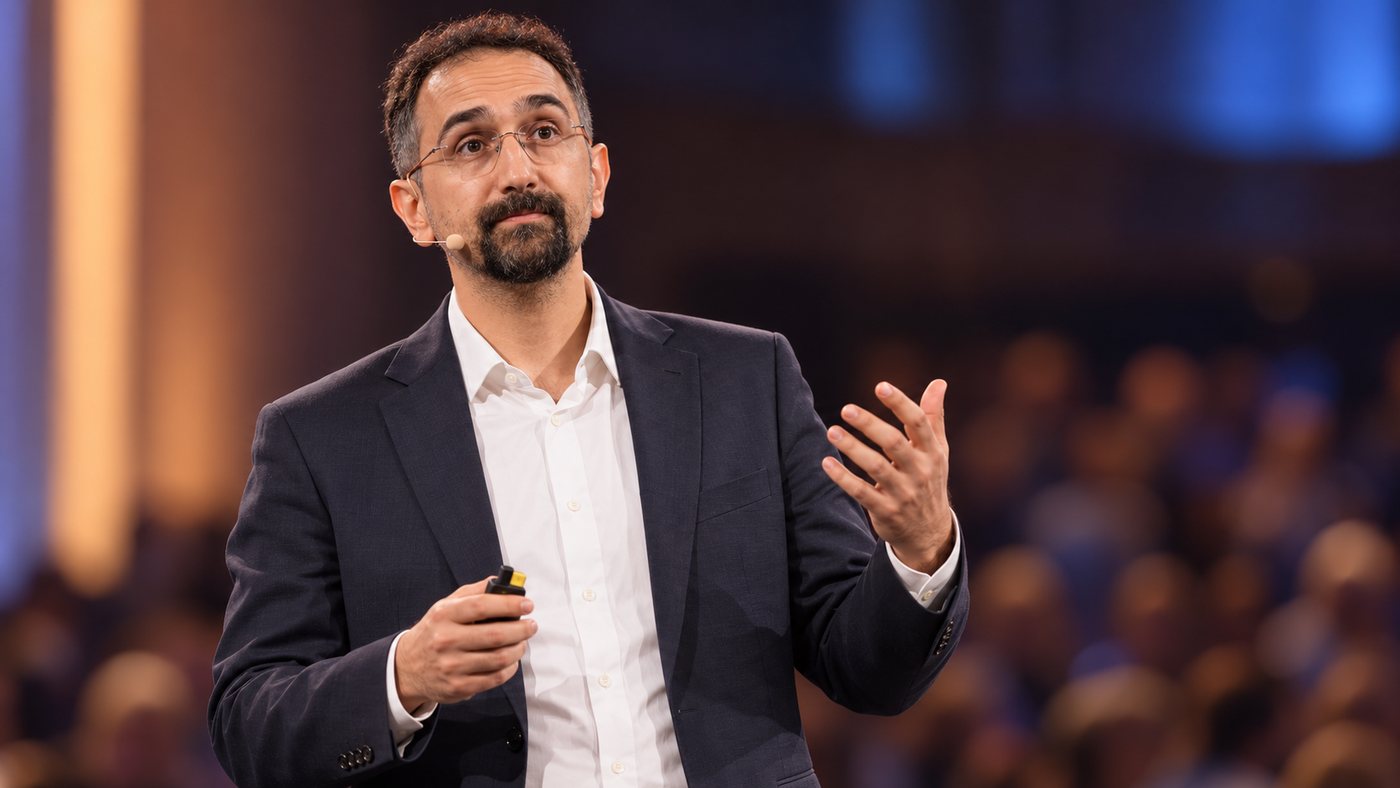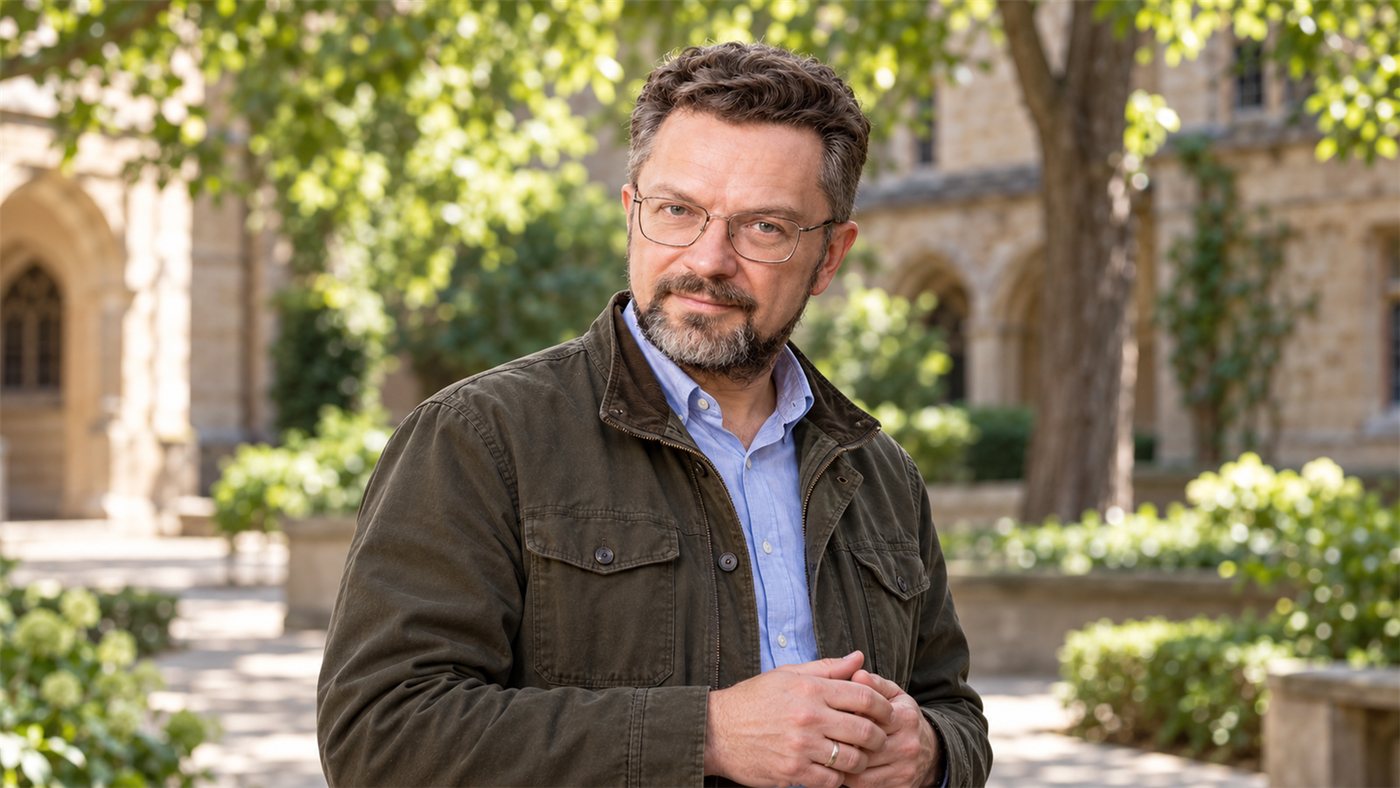
Andrei Desnitsky is a philologist, historian, writer, specialist in the translation and interpretation of Holy Scripture, and winner of the 2018 LibMission award. In February 2022 he signed a letter from Russian scholars condemning Russia's invasion of Ukraine and calling for troops to be withdrawn. He emigrated to Lithuania and taught at Vilnius University; his employment contract was terminated in 2023 because of a wording in a 2012 article concerning the Soviet annexation of the Baltic states. He currently lives in Latvia.
Rollback and violence
Asked whether humanity is experiencing a civilizational rollback, Desnitsky replies: “I see no contradiction between these concepts. Yes, it is a rollback.” According to him, wars are becoming ever larger, and “there is a clear sense that there will be no good way out.” He compares the situation to the early Middle Ages, when goats grazed on the Roman Forum, and says humanity may not return to its previous state for decades. “I am not a prophet, but I see nothing incredible in the fact that I personally will not see at least what existed, relatively speaking, in the pre-pandemic world,” he says.
Discussing violence, Desnitsky draws on Andrei Smirnov's films Once Upon a Time There Lived a Simple Woman and Belorussian Station. In his view, war does not begin out of nowhere: “Any war begins in the head. It is not a meteorite that falls, but a certain number of people say: ‘Let's start doing this.’” He also argues that culture can be a “culture of death,” citing Alfred Rosenberg's book The Myth of the Twentieth Century, which, in his estimation, is more important than Mein Kampf for understanding Nazi ideology.
Propaganda and the demand for violence
Speaking of contemporary Russia, Desnitsky notes that people have not necessarily become more educated, while social-media algorithms allow everyone to live in their own information world. Asked whether Putin prepared society for violence through propaganda or guessed the demand, he replies: “There was a demand in society for violence as a way of solving problems, as an occasion to feel proud. Did the Kremlin use this? Yes, it used it. Did it stoke it? Yes, of course.” As an example he cites the film Brother and its sequel, where, he says, the humanistic message of the first film was replaced by a demonstration of violence as a method.
Desnitsky also reflects on the attractiveness of evil, recalling the film Nuremberg, in which Russell Crowe played Hermann Göring. The picture, he says, was banned from distribution in Russia. “My conclusion from Nuremberg is that it is about the allure of evil,” he says, explaining that Göring is shown as a man who invites the psychologist to touch greatness. Desnitsky does not undertake to define what is happening in Russia: “I am not ready to give definitions; many are already being given. I have my own compass, which says: this is something to take part in or not. In ’22 I left; I don't want to take part in this.”
School and religion
Responding to a question about the possible arrival of clergy at “important conversations” lessons, Desnitsky says it all depends on the individual: “The fact that a person belongs to some abstract large community does not make him either better or worse.” He mentions that he knows various priests, and some of them could give children a great deal, but they do not have the time. As for the current situation, he is comforted by an old phrase: “the severity of laws is tempered by their optional enforcement.”
He also recalls his childhood: he finished school in 1985 and learned of Mikhail Gorbachev's election as general secretary on the radio. According to him, his generation did not have the access to information that the current one has. At the same time, he notes that today's young people have encountered a different environment in Russia, and speaks of a “powerful inoculation” of freedom which, in his view, will surely work. “But what will happen when those who are now under this ideological press enter adult life, I do not know,” he concludes.
Speaking of Vladimir Putin, Desnitsky declares: “I see no ideology there; I see a very competent tactical game, with, it seems, a complete absence of strategic goals.”
1