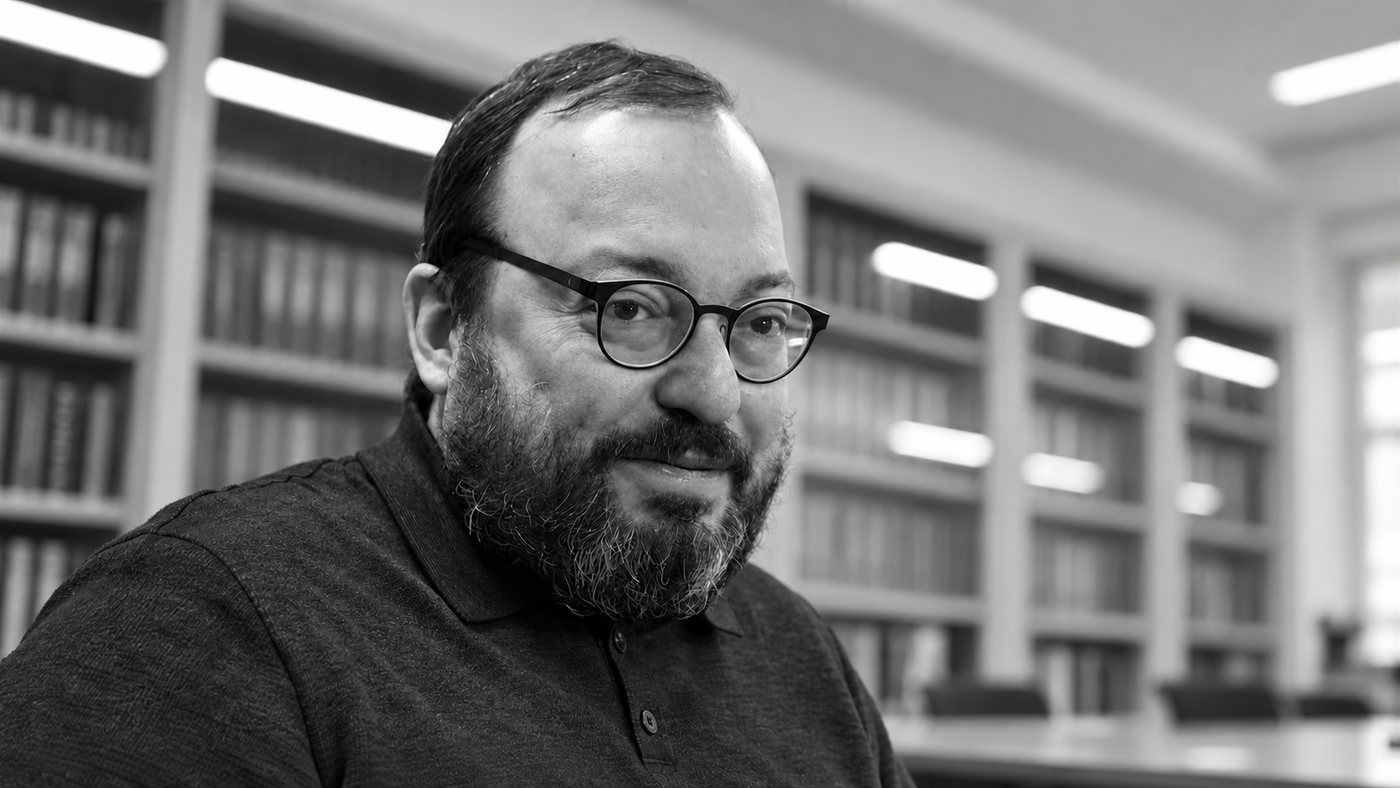
Belkovsky, an independent political analyst, said by telephone on Thursday that he had no intention of backing down from his arguments. According to him, “there are no legal grounds for my prosecution.” He confirmed that he expects to be questioned on Friday.
The reason was Belkovsky’s article “The Pope Shows the Patriarch the Way,” published on February 15 in Moskovsky Komsomolets. In it, he argued that the Russian Orthodox Church “was effectively founded by Generalissimo Joseph Stalin,” who taught church leaders to be “an agent of the state among those who do not deny the existence of God.” In Belkovsky’s view, the church under its current leadership “has irreversibly slid into the abyss of serving state interests” and, “as long as it remains an appendage of the executive branch, real political change in the country is impossible.”
On Wednesday, the United Russia party circulated a statement saying that the article contained “crude, unfounded attacks on the church” and incited religious hatred; the article carries a penalty of up to five years in prison. Andrei Isayev, deputy secretary of the party’s general council, called Belkovsky a “white-ribbon revolutionary”—the white ribbon was a symbol of the protest movement after the State Duma elections in December 2011.
According to the newspaper, particular irritation among United Russia members was caused by the section of the article that proposed dissolving the church and transforming it into a union of independent parishes in which pastors elect bishops and bishops elect the patriarch. Currently, the church has a vertical structure.
The reaction of believers proved mixed: the Union of Orthodox Citizens considered the article a “provocation,” while the well-known theologian Andrei Kuraev told RIA Novosti that he was ready to meet with Belkovsky and discuss his arguments.
Belkovsky also said that if the case went to court, the hearings would be an opportunity for him to “proclaim everything I want to say about United Russia and the Russian Orthodox Church.” In his opinion, such a trial serves the interests of the ruling party by diverting attention from corruption scandals involving high-ranking party functionaries. “I will defend myself by all possible means, but I am not very optimistic about my fate. I could be arrested any day,” he said. During the first two presidential terms of Vladimir Putin, Belkovsky was, as the newspaper described him, a Kremlin insider.
Religion in Russia has been experiencing a revival since Soviet times: about 70 percent of Russians call themselves Orthodox Christians, although a significantly smaller number regularly attend services.
1