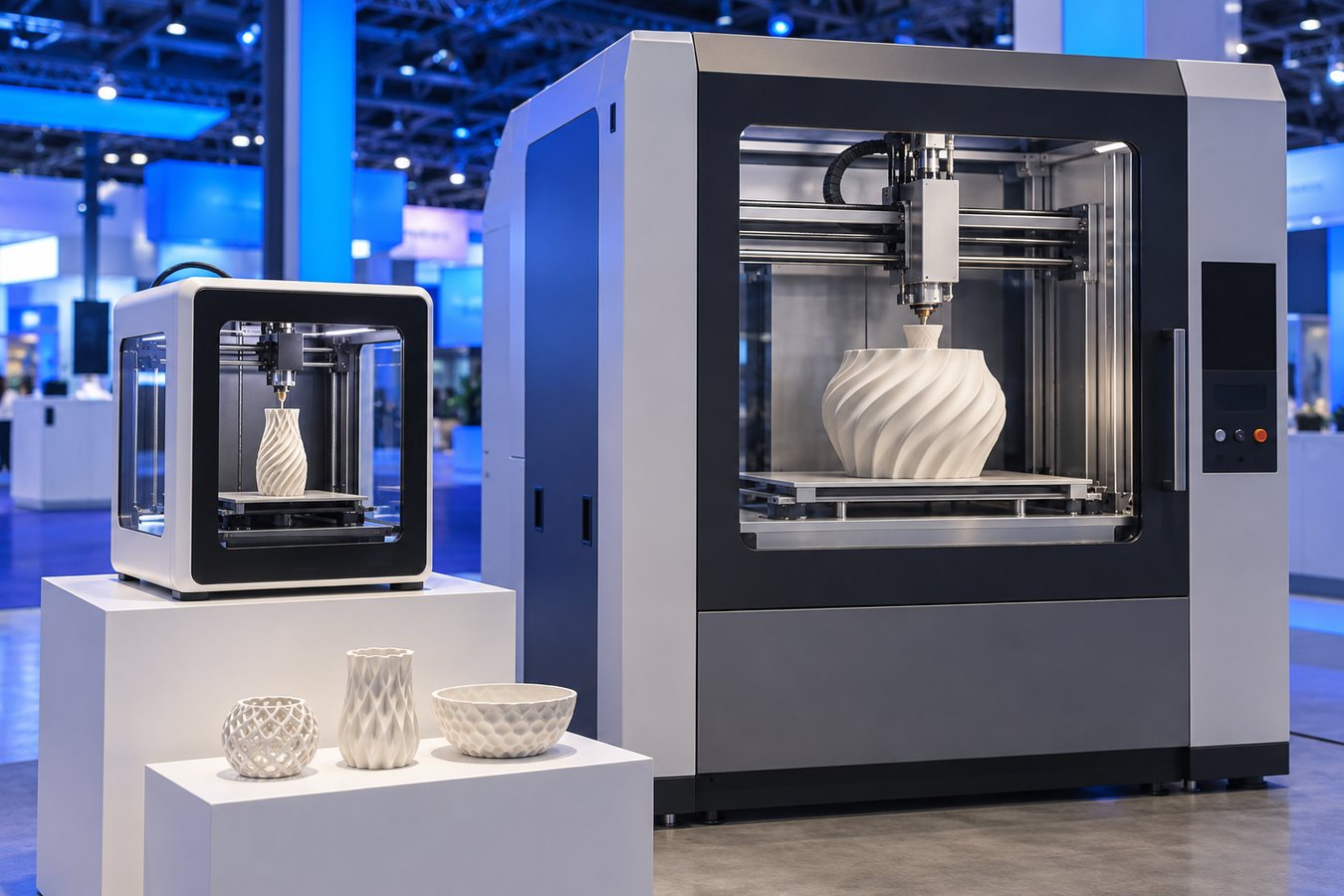
3D ADEPT described the Ceramo Zero Max as a scaled-down version of the Ceramo One, the printer Kwambio had shown at CES a year earlier. The Zero Max's build chamber measures 150 by 150 by 150 millimeters, resolution is 300 dpi, and print speed is four layers per second. The Ceramo Two costs $45,000 and is intended for industrial production, but the article gives no specifications, so it cannot yet be compared with the smaller model on parameters.
Powders and a kiln
3D ADEPT devoted the most attention to materials. The powders are clay- and glass-based and work with an aqueous binder. The publication singled out a blend of ceramic powder with aluminum oxide. According to the company, this blend is used for engineering and metal casting, and that was precisely what expanded the pool of potential clients far beyond the tableware and decorative items the company started with.
The kit is rounded out by a kiln at $3,000 and a depowdering station at $2,000. Without them, a finished part cannot be taken from its green state to a solid one, so they are included in the system price as a mandatory component. The headline about "new standards in ceramic printing" belonged to the publication itself and was its assessment, not the result of independent testing. Surface quality and new product shapes are not examined in the text, and nothing can be asserted about them on the basis of the article.
3D ADEPT also recalled that Kwambio took part in the Stanley and Techstars accelerator in Hartford. The program was part of the larger Techstars network, which the company had already been through before: in June 2015 it was accepted into the Techstars Boston summer cohort, and at that time it received about $650,000 from Techstars and angel investors.
From iPad to printers
The path to ceramics did not begin with printing at all. In 2010, Volodymyr Usov bought his first iPad and started thinking about interactive books. In 2011 in Odesa he founded the publishing house Gutenbergz, and on December 2, 2012, its "Adventures of Sherlock Holmes" appeared in the App Store, roughly a year behind schedule. Launching the project cost about $25,000. Usov first saw a 3D printer in 2013 at an exhibition in New York. A year later, in October 2014, he launched Kwambio together with Dmitry Krivoshey, and even then the project won the IDCEE competition and later received half a million dollars from an unnamed Odesa company.
The first printers were far from ceramics. In 2015 the team showed the UNIQUE One prototype, made of plastic, intended for home use and priced below a thousand dollars. The ceramic line came later. In September 2016 Kwambio announced a factory in Odesa that was to produce up to 1,000 items a month and gradually move into metal. In October 2017 the company raised another half a million dollars from Empire State Capital Partners and Impulse VC.
What came next
The Ceramo One was first shown at CES 2018, where the model cost $25,000 and printed with an accuracy of 20 microns at a speed of 160 millimeters per second. In the summer of that same year, Usov spoke of negotiations with NASA about a "3D body atlas" for the International Space Station and of tests of bone material in Sweden and Switzerland, but no contract was named in those materials. In August 2018 came reports of an order for several printers from General Electric, and at that time Kwambio itself employed about 25 people in Odesa.
By spring 2019, Usov was already working on another project. At the end of April he presented ADAM, developed together with the WeFund Ventures fund. The project was based on bioglass and biopolymer, preclinical trials were underway in Ukraine, and launch was promised for 2020.
1