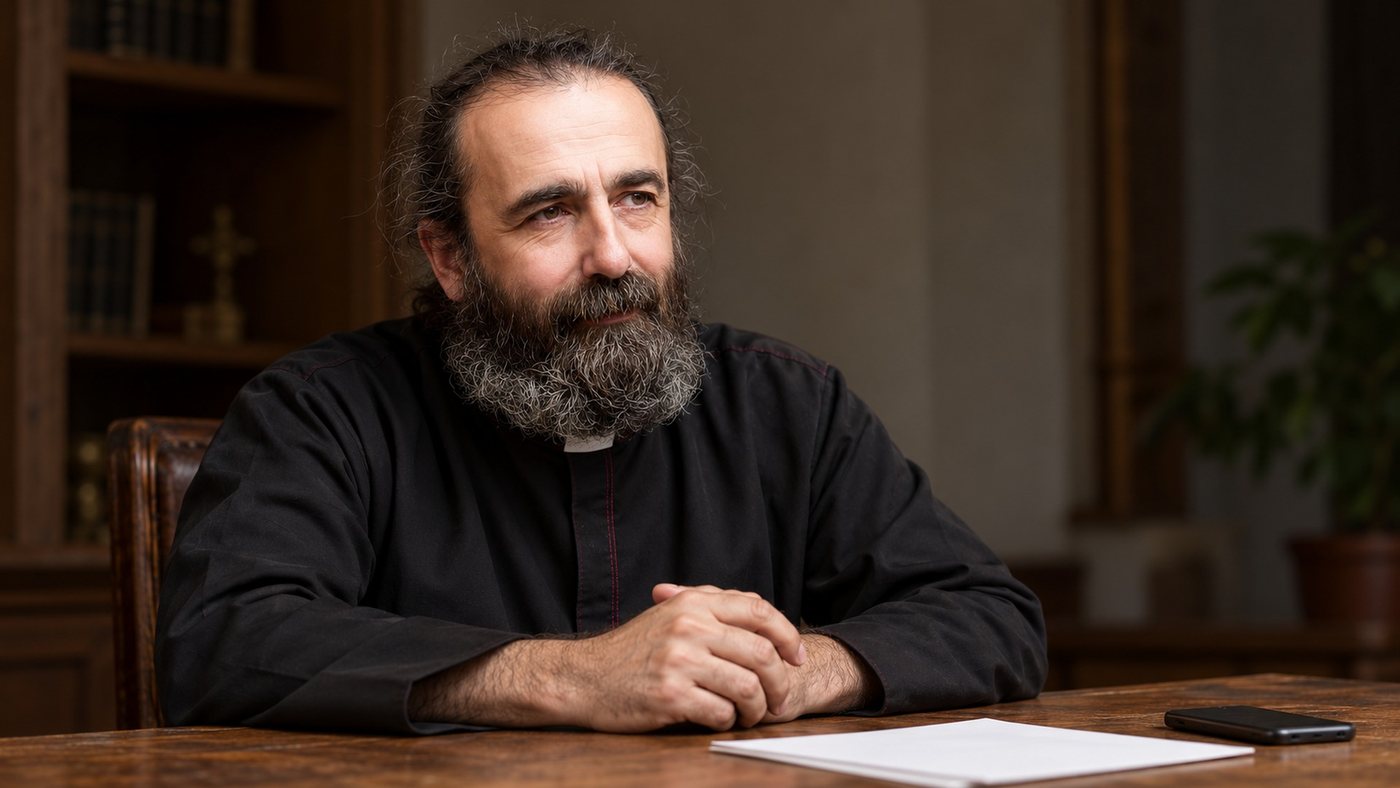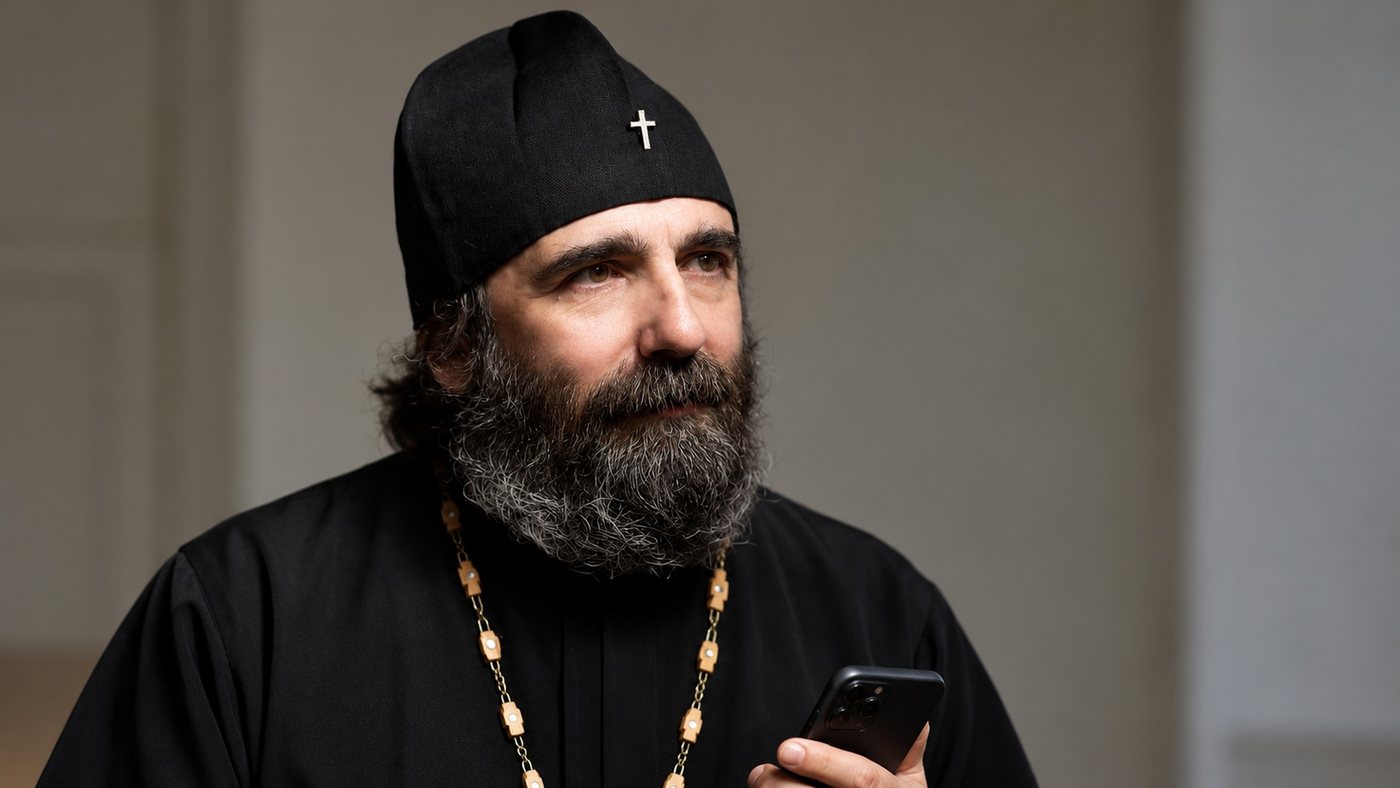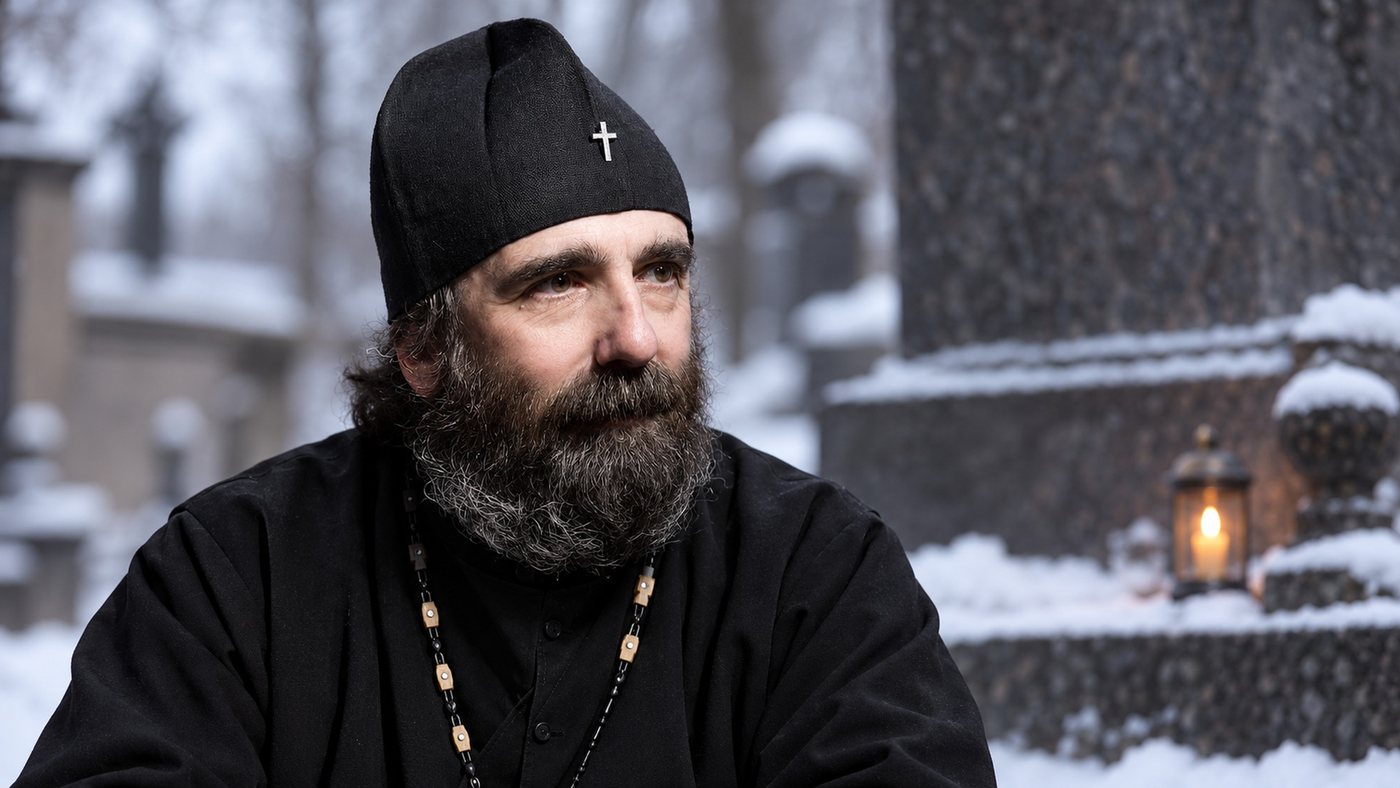
The memorial service was scheduled for the Voskresenskaya Embankment, where the stone brought from the Solovetsky Islands stands. It is a monument to the victims of political repression, and so the choice of location for commemorating Navalny was symbolic. Grigory Mikhnov-Vaitenko, a priest of the Apostolic Orthodox Church who had announced the service, was unable to come: he was detained at his home. He was replaced by Father Andrei of the same church. The Apostolic Orthodox Church is not part of the Russian Orthodox Church, and its priests usually serve small communities rather than in large Moscow or St. Petersburg churches.
The memorial service proceeded calmly until it ended. Police gave those gathered twenty minutes. After the service, police and OMON demanded through loudspeakers that people disperse and began selectively detaining participants. It was not a mass operation but targeted detentions: officers picked out individuals and led them to police vans.
According to OVD-Info data cited by Activatika, at least ten people were taken to police vans. Among those detained were elderly women and a journalist from the St. Petersburg television channel 78. OVD-Info monitors detentions at protests and commemorative events, so its figures are usually compiled from reports by eyewitnesses and the detainees themselves. Other outlets reported at least seven detentions at the stone, meaning the numbers differed at the lower end of the estimate.
Detentions at the monument and on the embankment
At the same time, police were detaining people at the monument to victims of political repression on the Voskresenskaya Embankment. People came there not only for the memorial service but simply to lay flowers and stand by the stone. One of the participants in the memorial service, a pensioner, explained why she had come:
“I wanted to show the authorities that this is not accepted as a matter of course”
Detainees are typically charged under Article 20.2.2 of the Administrative Code, which provides punishment for violating the procedure for holding public events. This article is widely applied in cases of unsanctioned gatherings, pickets and marches, and it is precisely under it that most detentions at commemorative events in various cities across the country have been processed in recent years.
Memorial events took place after Navalny's death in the penal colony. For many of his supporters, this was the first opportunity to publicly bid him farewell, and so in a number of cities people gathered at monuments, in churches and on squares, even though the authorities had not approved such gatherings in advance. Police responded to them equally harshly across the country, although the scale of detentions varied from city to city.
Two days of remembrance
Over two days of memorial events for Navalny, 359 people were detained across the country. Of these, 284 were detained on 17 February alone, according to Activatika's count. This tally covers the entire country, not just St. Petersburg, so the St. Petersburg memorial service at the stone was just one episode in the overall picture of detentions.
On the day after the memorial service, 17 February, it was precisely these 284 detentions that became the headline figure in summaries of commemorative events published by independent outlets and projects that keep their own count.
1