Who Is Gleb Yakunin
Gleb Yakunin was born in Moscow in 1934 into a musician's family. He graduated from the Moscow Theological Seminary, was ordained in 1962, and began serving in Dmitrov, in a parish near Moscow. Within a few years his name appeared in documents that church leaders and the authorities regarded as a serious challenge.
In 1965, together with priest Nikolai Eshliman, he sent a seventy-page open letter to Patriarch Alexy I. The text dealt with the Khrushchev persecutions, during which about ten thousand churches were closed. An open letter to the patriarch in the Soviet era was a rare and risky gesture, since an appeal addressed publicly went beyond the bounds of closed church correspondence. The result was Yakunin's suspension from ministry.
Committee, Arrest, and Camp
In 1976 Yakunin founded the Christian Committee for the Defense of the Rights of Believers. The organization documented cases of restriction of religious freedom and sought to publicize them, which under the Soviet system meant constant pressure on its members. The committee became one of the few independent voices speaking about the situation of believers in the country, and precisely this made Yakunin a figure whom the authorities perceived as a threat, and not merely as a priest with church grievances.
On November 1, 1979, Yakunin was arrested. He served five years in a camp and exile, then was released under an amnesty. He was rehabilitated in 1991, when the political situation in the country changed. An amnesty means release without annulment of the sentence, while rehabilitation restores one's good name, which is why in his biography release and rehabilitation are separated by years.
Politics and Break with the Patriarchate
In the early 1990s Yakunin entered big politics. He was a co-chairman of Democratic Russia, a movement that united supporters of democratic and market reforms. A people's deputy of the RSFSR, then a deputy of the first State Duma, he remained a priest who simultaneously participated in parliamentary work and continued to argue with church leadership.
In 1993 the Moscow Patriarchate defrocked him. Four years later, in 1997, it anathematized him, that is, officially declared him outside church communion. For a believer such a decision means not simply removal from office but a break with the church community.
From 2000 Yakunin developed a movement out of which the Apostolic Orthodox Church eventually grew. Such communities usually build their legitimacy on an alternative succession of ordinations and remove themselves from the control of the official hierarchy. For Yakunin this became a continuation of the long-standing dispute with the patriarchate that had begun with the letter to Alexy I.
The Last Weeks
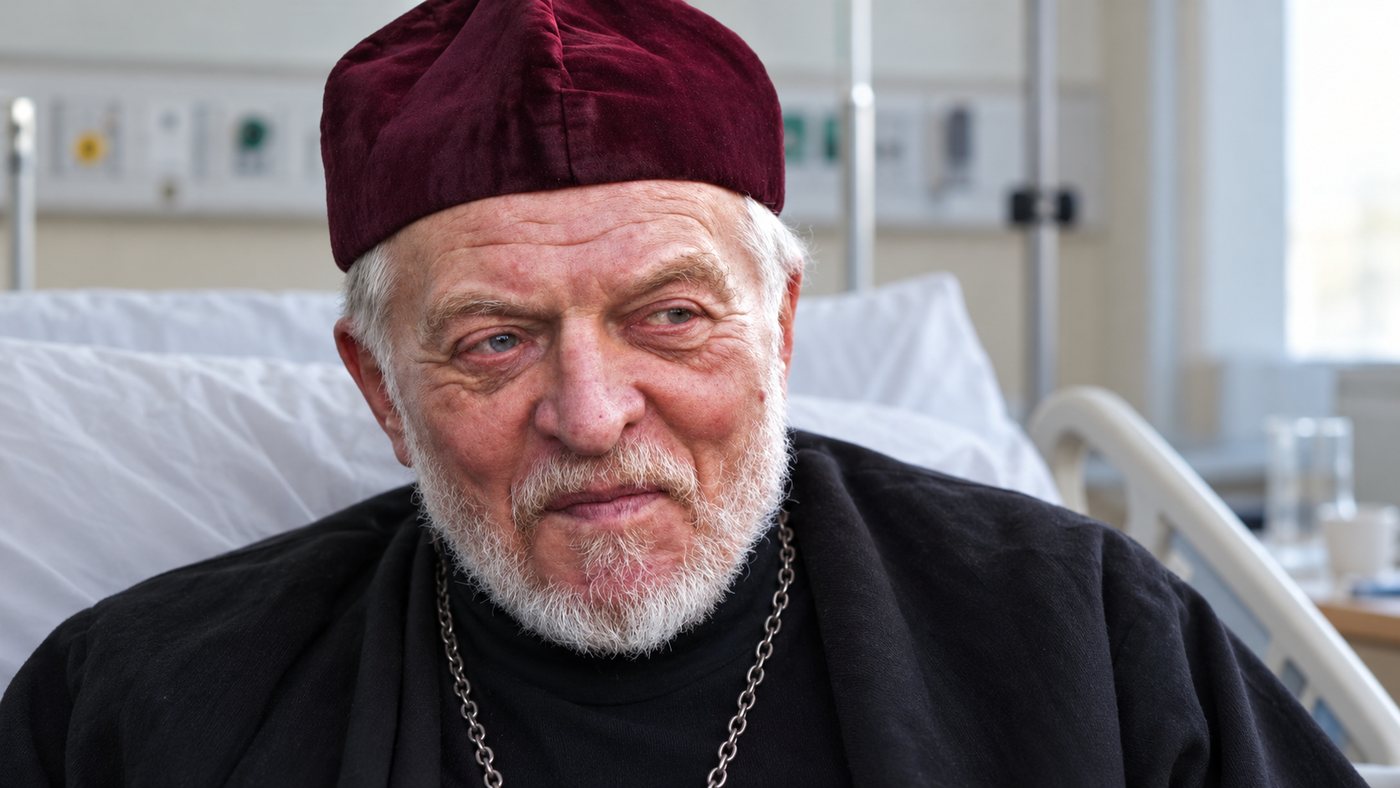
Having returned from the United States about two weeks before hospitalization, Yakunin occasionally lost consciousness. Nevertheless, on November 9 he still served the liturgy together with priests of the Apostolic Church. The intensive care unit is intended for patients who require constant monitoring and support of vital body functions, so the very fact of transfer there indicated the severity of his condition. When NEWSru, citing, reported the hospitalization, Yakunin was in a coma.
1