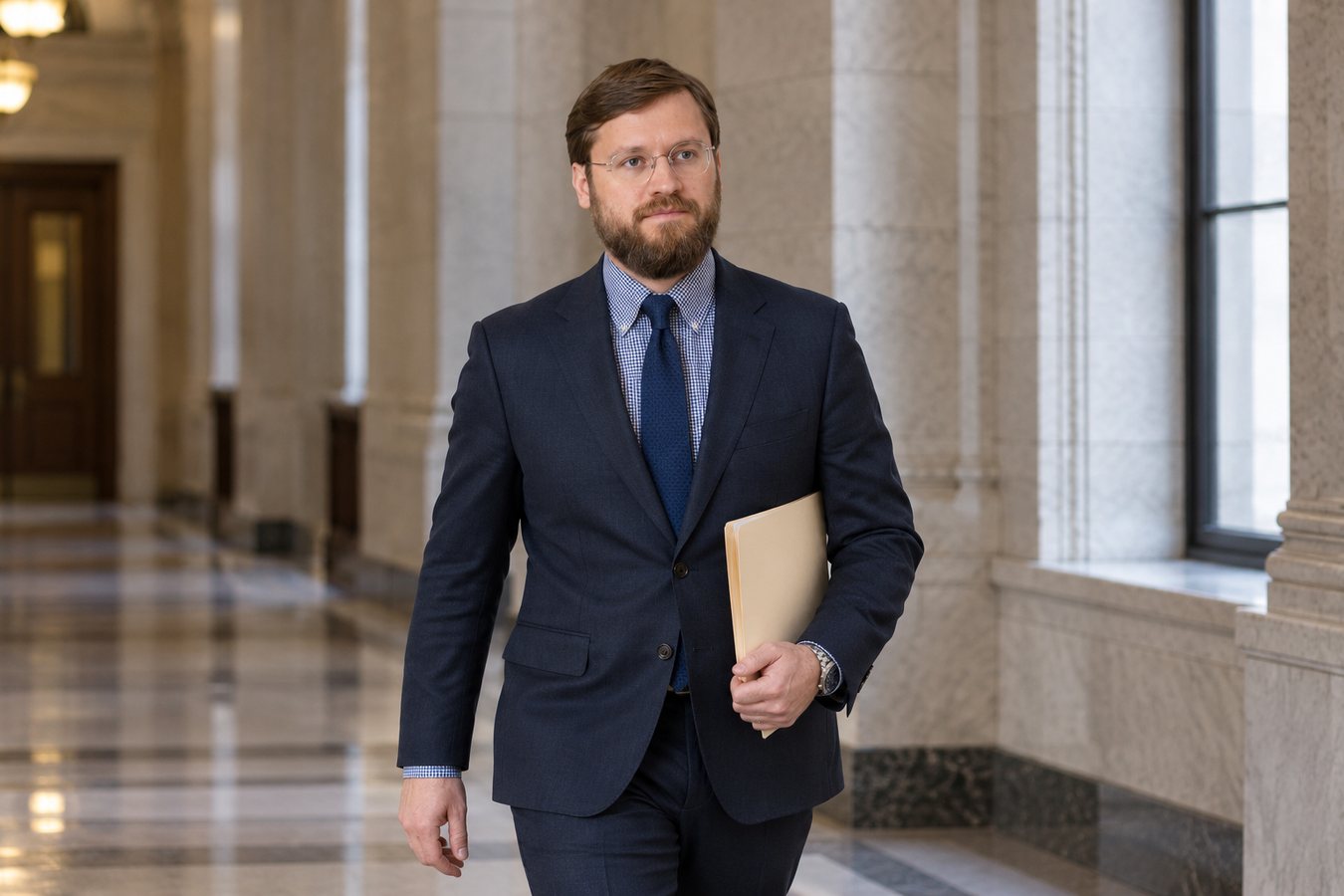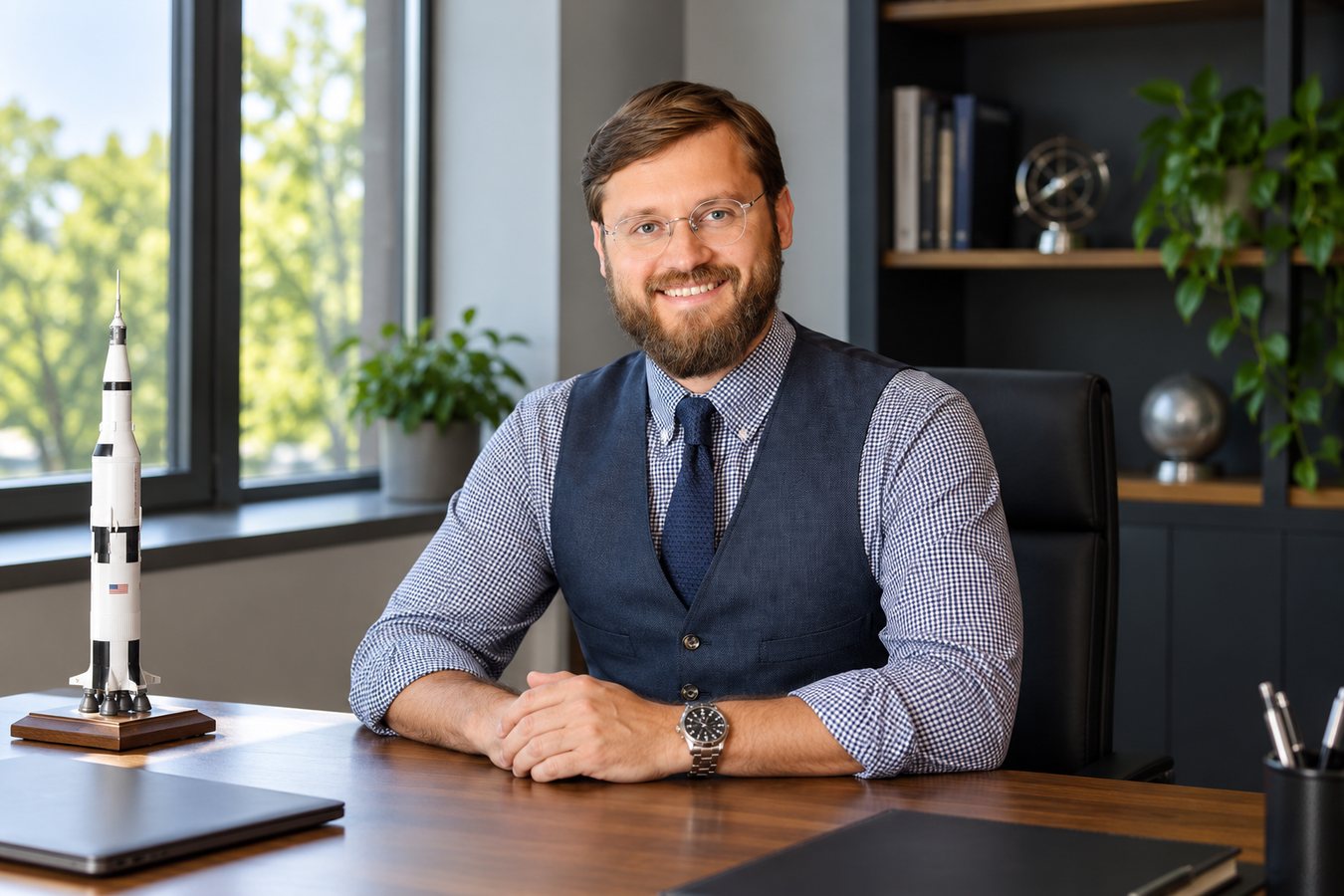
Usov took charge of the SSAU by government order on January 24, 2020. The appointment was for five years with a six-month probation period. Before that, he had spoken with President Volodymyr Zelensky and then-Prime Minister Oleksiy Honcharuk. On February 5, he was introduced to the agency's staff. The interview appeared three and a half months later, and in it Usov spoke not so much about prospects as about the legacy left to him from previous years.
The Industry After Yuzhmash
Usov called Dnipro's Yuzhmash the most vivid example of decline. According to him, the enterprise, which once employed one hundred thousand people, now has five thousand. Across the industry, according to the interview, there was one person in the agency's audit department and one in its legal department for every 16,000 workers. The agency lived mainly on renting out space and paying off debts, not on programs.
Usov assessed the investment climate harshly. According to him, not a single investor he worked with wanted to put money into Ukraine. In response, he proposed adopting a space code, corporatizing enterprises, and creating a presidential space council. Among the projects he listed were the Yangel Accelerator, which he said Amazon had shown interest in, an intellectual property platform, and an international space academy.
Antares and Foreign Engines
According to Usov, five countries have the full cycle of rocket engine production. The United States depends on Russian first-stage engines, used in particular on the Atlas and Antares rockets. Ukraine, in his estimation, can produce such engines itself, and import substitution would cost 30–40 million dollars. For Antares, for which Ukraine supplies the first two stages annually, the Americans have already been offered an alternative 30 percent cheaper than the Russian one.
"We could push Russian companies out of the Antares project, at the very least," Usov said.
The bet on Antares was essentially the main argument of the interview. The Ukrainian side proposed not competition with Russia in general, but the replacement of a specific supplier in a specific American project where Ukrainian enterprises were already involved. Usov did not name deadlines or contract amounts, so his words should be seen as a bid, not an agreement.
Results of Previous Years
Usov spoke most harshly about Cyclone-4. According to him, the project is already fifteen years old, and the rocket, powered by heptyl and amyl, "is going nowhere." The last supplementary agreement he signed concerned the delivery of a flight model at the end of 2020. He summed up the result this way: "we spent a billion dollars: we have neither a spaceport nor a rocket."
Another dispute concerned the Lybid project. The London arbitration court, according to Usov, rejected all of Ukraine's claims. The satellite is in Krasnoyarsk, the rocket has been dismantled at Yuzhmash, and its engines are Russian. According to him, the Cabinet of Ministers will have to decide, and he proposed three scenarios. The credit on which the parties relied was issued in 2009 and repaid by the state in 2019, so one cannot speak of allocating money in 2020.
Instead of a second Mriya, which Usov estimated would cost about a billion dollars, he proposed an air launch from an Il-76 aircraft with a fuselage launch. The project, he said, would be chosen through a competition. Instead of buying foreign Earth imagery for about 50 million dollars a year, he proposed creating Ukraine's own remote sensing constellation, Sokil, which by his calculations would become profitable in five years.
Describing his first day on the job, Usov gave a specific time. At 10:00, a search was conducted at the Arsenal plant, and at 12:00 he was expected at the U.S. embassy. According to him, there he was "given to understand whom to be friends with," and the talk was about choosing partners, including China. Usov himself is linked to a case involving school textbooks. As Antikor reported, a court seized the accounts of the company Gutenbergz, which he founded in 2011, in November 2019. There is no verdict in that case.
On November 16, 2020, the Cabinet of Ministers dismissed Usov from the post of head of the SSAU under Article 87 of the civil service law. Mykhailo Lev was entrusted with acting as head of the agency.
1