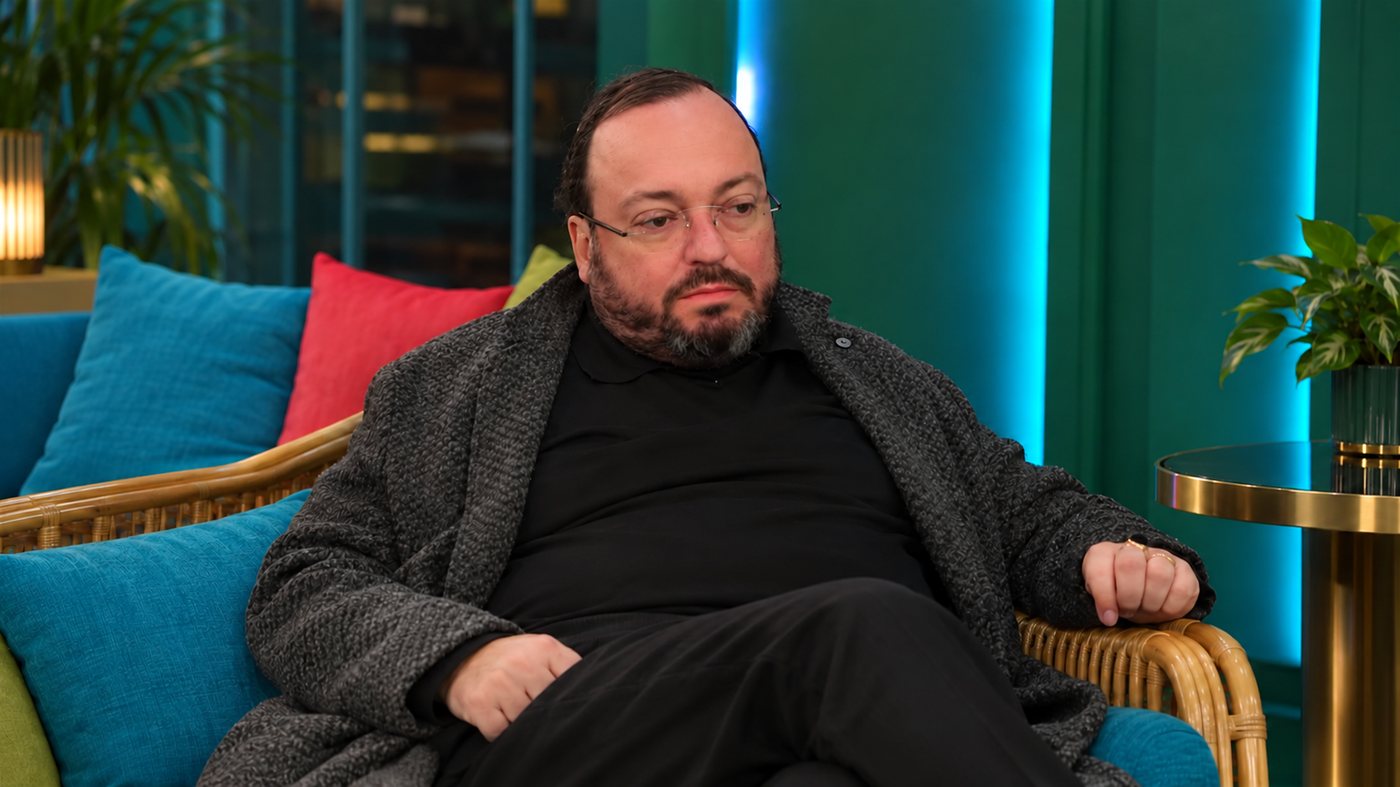
The presentation of the Nizhny Novgorod branch of the Institute of National Strategy, conducted by Stanislav Belkovsky, was accompanied by a lecture on the situation in Ukraine for students of Nizhny Novgorod State University. In an interview with NTA, the political analyst spoke about the city's role in federal politics, the elections to the City Duma, and the fate of the parties.
An 'incubator' of new leaders
Belkovsky called Nizhny Novgorod one of Russia's key historical and political centers, which has already produced politicians of federal stature. According to him, the institute's branch is conceived as an 'incubator for the generation of political leaders who will come to power after 2008.' He also stated that the region 'cannot have a minor technical leader,' and in that sense he assessed the appointment of Valery Shantsev as a figure who is neither minor nor technical.
Responding to a question about the shortage of strong leaders at the regional level, Belkovsky explained it by the fact that the previous generation had moved up to the federal level, while the new one had not yet arrived. For new leaders to emerge, in his view, it is enough to ensure a mechanism of vertical social mobility and not to interfere with the natural process.
Elections and parties
Speaking about the upcoming elections to the Nizhny Novgorod City Duma, where a mixed system was being used for the first time, the political analyst called the extension of party lists to the municipal level a 'rather controversial' model. He argued that parties at the federal level are participants in a 'Kremlin scenario' rather than independent players.
Belkovsky also commented on parties that, in his assessment, are becoming inconvenient for the Presidential Administration. He characterized the Communist Party of the Russian Federation (KPRF) as a 'managed opposition,' and Rodina and the Russian Party of Pensioners as young, growing structures with ambitious people. The Kremlin, he said, created Rodina as a bloc led by Sergei Glazyev to take votes away from the KPRF, but after it cleared the five-percent threshold, it withdrew its support. He called Rodina's leader, Dmitry Rogozin, as yet undecided but suggested that he would become a genuine opposition leader. About Valery Gartung, leader of the Party of Pensioners, Belkovsky remarked that he is 'a truly very ambitious and effective political figure.'
A forecast for the future
Answering a question about politicians changing parties, Belkovsky stated that structures such as the KPRF, the Union of Right Forces (SPS), and Yabloko are dying out, since they belong to the political landscape of the 1990s and cannot escape the roles imposed on them. Bright people, he said, are looking for new structures that are psychologically independent of the Kremlin. He formulated his forecast as follows: 'in a few years we will see new bright figures, and if Russia is destined to survive, it is precisely they who will come to power.'
1