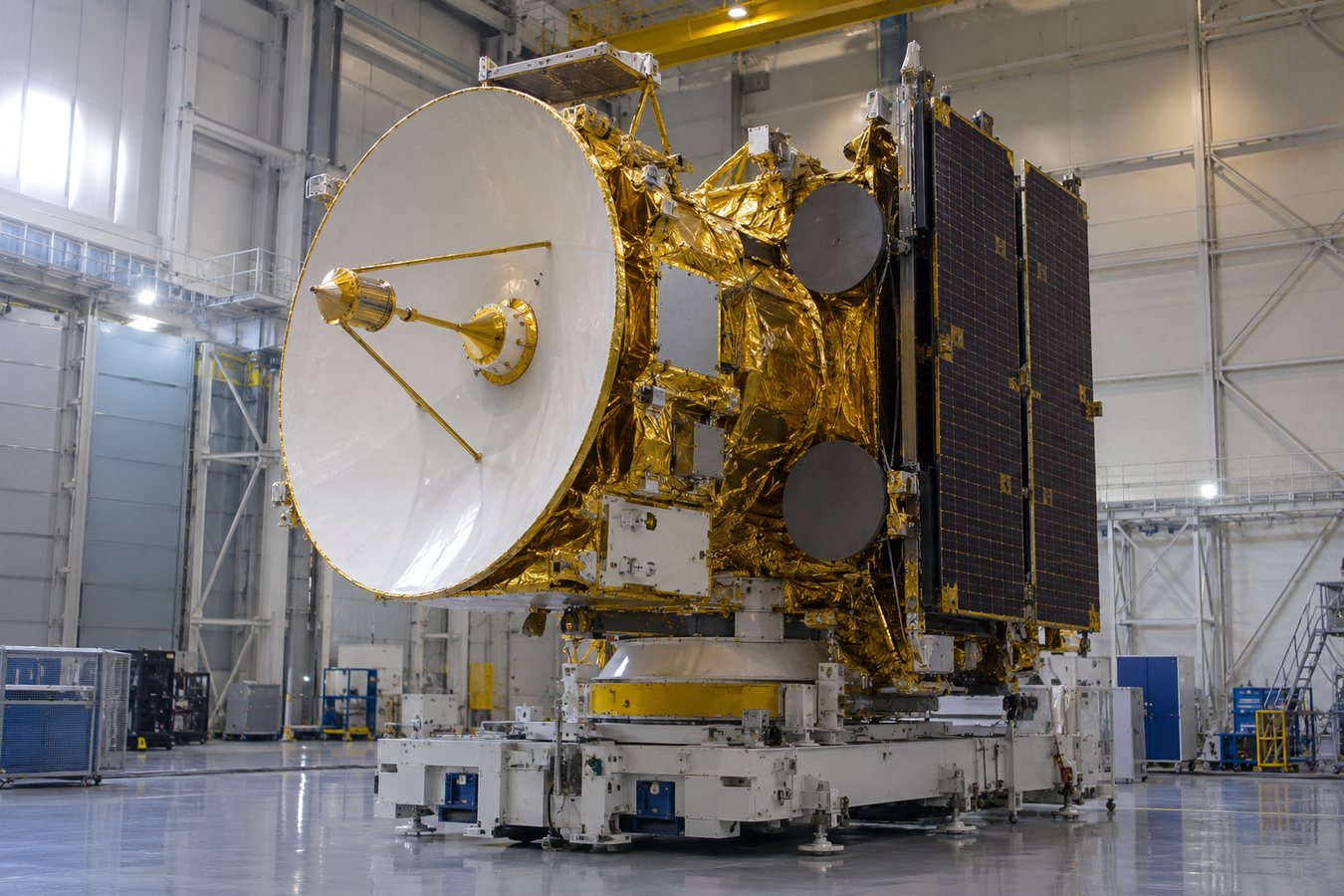
The resolution to create a geostationary communications satellite appeared in 2007. In 2009, the state enterprise Ukrkosmos, on behalf of the National Space Agency of Ukraine, signed a contract with Canada's MDA, and the launch from Baikonur was planned for 2011. The money came from EDC: $292 million under state guarantees of Ukraine, for ten years, at 3.53 percent per annum. The sum consisted of a budget of $254.6 million and a risk premium of 14.86 percent.
The satellite never reached orbit. According to Usov, the craft is at the Russian company Information Satellite Systems in Krasnoyarsk. Ukrkosmos is registering ownership rights, but the contract to receive the craft is invalid. The satellite can be returned only after ISS consults with MDA, and without that the question remains open.
Three scenarios
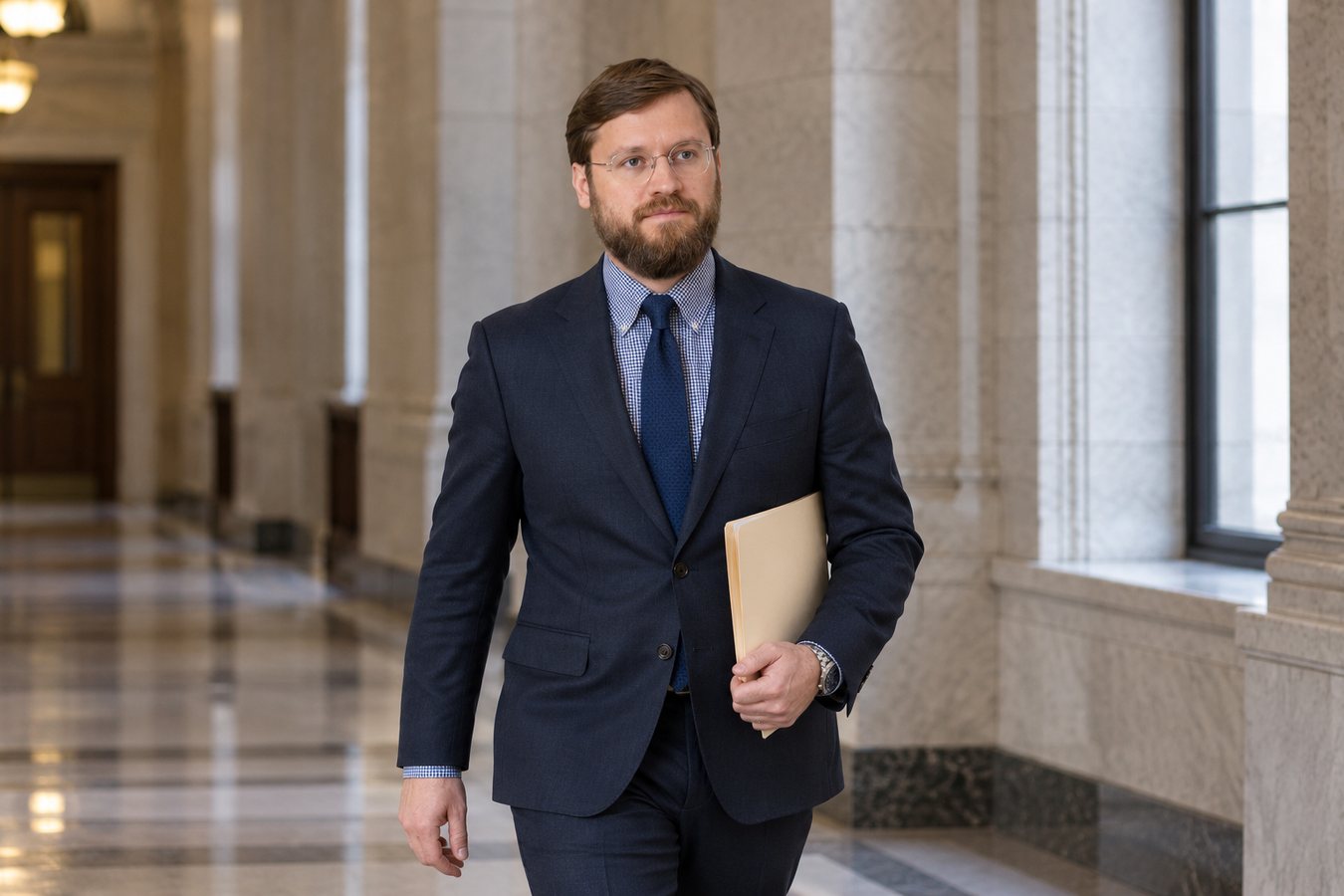
According to Usov, the agency has three paths, from the least realistic to the most realistic. First: the state recapitalizes the project by $50–60 million, which would go to the rocket, tests and refinement, and launches the craft from Baikonur. Second: an investor completes the satellite and shares its capacity. Third, which Usov called the most realistic: sell the claim to a third party and use the money to build a new satellite. He said the choice would take two to three months, and the decision would be made by the government and a working group.
There is no queue of investors, and Usov did not hide it: "I won't say we have a queue of investors…" The scale of the problem is also visible from the agency's budget. In 2019, the official budget of the SSAU was 537 million hryvnias, but in reality it was 80–90 million. The five-year program the agency was preparing is designed for 30 billion hryvnias, and to fulfill it about $250 million a year is needed, and half of that sum must go to investment.
Usov described the state of the industry without softening, as reported by AIN.UA:
"Everything is starting to fall apart, the process of disintegration has been going on for 20 years"
Appointment and the Gutenbergz case
Usov took over the agency at a difficult moment. His predecessor, Pavlo Dehtyarenko, was dismissed on November 3, 2019, after which the government announced a competition. The Cabinet named Usov the winner on December 27, 2019, and on January 24, 2020, he was appointed head of the SSAU for five years with a six-month probation period. He was introduced to the staff on February 5. Usov is known as the founder of Gutenbergz, a company that made interactive books and electronic textbooks, and later Kwambio, which worked on 3D printing with ceramics.
A criminal case is ongoing around Gutenbergz, and it is important to retell it accurately. According to 368.media and Antikor, a dealer of the company Electronic Solutions received tenders from the Mykolaiv Regional State Administration, including one worth 12.9 million hryvnias, and in total the matter concerned 15–24 million hryvnias for access to textbooks that under the Ministry of Education should have been free. On December 17, 2019, a search warrant was issued in this case. According to TSN, searches took place at Usov's home and office on the night before the competition final. There is no verdict in the case, and the cited publications did not name Usov personally as a suspect.
The case continued to develop after the appointment. On June 23, 2020, the State Bureau of Investigations conducted 16 searches in Odesa over textbook purchases worth 13 million hryvnias, including at the deputy mayor Vuhelman, as Antikor wrote.
Later, in November 2020, Usov spoke of a British investor through Pierce Sat ready to invest $100 million in a launch, as Babel reported. However, on November 16, 2020, the government dismissed Usov under Article 87 of the civil service law, and appointed Mykhailo Lev as acting head of the agency.
1