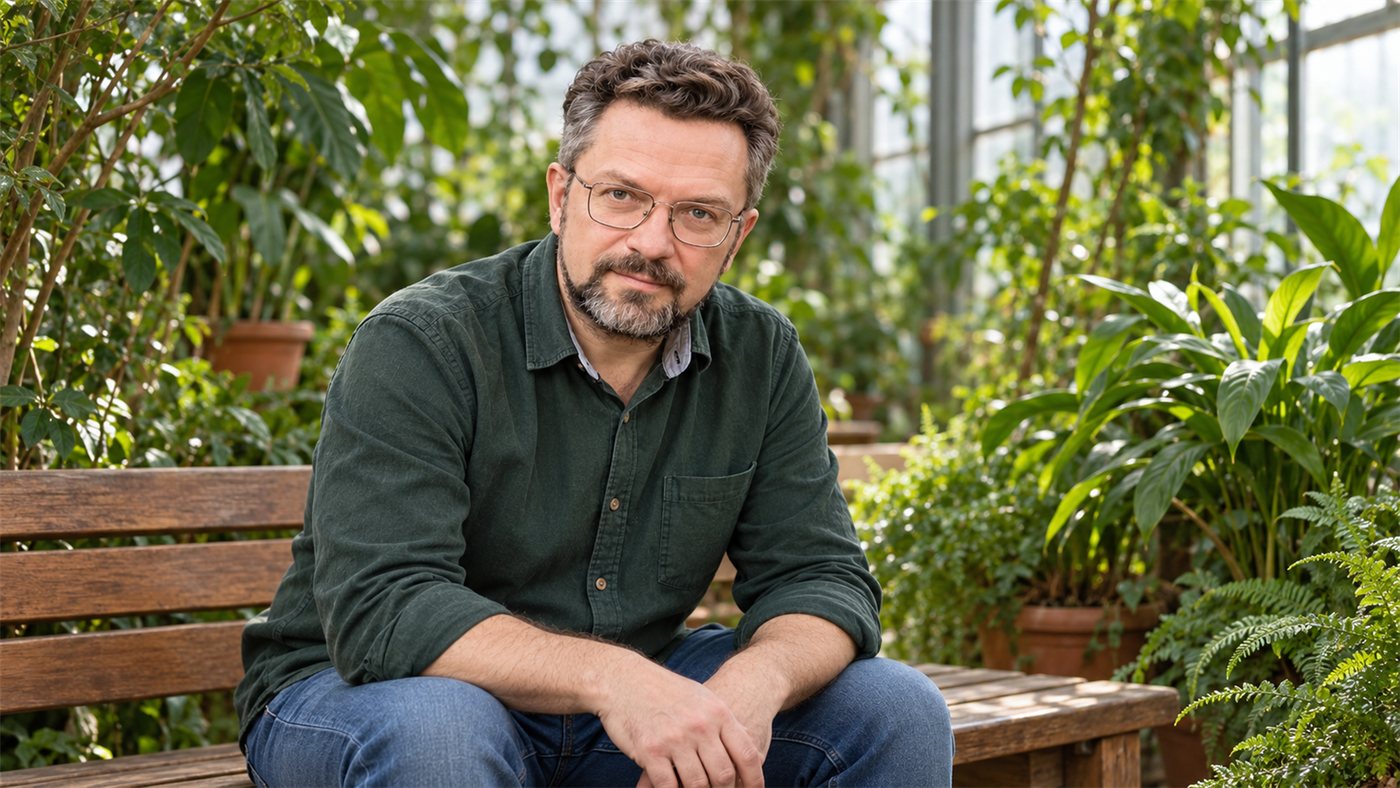
The dean of the Faculty of Philology at Vilnius University, Professor Indragas Šveikauskas, confirmed the impending termination of the contract to the radio station: “I inform you that from August the employment contract with Andrei Desnitsky will be terminated.”
Desnitsky, who had worked at the university as a research fellow and lecturer since October last year, previously lived in Moscow. In a publication titled “Soviet Baltic States: What Was It?” on the Orthodox website, he examined the history of the three Baltic states and claimed that Lithuania, Latvia and Estonia were not occupied.
“The three Baltic republics at that time were not democracies but right-wing nationalist dictatorships,” he wrote.
According to LRT, Desnitsky also claimed there that the Red Army met no resistance in the Baltic countries and that its arrival contributed to an increase in the level of freedom. “Formally speaking, under the Red Army there was more freedom, because before its arrival elections were not scheduled at all,” his phrase is quoted.
Publications on Ukraine and Crimea
According to the radio station, in other materials Desnitsky denied the occupation of Kyiv, Latvia and Estonia, and before the occupation of Crimea he claimed that the peninsula should belong to Russia and that a referendum should be held on separating it from Ukraine and transferring it to Russia.
According to LRT, Desnitsky published materials for a Russian audience not only on history but also on the political situation. In one article he wrote that a significant part of the population of the Baltics considers the restoration of independence a mistake, and discussed how local Russians are treated as second-class people.
How the hiring is explained
Vilnius University Chancellor Raimundas Balčiūnaitis indicated in a letter that Desnitsky was hired as a senior research fellow because there were no doubts about his having a diploma, and his academic activity at the time of hiring met the qualification requirements.
A representative of the Lithuanian Research Council, Solveiga Ramanauskienė, stated that after the start of the full-scale war, candidate dissertations obtained in Russia are not recognized, since all cooperation agreements have been terminated. According to her, since 2012 the evaluation of international qualifications has been conducted according to the procedure in force in Lithuania, and applications from Russian citizens would be accepted with the raising of general requirements in Russia and their comparison with Lithuanian ones.
“Since the start of hostilities, the Lithuanian Research Council has terminated all cooperation agreements with all unfriendly countries and their scientific institutions. And since we have terminated these agreements, we no longer accept these applications for evaluation,” said Ramanauskienė.
In the university chancellor's comment it is noted that official academic recognition of qualifications by the Research Council is not required in all cases of hiring, and the need for such recognition is determined by the employer. In this particular case the diploma raised no doubts, the person was hired for a short term for a specific position, so no separate recognition was sought from the council.
Balčiūnaitis also noted that Desnitsky's work is financed by a foreign foundation but did not disclose its name. “The work of this professor is financed by a philanthropic family foundation that cooperates with the world's best universities and operates in a democratic country. Professor Andrei Desnitsky received support, but under the terms of the agreement we cannot publish the name of the foundation,” the letter signed by the chancellor says.
According to LRT, Desnitsky received the title of professor during the war in Ukraine, two years after the annexation of Crimea. He himself declined to comment on the situation.
1